
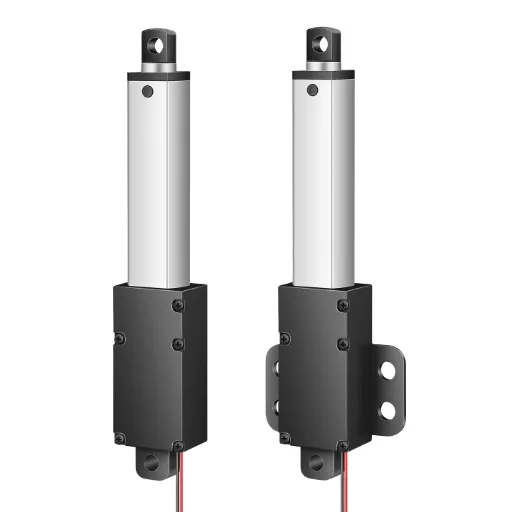
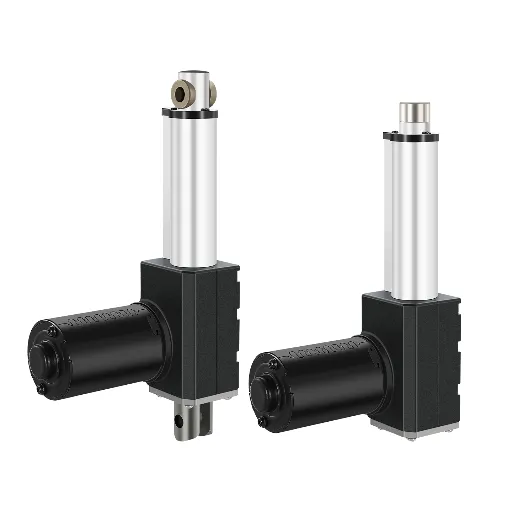
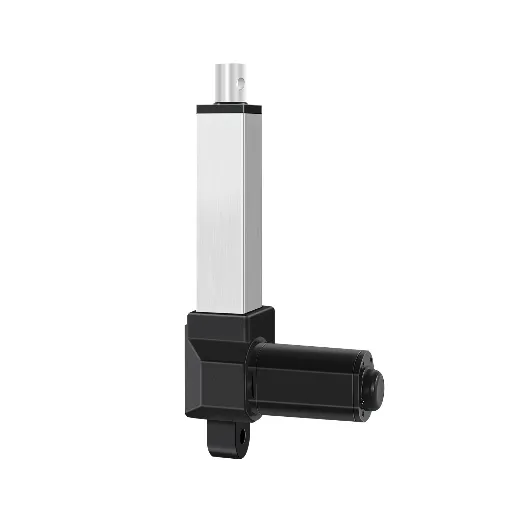
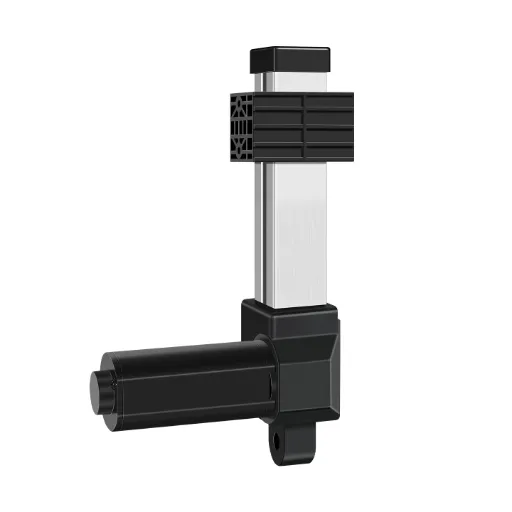
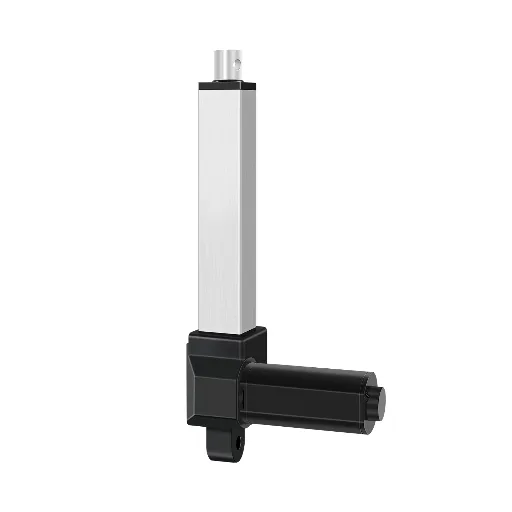
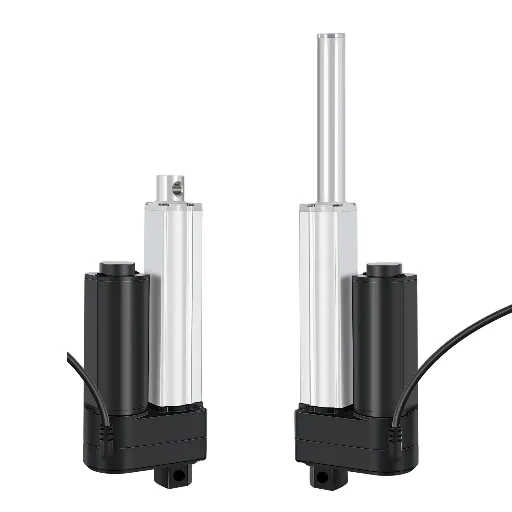
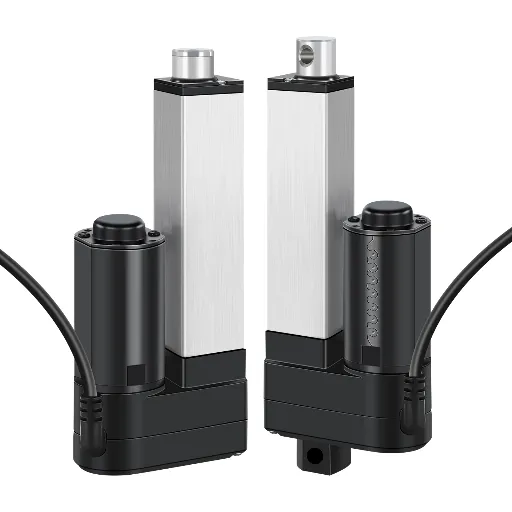
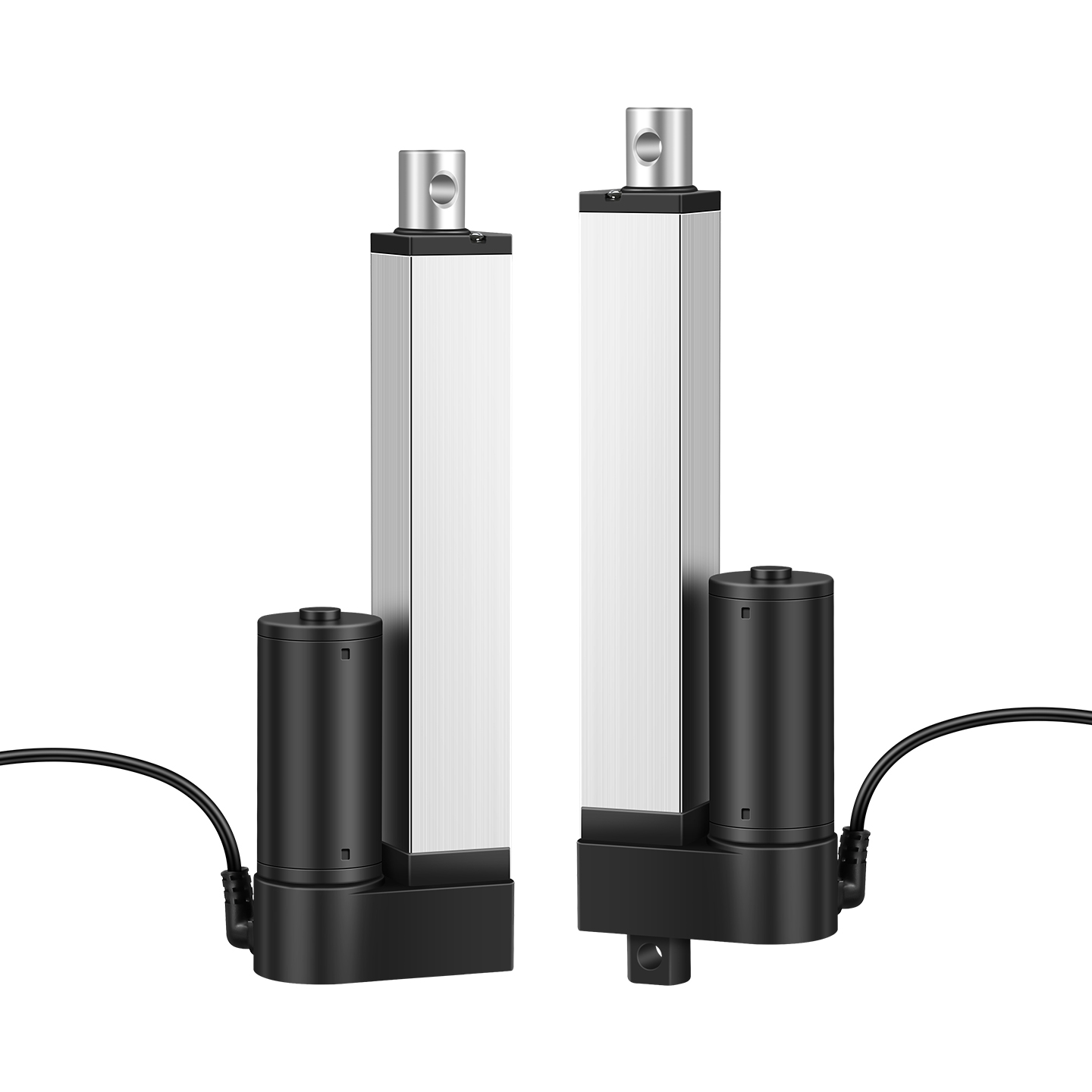
Budgeting for linear actuators in B2B engineering and industrial design is often a minefield. If you are a procurement manager or a design engineer, you already know that the sticker price of a bare actuator is rarely your final bill. Buying a $100 off-the-shelf unit seems like a win for the budget—until you spend $400 in engineering hours trying to make it communicate with your PLC, or worse, dealing with a catastrophic failure on the production line due to an underrated duty cycle.
This guide breaks down the engineering reality behind linear actuator pricing. We will dissect the exact physical variables that drive up costs, expose the hidden fees in integration, and show you why standardizing on custom solutions from source manufacturers is the true secret to lowering your Total Cost of Ownership (TCO).
What Really Drives the Cost of a Linear Actuator?
The cost of linear motion isn’t arbitrary; it is directly dictated by physics. Before looking at price lists, it is crucial to understand how stroke, force, and speed shape the manufacturing cost.
Stroke Length and Load Capacity
It is a common misconception that doubling the stroke length simply doubles the price of the metal tube. In reality, actuator pricing scales exponentially with stroke length due to a mechanical principle known as Column Load (or Euler’s buckling limit).
When an actuator extends from 200mm to 1000mm, the risk of the internal rod bending or snapping under pressure increases dramatically. To counteract this, manufacturers cannot just use longer steel; they must upgrade to significantly thicker extruded aluminum guide tubes, heavy-duty bearings, and high-rigidity internal shafts. Think of it like a fishing rod: a short, thick pole can easily lift a heavy weight. But lifting that same weight with a long pole requires highly reinforced, expensive carbon materials to prevent snapping. If your project requires long strokes combined with high push/pull forces (e.g., 6000N), you are moving into a premium tier of materials.
Speed vs. Force: The Budget “Seesaw”
In standard motor designs, speed and force sit on opposite ends of a seesaw. Mechanical power is a fixed equation. If you need a mechanism to push heavy loads at high speeds simultaneously, you cannot simply tweak the gearing—you must upgrade to a significantly larger, higher-wattage brushless motor, which instantly elevates your budget.
Furthermore, the gear mechanism plays a huge role in the final price. Cheap actuators use plastic spur gears to keep upfront costs low, but they are notoriously loud and wear out quickly under load. Precision-machined worm gears represent a noticeable price bump, but they bring a massive operational advantage: durability and silence.
For example, precision-focused manufacturers like Hoodland utilize their own in-house mold and machining workshops to ensure gear meshing is exceptionally tight. This internal quality control allows their actuators to operate at <50dB (whisper-quiet)—a standard that is absolutely critical for high-end medical beds, dental chairs, and premium smart furniture, where “tractor-like” motor noises are unacceptable.
Standard Price Ranges: What to Expect in the Market
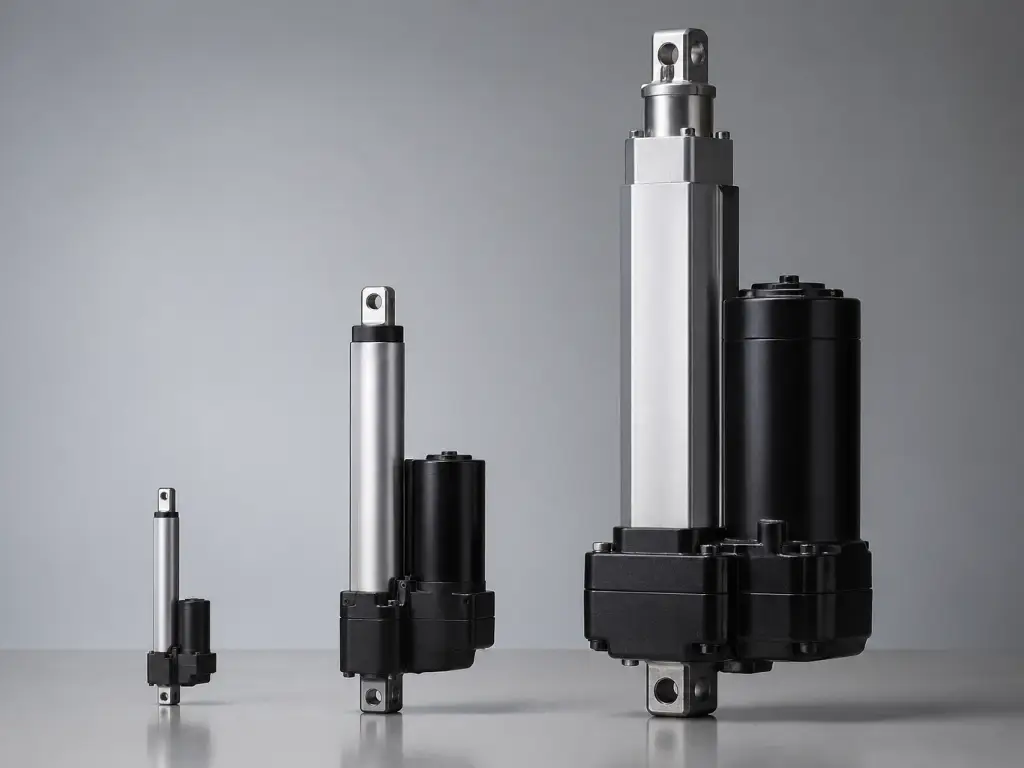
While custom engineering changes the math, standard off-the-shelf actuators generally fall into three distinct budget brackets based on their application:
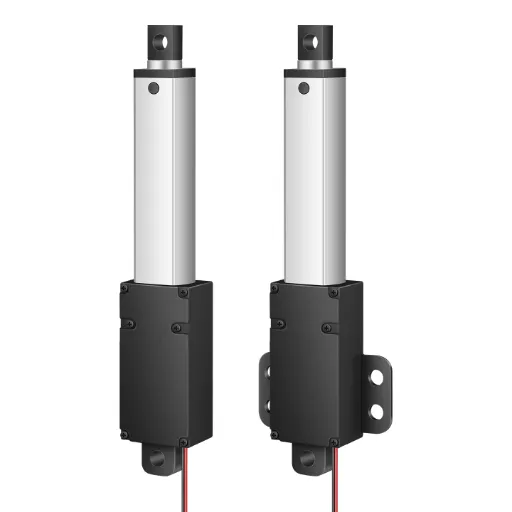
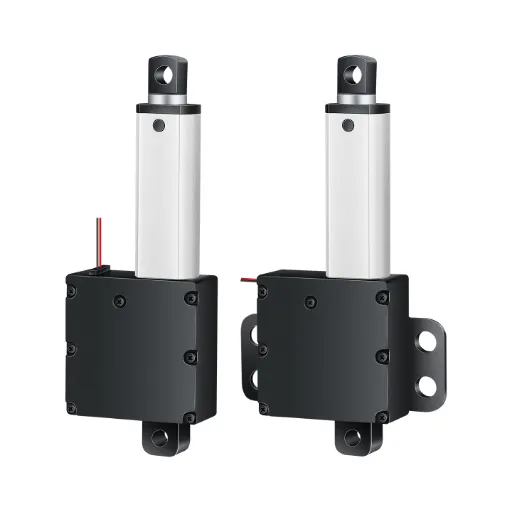
- Micro & Miniature Actuators ($35 – $150): Ideal for space-restricted environments like smart home hidden cabinets, automotive tailgate locks, or precision dampers. They typically offer lower force but highly compact footprints.
- Industrial & Medium-Duty Actuators ($200 – $800+): The backbone of automation. These units command a premium for robust IP ratings (IP65/IP66), heavy-duty Clevis mounts, and overload clutch protection. They are built for agricultural machinery, solar trackers, and factory floors.
- High-Precision / Piezo Actuators ($1,000 – $5,000+): Utilizing piezoelectric ceramics or voice coils for nanometer-level adjustments in semiconductor manufacturing or optical arrays. You are paying for absolute microscopic control, not brute force.
The Hidden Truth of Internal Mechanics: Acme vs. Ball Screws
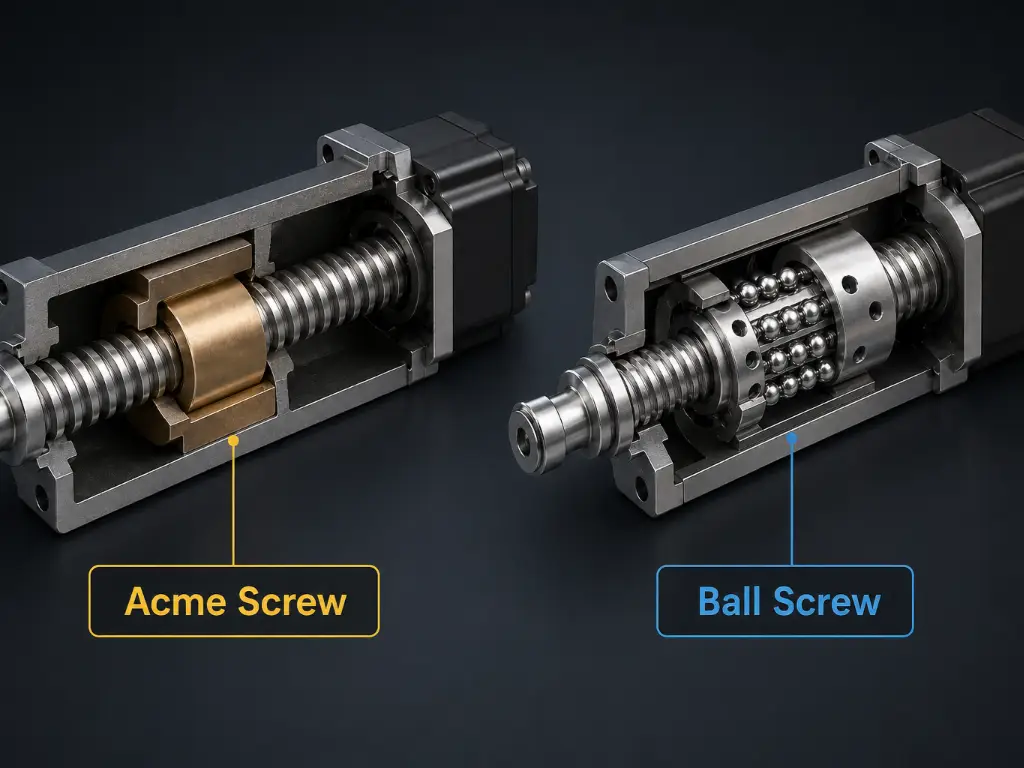
Why do two linear actuators that look identical on the outside have a $200 price difference? The answer almost always lies in the internal screw mechanism.
According to engineering standards (such as ISO 3408), upgrading from a standard lead screw to a ball screw fundamentally changes the mechanical efficiency of the unit.
Acme Screws (Trapezoidal)
These rely on sliding friction. Imagine pushing a heavy brick across a concrete floor. It is cheap to manufacture, but they typically only offer 30% to 40% efficiency. The rest of the motor’s energy is lost as heat.
Ball Screws
These utilize a recirculating ball bearing system—like putting that heavy brick on a set of high-quality wheels. The complex internal raceway machining adds $100 to $300 to the unit price. However, they boast 80% to 90% efficiency. This means you can often pair a ball screw with a smaller, cheaper motor to achieve the same force, ultimately balancing the system cost while radically extending the actuator’s lifespan.
Decoding the Total Cost of Ownership (TCO) & Hidden Fees
The most dangerous mistake a procurement manager can make is equating the “actuator unit price” with the “total project budget.” The bare actuator often accounts for barely half of the necessary investment.
Controllers, Power Supplies, and Feedback Systems
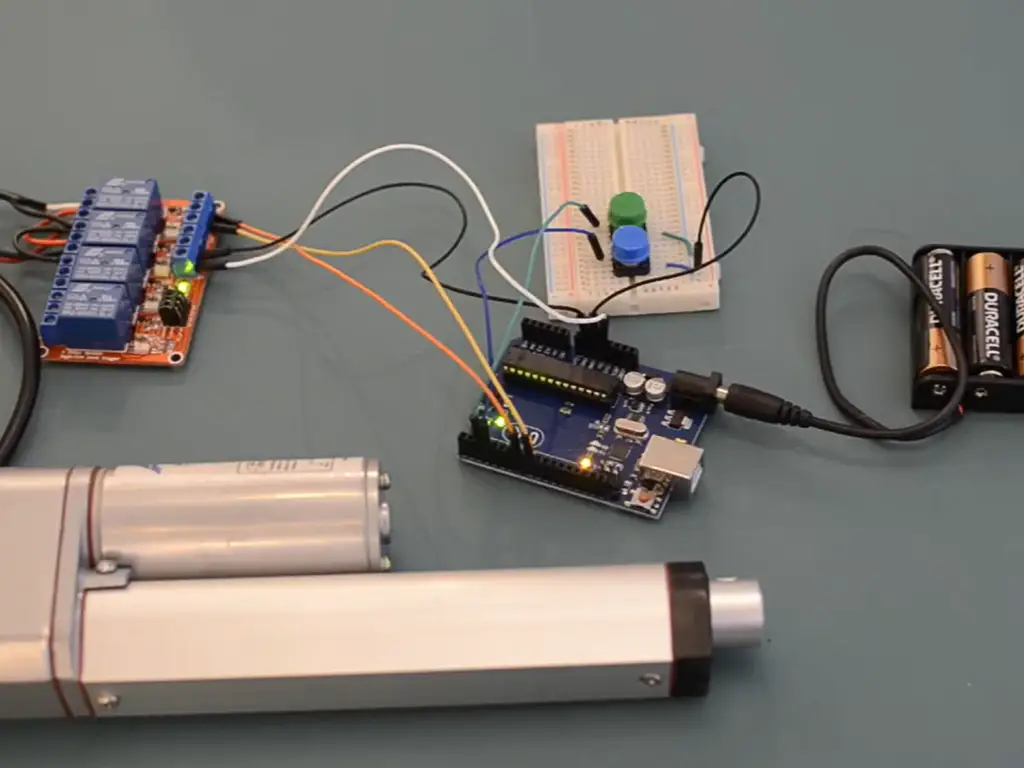
An actuator is just a muscle. Without a brain (controller), nerves (sensors), and a heart (power supply), it is just an expensive paperweight.
If you need your actuators to move in perfect synchronization (like a dual-motor height-adjustable desk), or if you need memory positioning, a basic limit switch won’t cut it. You must upgrade to Potentiometers (adding $20-$40) or Hall Effect Sensors (adding $50-$100+). Add an industrial PID motor driver and a high-amperage 24V power supply, and your “cheap” $100 actuator suddenly requires $250 in external electronics.
The Cost of Mounting Hardware and Integration (The “Compatibility Nightmare”)
Sourcing the actuator from Vendor A, the controller from Vendor B, and machining brackets in-house leads to a compatibility nightmare. The engineering hours spent troubleshooting communication protocols, dealing with mismatched wiring, or retrofitting incorrect Clevis pins will obliterate any savings made by buying the cheapest bare unit.
This is where true source manufacturers like Hoodland change the equation. Instead of forcing clients to hack together third-party components, Hoodland delivers a complete “Plug-and-Play” system. Because they develop their own control systems in-house, they can provide the actuator, a perfectly matched power supply, a proprietary controller with built-in synchronization, and custom-machined mounting brackets as a unified package. This drastically cuts down integration labor and eliminates finger-pointing during troubleshooting.
The Duty Cycle Trap: Paying Upfront to Prevent Downtime
In B2B applications, buying a cheap actuator is essentially paying for future downtime. The trap lies in the Duty Cycle.
A bargain $80 actuator often has a 10% duty cycle. This means for every 1 minute of work, it must rest for 9 minutes to dissipate heat. If you install this on an industrial packaging line or a heavily used medical lift that requires 50% or continuous operation, the internal coils will melt within days. When factory downtime costs thousands of dollars per hour, that $80 “savings” becomes a catastrophic loss.
Investing in premium reliability is an insurance policy. For instance, Hoodland designs its core products for 30,000 lifecycles and mandates a strict 2-hour aging test for every single unit before it leaves the factory floor. Furthermore, their manufacturing discipline is backed by ISO9001, CE, RoHS, and even rigorous Ex ib IIA T6 Gb explosion-proof certifications for hazardous environments. Even if your specific project doesn’t require explosion-proof ratings, buying from a facility capable of meeting those stringent sealing and electrical safety standards guarantees a level of reliability that standard assembly lines simply cannot replicate.
Standard Off-the-Shelf vs. Custom Actuators: The Real Cost Comparison
There is a persistent myth in procurement that “customization equals exorbitant pricing and long lead times.” This is only true if your supplier acts as a middleman and outsources their machining.
If your project has tight spatial constraints, buying a standard actuator usually means paying your own engineers high hourly rates to cut chassis, weld adapters, or compromise on your product’s design to make the actuator fit.
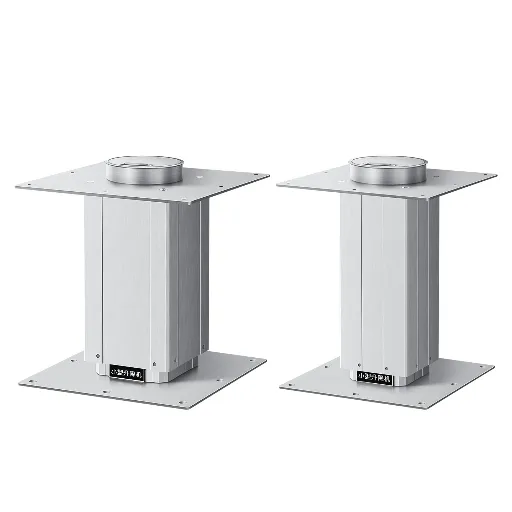
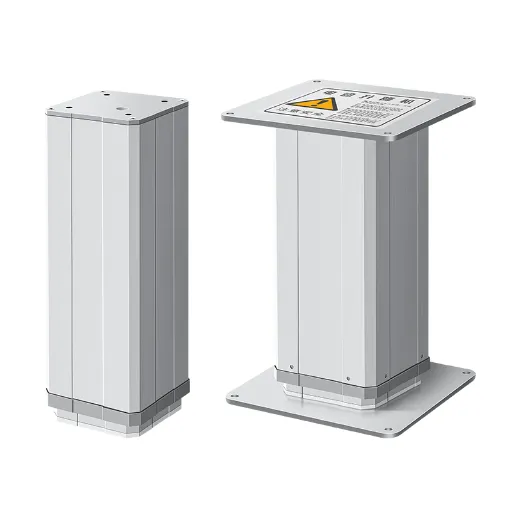
Conversely, a vertically integrated manufacturer turns customization into a cost-saving tool. Because Hoodland operates 4 dedicated internal workshops (Injection Molding, Tooling, Actuator Assembly, and Lifting Columns), they control the entire supply chain. Need a highly specific 235mm stroke? Need a custom base plate precision-cut to fit a strange angle? Need specific cable routing? Hoodland can adjust molds and tooling internally, delivering a bespoke solution quickly (“Fast, Not Rushed”) without the massive Non-Recurring Engineering (NRE) fees typically associated with custom orders.
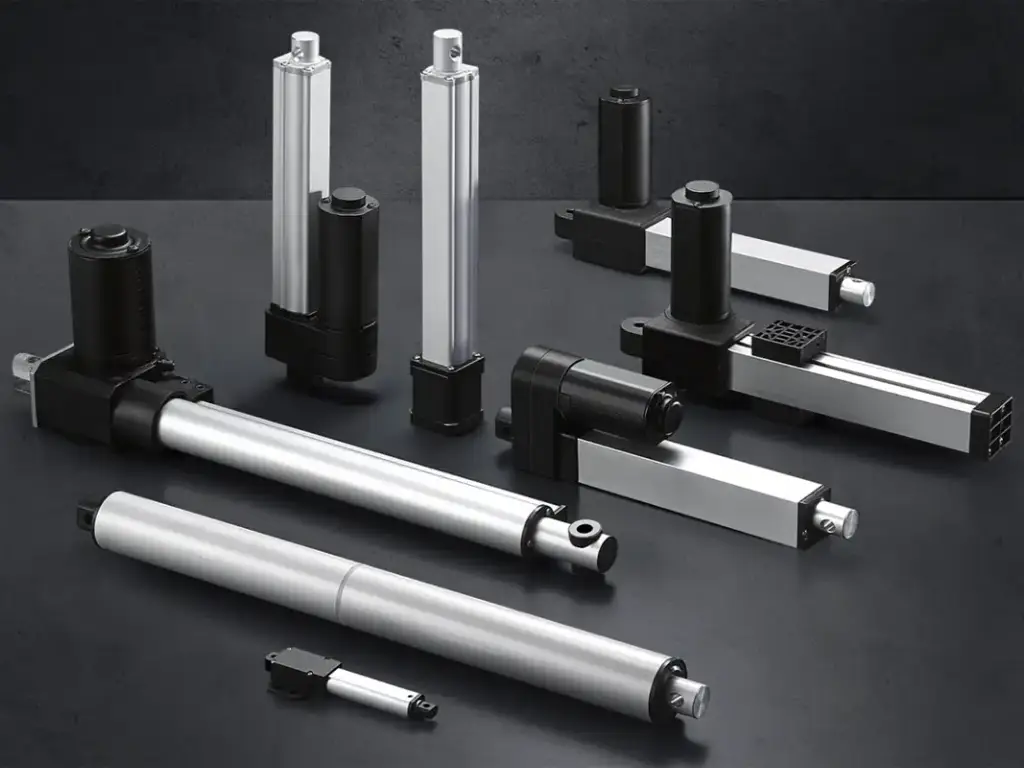
Need a bespoke linear motion solution? Explore how we turn your vision into reality.
Budgeting Sandbox: Simulating a 1000N Actuator System
To illustrate the difference between “buying parts” and “investing in a solution,” let’s look at a simulated Total Cost of Ownership over a 3-year period for a 1000N load requirement in a commercial application.
| Component / Cost Factor | DIY Piecemeal Setup (Standard Cheap Parts) | Factory Integrated System (e.g., Hoodland Custom) |
|---|---|---|
| Bare Actuator | $120 (Standard specs, low duty cycle) | $180 (Custom stroke, <50dB, high duty cycle) |
| Controller & Power Supply | $150 (Third-party, unconfigured, wiring needed) | Included / Perfectly Matched in system package |
| Mounting Hardware | $45 (Plus manual modifications/welding) | Included (Factory-machined to exact spec) |
| Engineering / Integration Time | ~$400 (Troubleshooting compatibility & wiring) | $0 (True Plug-and-Play) |
| Expected Lifespan & Maintenance | High risk of failure (Mismatched components) | 30,000+ Cycles (Pre-tested together, low risk) |
| Estimated 3-Year Total Cost | $715+ (Excluding catastrophic downtime losses) | ~$380 (Stable, integrated investment) |
The Bottom Line: In the world of linear actuators, the purchase price is merely a down payment. The true cost is paid in integration, maintenance, and lifespan. By partnering with a source manufacturer capable of deep customization and full-system delivery, B2B buyers can avoid the duty cycle traps, eliminate integration headaches, and dramatically lower their ultimate project costs.
 English
  Chinese