
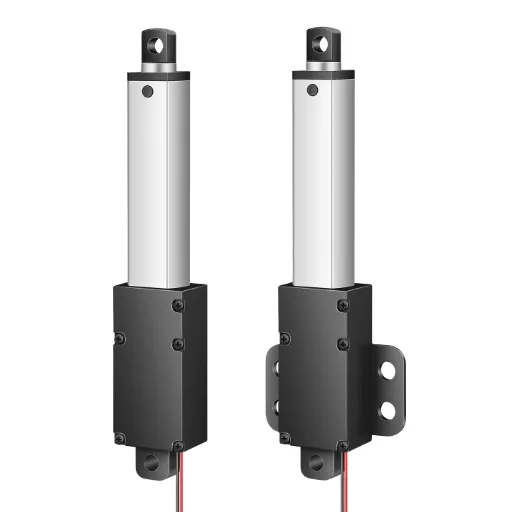
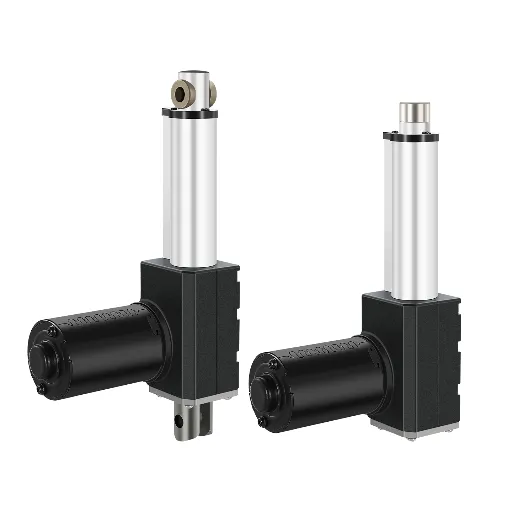
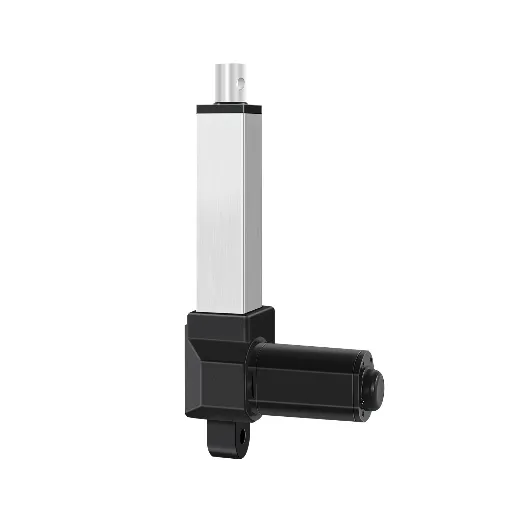
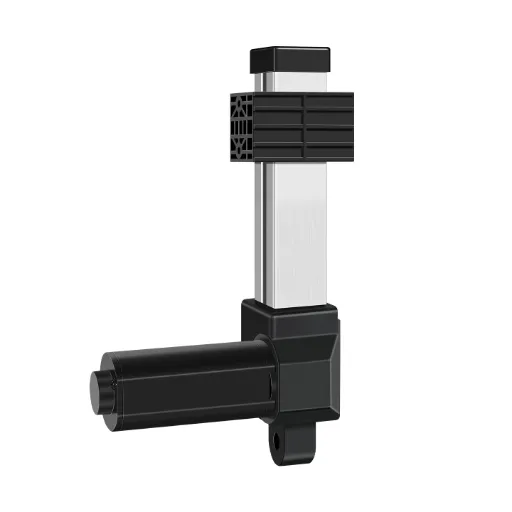
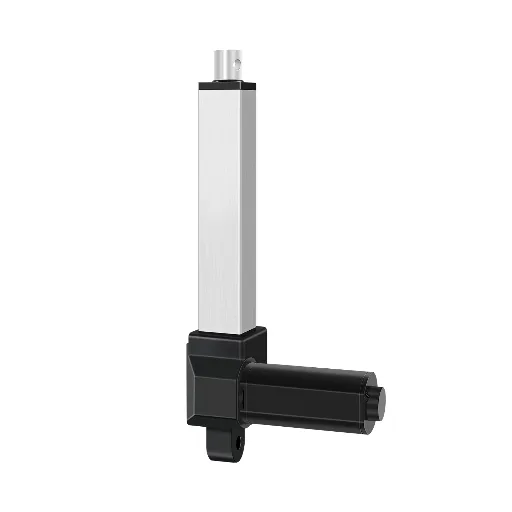
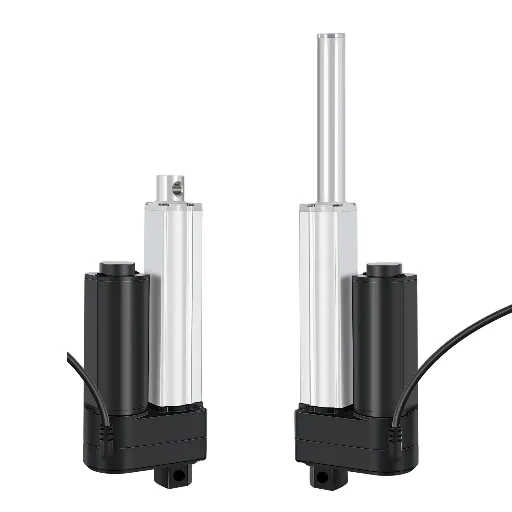
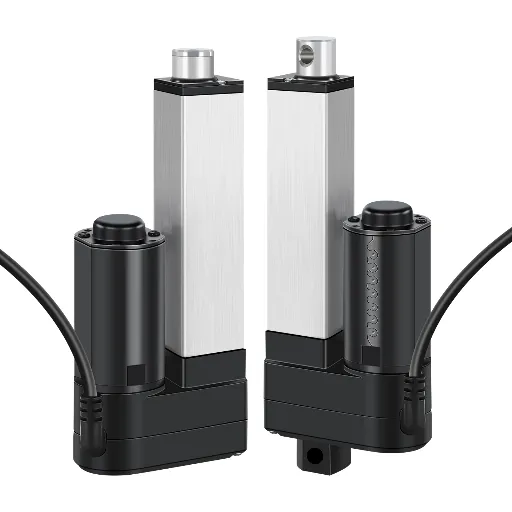
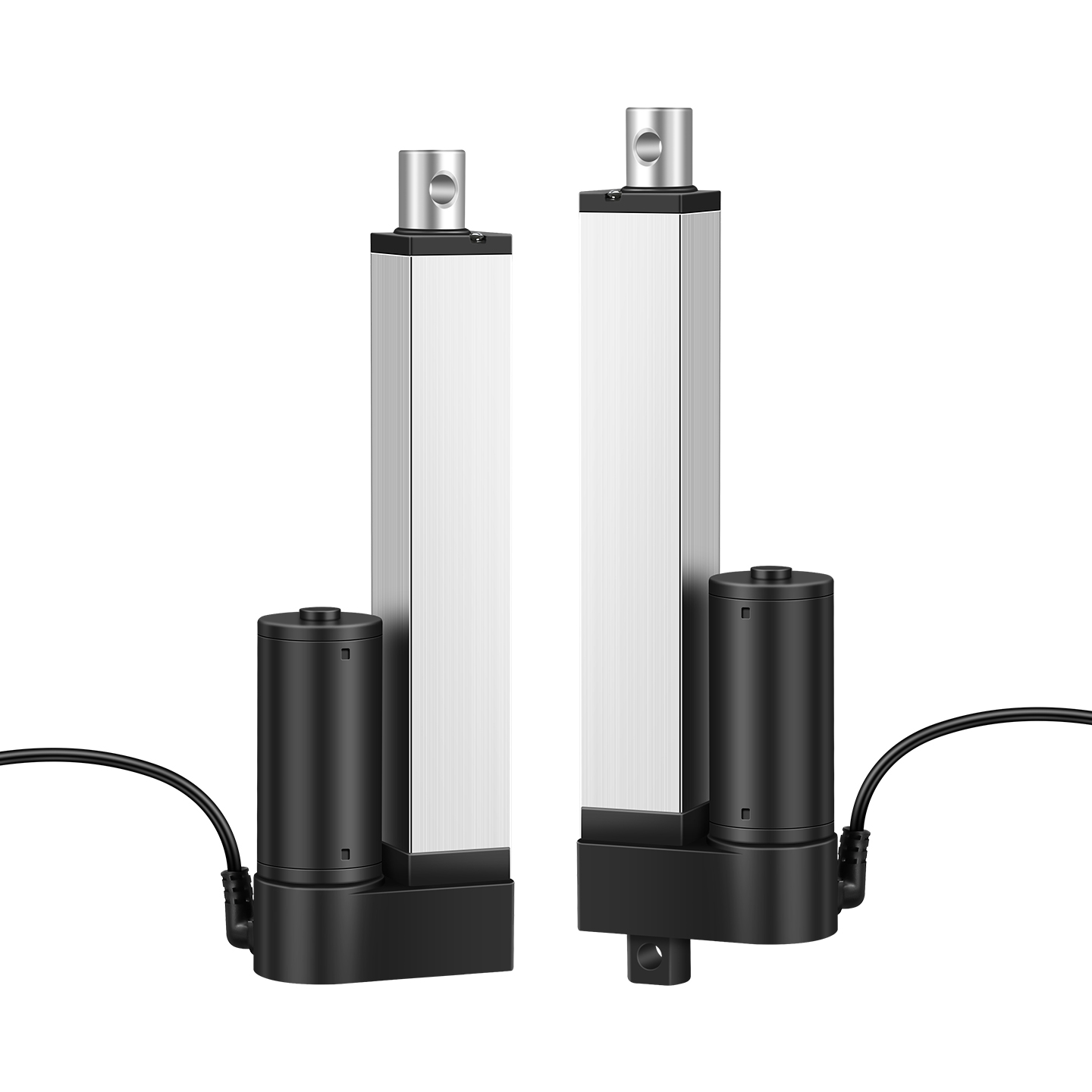
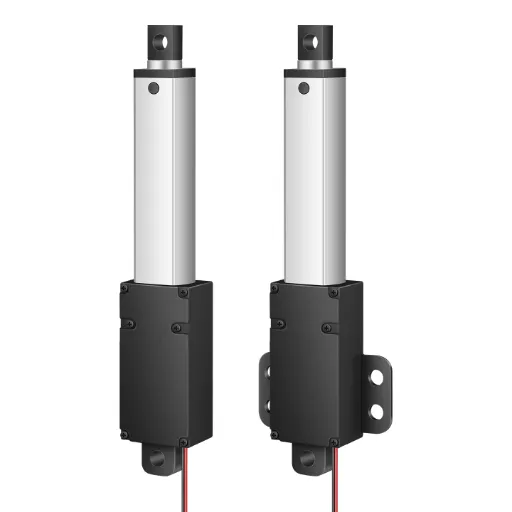
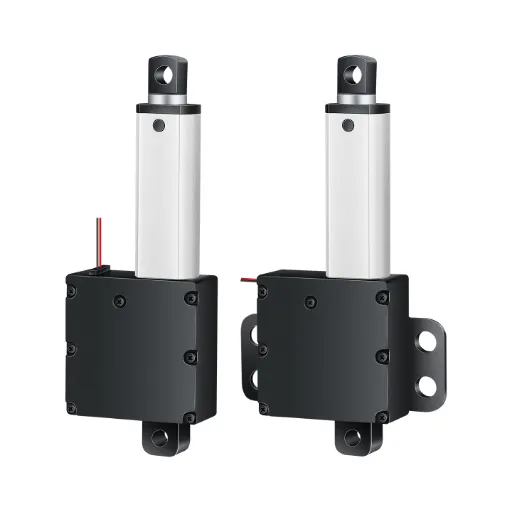
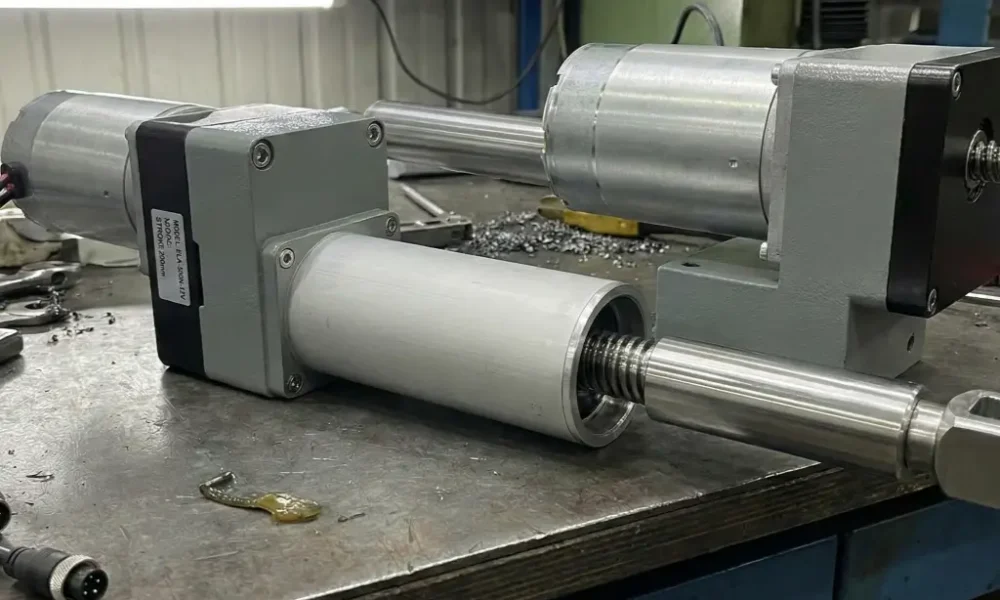
A linear actuator is a device that converts rotational energy into straight line displacement, serving as the basic muscle of automation systems and industrial machinery. Although the definition is misleadingly straightforward, the engineering reality is complicated. Unlike rotary actuators that simply spin, these devices drive linear movement. A mismatch of actuator type to application need—such as applying hydraulic fluid power where electromechanical high precision is needed—is a major source of system failure.
This guide offers a strict structural examination of the types of linear actuators, based on power source, transmission mechanics, and form factor. Through analysis of operational principles and trade-offs, we will enable informed engineering choices to guarantee optimal performance in machine tools, material handling, and consumer applications.
What is a Linear Actuator? Why Proper Classification Matters
The linear actuator in mechanical design is the interface between a control signal and physical motion control. It is tasked with pushing, pulling, lifting, lowering, positioning, or tilting loads. The need to know the exact classification of these system components is not limited to academic classification; it is an important aspect of risk management in engineering.
The “black box” method of looking at the actuator as a mere extension and retraction device tends to hide the internal processes that determine lifespan and reliability. An example is that a basic design lead screw actuator produces heat due to sliding friction, making it inappropriate in high-duty cycle assembly lines, whereas a pneumatic cylinder is plagued by the compressibility of gas, making it inappropriate for precise positioning.
Thus, the process of selection is an optimization problem. It involves a strict examination of external power source availability, transmission efficiency, and geometric constraints. Any failure to categorize the application appropriately will lead to over-engineering (wasted capital) or under-engineering (system failure).
Core Classification I: Power Source (The Energy Input)
The clearest distinction between actuators is the medium through which the force is produced. The power source determines the infrastructure of the system, power density and control architecture.
Hydraulic Actuators
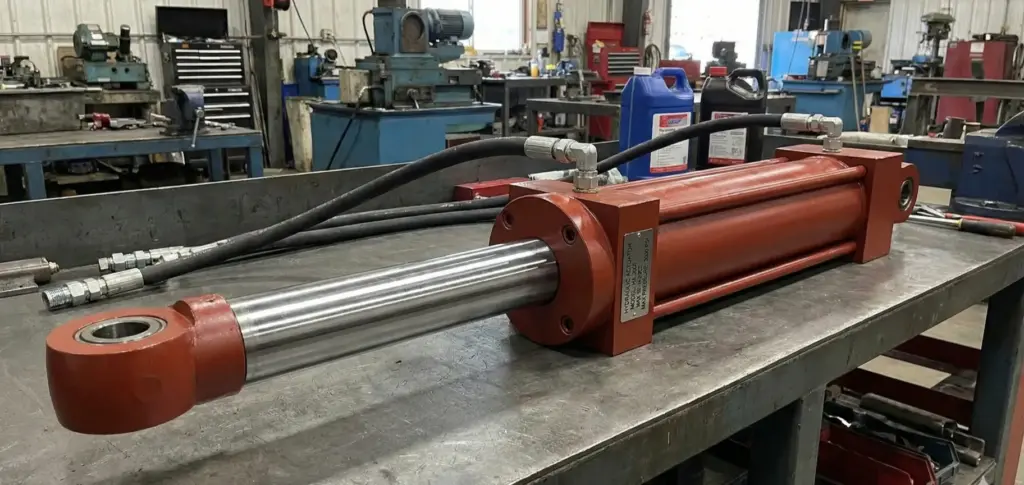
Hydraulic actuators work on the basis of Pascal’s law and utilize pressurized hydraulic fluid (usually oil) to convey force.
- Operational Profile: They are the most powerful. Hydraulics have been the norm in rugged applications where high force is needed, often above 50kN, or where shock loading and extreme loads are common.
- Trade-offs: The infrastructure requirement is significant, necessitating pumps and fluid reservoirs. They are prone to fluid leakage, creating environmental hazards, and lack precise positional control without expensive servo-hydraulic additions.
Pneumatic Actuators
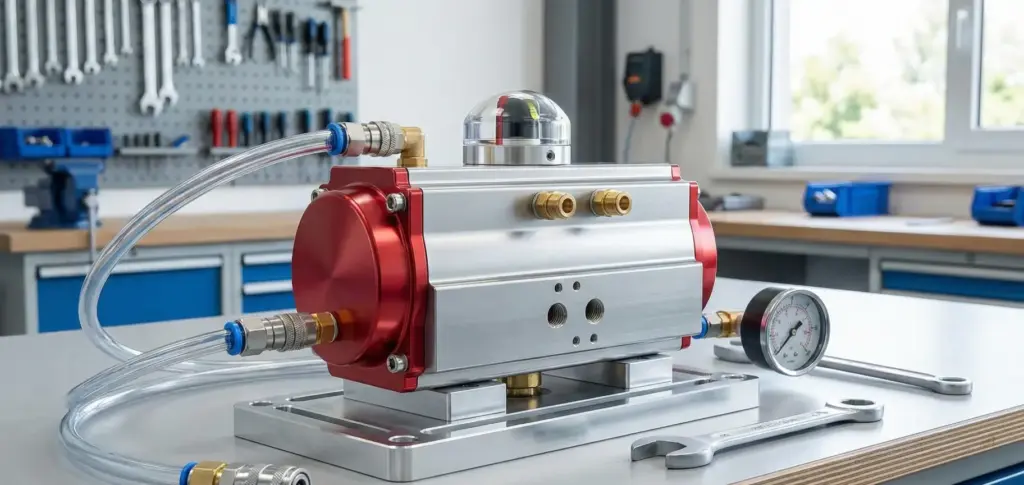
Pneumatic linear actuators function similarly to hydraulic systems but utilize compressed gas (usually air).
- Operational Profile: Pneumatic systems are fast, simple, and inherently explosion-proof, making them ideal for hazardous environments. They are commonly found in tools like nail guns and simple pick-and-place stations.
- Trade-offs: Gases are compressible. This “sponginess” makes pneumatic actuators poor candidates for precise positioning or uniform velocity under varying loads. They require a continuous supply of air pressure via air compressors or an electric compressor, and the associated noise is often a drawback.
Electric (Electromechanical) Actuators
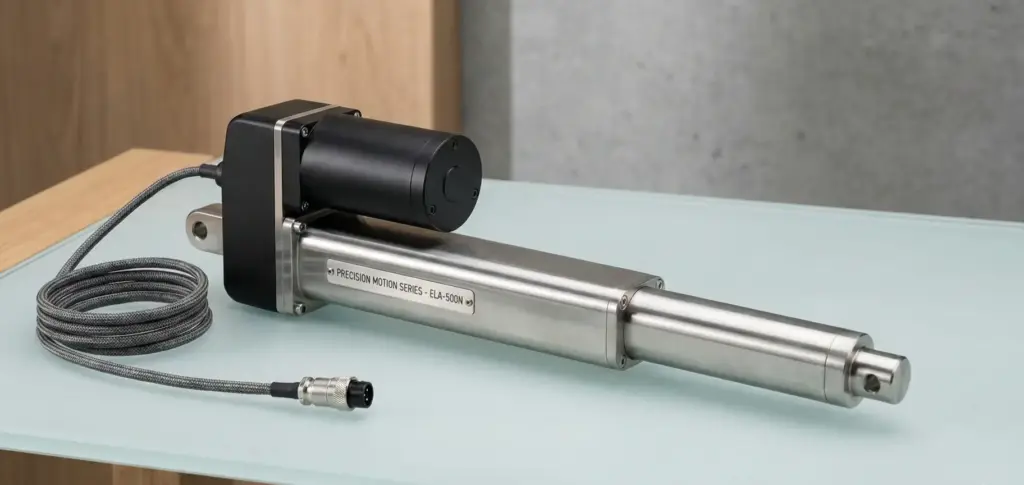
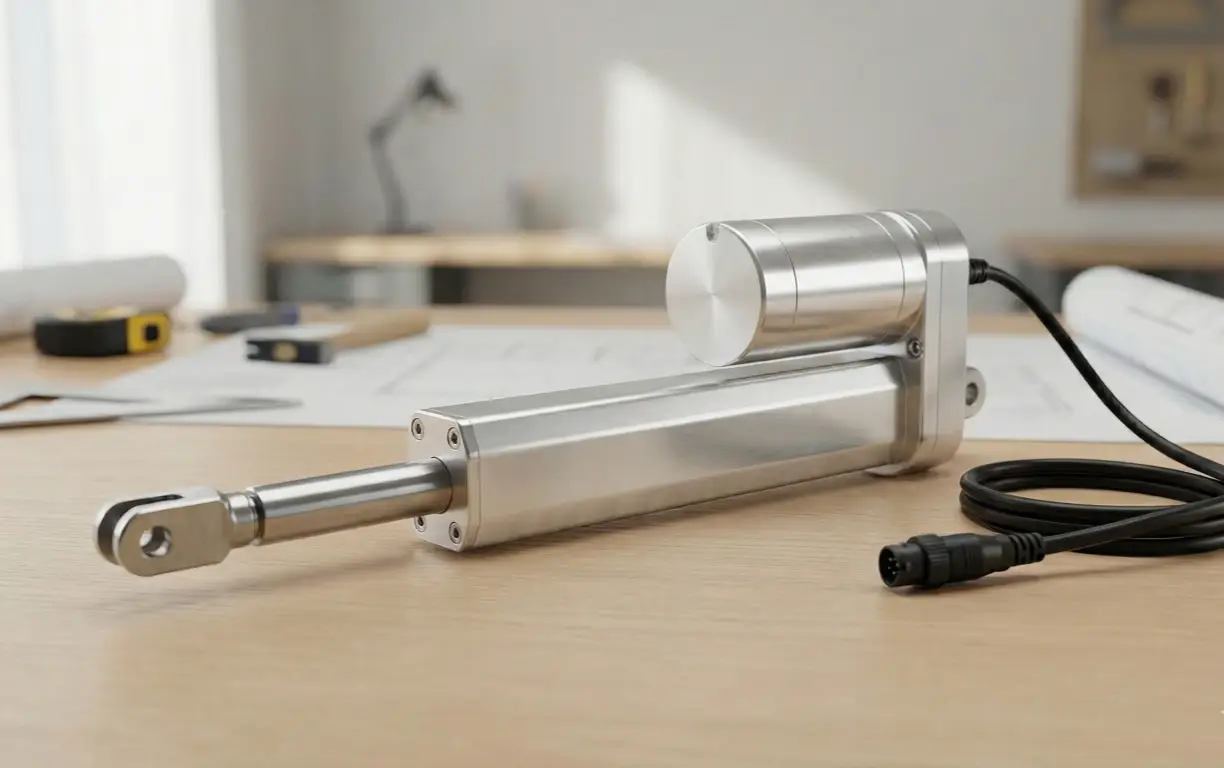
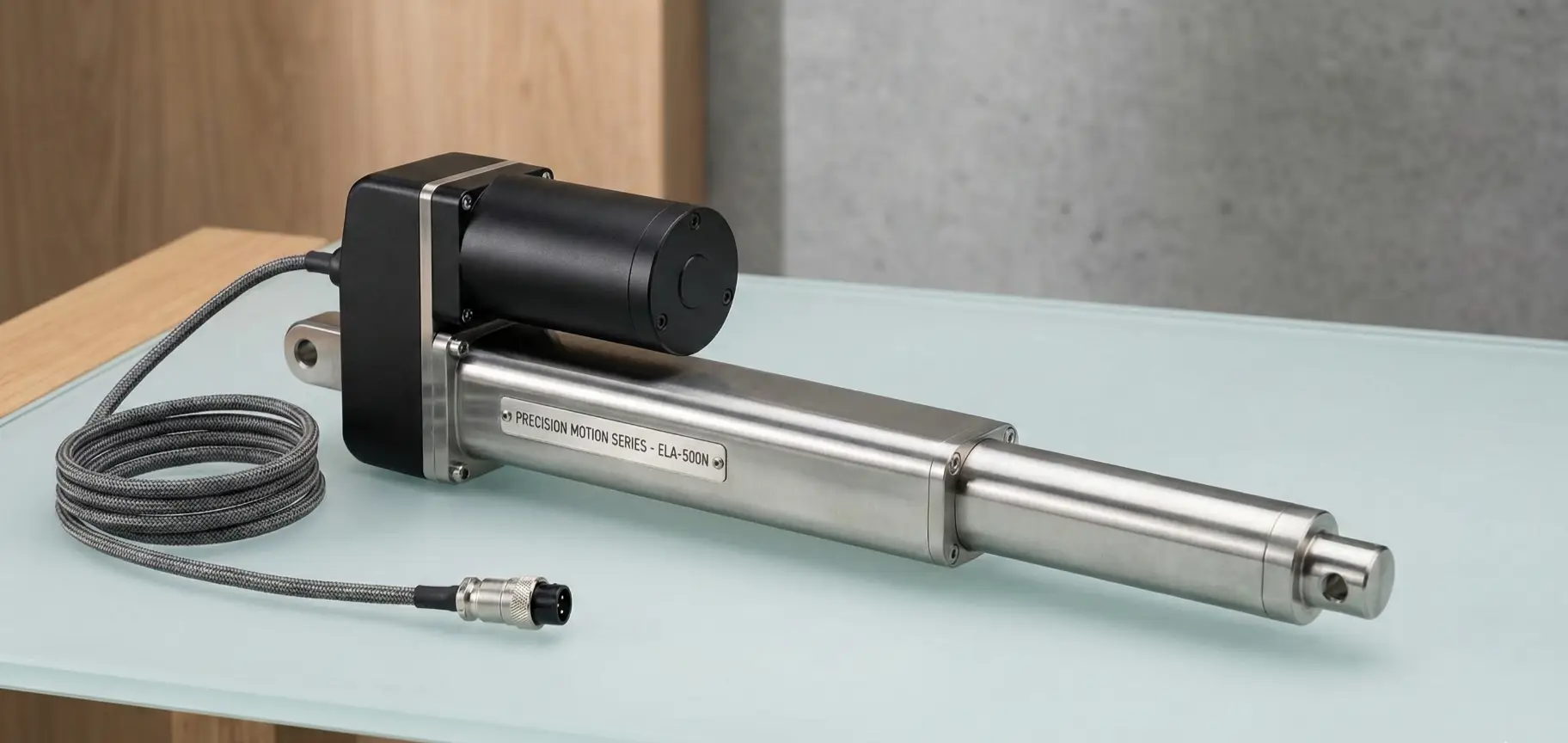
Electric actuators take in electrical energy and convert it to mechanical torque through a motor (DC, AC, Stepper or Servo), which is converted to linear movement by a mechanical transmission system.
- Operational Profile: These systems have higher precision, repeatability and programmability. They do not produce any fluids, do not make a sound, and need practically no maintenance.
- Trade-offs: Although in the past they have been weaker than hydraulics, the current heavy-duty electric actuators are approaching the force levels of hydraulic cylinders in most smaller industrial tasks.
Comparative Analysis Matrix
| Feature | Hydraulic Actuators | Pneumatic Actuators | Electric Actuators |
| Power Source | Pressurized Fluid (Oil) | Compressed Gas (Air) | Electricity (Motor) |
| Force Capacity | Very High (>50 tons) | Low to Medium | Medium to High |
| Speed | Slow to Medium | Very High | Variable / Programmable |
| Precision | Low (without servo) | Low (spongy) | Very High (microns) |
| Maintenance | High (leaks, filters) | Medium (seals, air prep) | Low (sealed units) |
| Energy Efficiency | Low (pump runs constantly) | Low (compressor loss) | High (power on demand) |
| Cleanliness | Dirty (leak risk) | Clean (exhaust air) | Very Clean |
Core Classification II: Electromechanical Transmission Mechanisms
Within the category of electric actuators—which represent the growing majority of modern automation solutions—differentiation is based on the internal mechanism that translates rotary motion into translation.
Screw Driven Systems: Lead Screws vs. Ball Screws
Screw assembly is the most common way of transmission. It identifies the actuator efficiency, back-driving capability and life cycles.
Acme Screw Lead Screw (ACT) Actuators
The lead screw utilizes a threaded shaft and a nut that slides the axis of the threads. Sliding friction is referred to as mechanical contact.
- Advantage: These types are usually self-locking which means that the load will not reverse the motor on turn-off. This makes them extremely good at vertical lifting where safety is the priority of choice.
- Disadvantages:Duty cycles, speeds, and limits- Duty cycles are limited due to the low (30-50%) mechanical efficiency created by sliding friction.
Ball Screw Actuators
Ball screw actuators place recirculating ball bearings between the screw bearing and the nut, and make use of rolling friction.
- Strengths: The efficiency is more than 90 , which means it can run faster and provide more thrust and full-time duty cycles.
- Disadvantages: They tend not to interlock; a brake is necessary to restrain vertical loads. They are costlier to produce.
Belt and Rack & Pinion Drives
For applications requiring high speed or long travel distance where screw whip becomes an issue:
- Belt-Driven: Can offer high linear speeds (up to 5-10 m/s), and can be elastic when loaded.
- Rack and Pinion: Can be virtually of unlimited length by joining rack lengths, but needs high quality gearing to keep backlash to a minimum.
Core Classification III: Form Factor and Mechanical Configuration
The mechanism of integration of the actuator within the space of the machine depends on the physical structure thereof.
- Rod-Style Actuators: The typical looking actuator has a cylinder shape, with a rod sitting out/sucking in. And 8.3v-12v DC, full break, single-stage transistors, switches, resistors, and various specialized applications, e.g. optical applications, transmitters, industrial machines, and power distribution.
- Rodless (Slider/Track) Actuators: The load is placed on a carriage on the body. Space-saving and able to take moment loads.
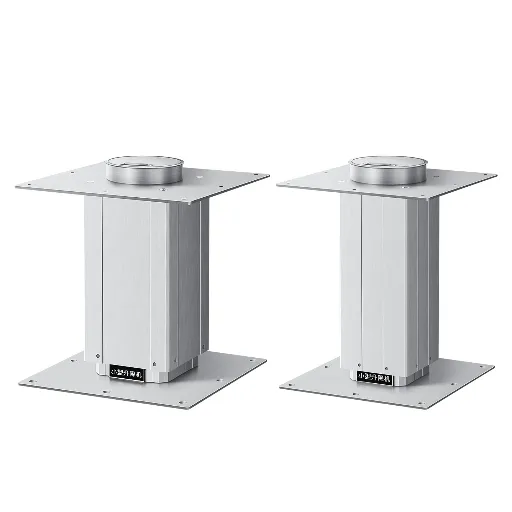
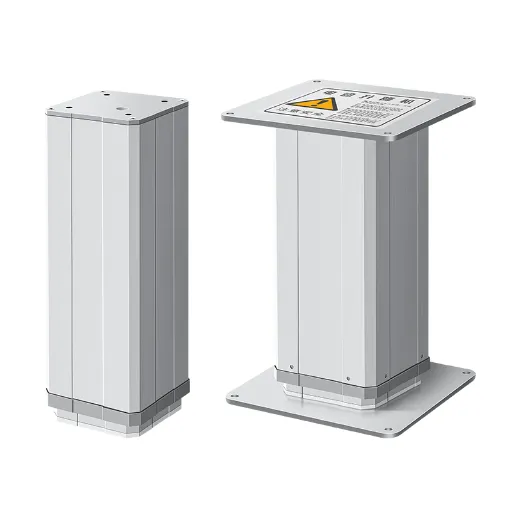
- Telescoping Column: Tubes that slide inside each other in multi-stages. The benchmark of the height adjustable desks and medical beds on which the mechanism shall be hidden and shortened height reduced.
The Selection Decision Matrix: Optimizing for Application Variables
Selecting the right linear actuator is a multi-variable equation. The following parameters must be balanced:
- Load vs. Speed: Force and speed are inversely proportional to a given motor power. Analyze dynamic load (moving) versus static load capacity (holding).
- Stroke & Retracted Length: Geometric constraints are non-negotiable. Compact linear actuators or telescoping designs may be required for confined spaces.
- Accuracy & Feedback: Does the application require simple end-stops (limit switches) or precise coordinate control (Hall sensors/Encoders) typical of linear stages?
- Environmental Factors: An IP20 unit is suitable for dry indoor use, whereas IP66 or IP69K is required for outdoor or wash-down environments.
Industry Trends: The Shift Toward Electrification
The macro-trend of linear motion is the replacement of fluid power by electromechanical, commonly known as “Oil-to-Electric.”
Total Cost of Ownership (TCO)
Although the cost of hydraulic cylinder is less to purchase, they are expensive to operate because of energy wastage (pumps that run 24 hours), maintenance, and clean up. Electric actuators are power-on-demand devices; they use no power when stationary.
Intelligence and Connectivity
Modern electric actuators are no longer passive components. Integrated controllers now offer communication capabilities (CAN bus), enabling predictive maintenance and precise synchronization without complex external PLCs.
Custom Electric Actuators: The Specialized Solution
In rigorous engineering scenarios, standard off-the-shelf components often force design compromises. Standard catalogs are designed for the average market requirements. However, specific applications—whether in advanced medical devices, specialized industrial automation, or compact smart furniture—often reside at the edges of this curve.
For engineers seeking to replace hydraulic/pneumatic systems with cleaner technology, or those requiring precise electromechanical motion, the solution lies in Customized Electric Actuators.
Why High-End Applications Demand Deep Customization
Real customization is more than just cutting a lead screw to a new length. It is a complete reconfiguration of the actuator features. This is where Hoodland as a manufacturer of electromechanical linear actuators only comes in.
Hoodland deals exclusively with the refinement of electric motion, unlike generalist suppliers who deal in refinement of fluid power components. The company has the structural flexibility to modify the physical architecture of the electric actuator through the leverage of a background in precision mold making and production:
- Structural Modification: Re-designing housings or cutting bases to fit into limited chassis spaces.
- Performance Tuning: Internal gearing, motor winding parameters, and lead screw pitch are adjusted to obtain a desired force/speed curve that is not available in standard catalogs.
- Rapid Prototyping: The philosophy of Fast, Not Rushed enables quick validation of electric prototypes, which is needed in projects that are moving off of other technologies.
Convergence of Industrial Precision and Whisper-Quiet Operation
One trade-off that has existed in the electric actuator market has been that of power versus noise. Hoodland fills this gap by implementing industrial standards of manufacturing for every line of products.
The “Whisper-Quiet” Standard
In the case of medical settings and smart homes, acoustic intrusion is not tolerated. With the use of high-precision gear molding and custom motor tuning, Hoodland is able to achieve a level of noise below 50dB. This keeps the mechanism out of the way- an important point in comparison with the natural noise of pneumatic compressors or hydraulic pumps.
The Reliability of Industry of any Size
There is no need of a compromise in durability with silence. The Hoodland electric portfolio specializes in:
- Wide Load Range: Micro-Precision Series (IP70/IP800) to Heavy-Duty Series (IP6000) with forces up to 6000N (approximately 600kg), an alternative to hydraulic cylinders in the middle load range.
- Quality Assurance: Hoodland has a 100 percent inspection rate and uses independent data reports and exposes units to a 2-hour aging test.
- Compliance: Safety is certified through a strong portfolio of certification, such as ISO9001, CE, and RoHS. Specifically, dedicated electric models are Explosion-proof (Ex) certified, which confirms that they can be used in dangerous industrial areas where common consumer-level electronics would not operate.
Summary and Strategic Recommendations
The terrain of linear actuators is enormous. Although hydraulic and pneumatic solutions are still applicable to particular extreme-force or risky niche, the obvious industrial trend is towards electrification due to its accuracy, controllability and low overall cost of ownership.
To engineers and buyers who are particularly interested in electric linear motion solutions, standard catalog products can present unacceptable design tradeoffs. In these cases, working on a specialist manufacturer such as Hoodland makes the actuator a subsystem optimized.
Hoodland offers Plug-and-Play electric systems that address certain installation and performance issues by concentrating on the electromechanical technology and exploiting the ability to customize the system to the fullest, offering the power of industry and the quietness of precision engineering.

 English
  Chinese