
Servo Motor vs. Stepper Motor: The 2026 Ultimate Selection Guide for Electric Linear Actuators
During the research, development, and procurement phases of automation equipment, engineers frequently face a classic dilemma: “Should this machine use a servo motor or a stepper motor?”
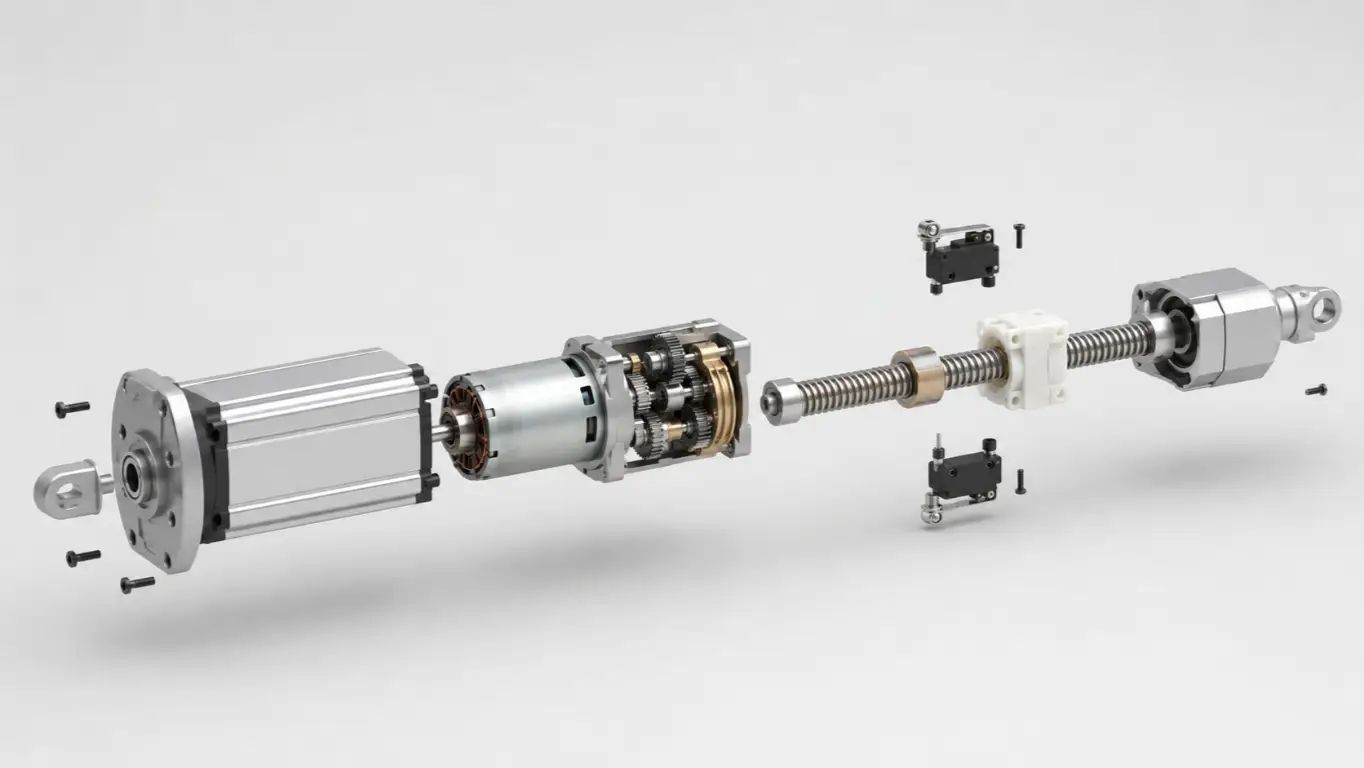
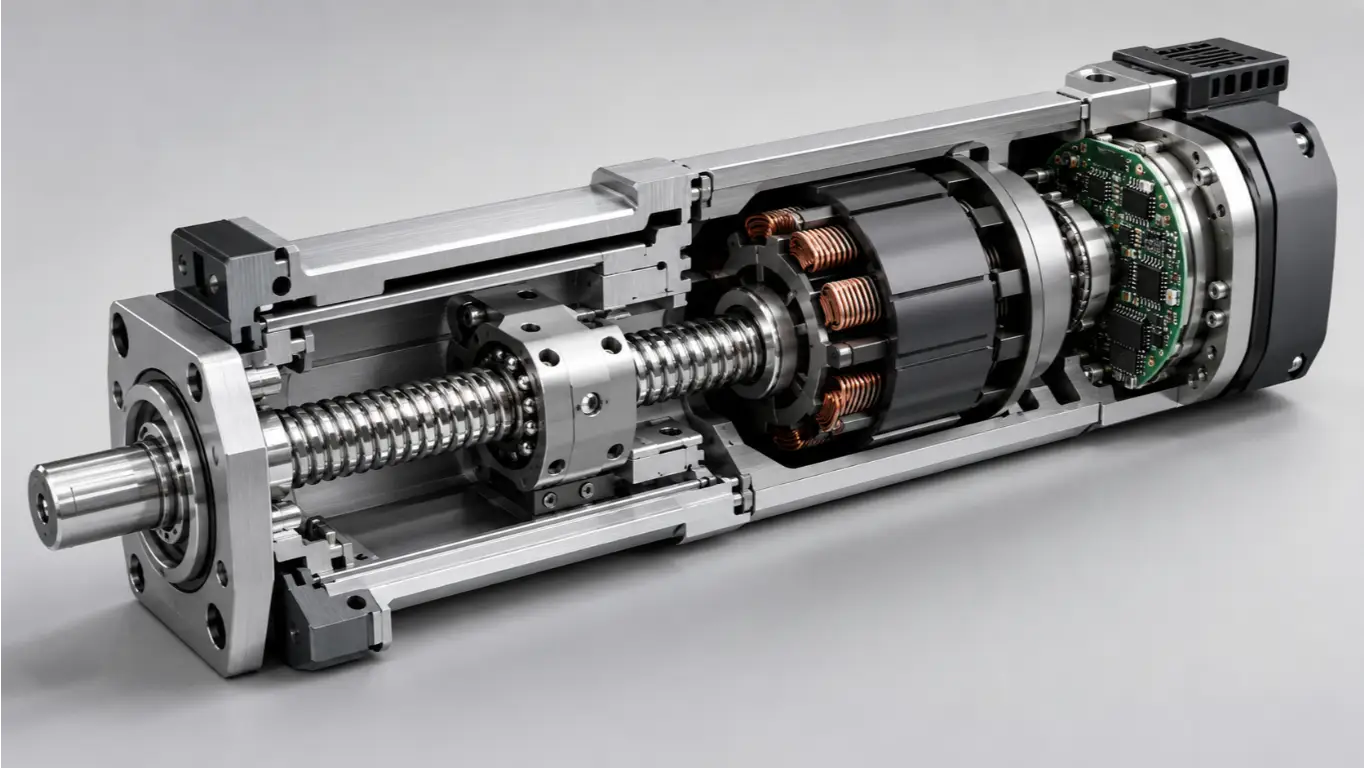
If your only goal is to make a dial spin, this is merely a simple trade-off between cost and precision. However, if your ultimate objective is to achieve precise linear motion—such as lifting a heavy medical bed, pushing a massive industrial hatch, or adjusting a solar tracker—this selection process becomes exponentially more complex. In these scenarios, the motor is merely the “heart” of the system. The transmission mechanism (like lead screws or ball screws) and the controller that convert rotational motion into linear thrust are what truly determine the success or failure of your project.
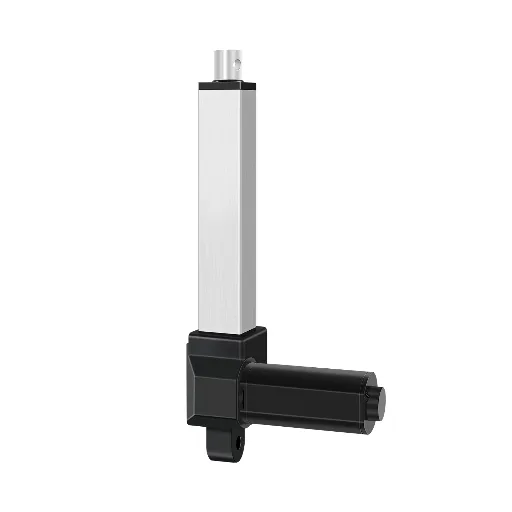
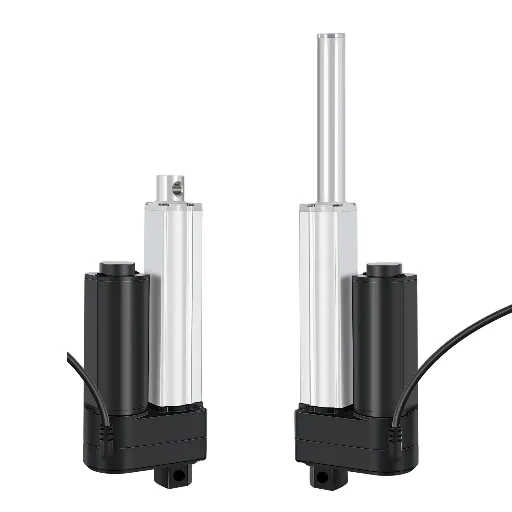
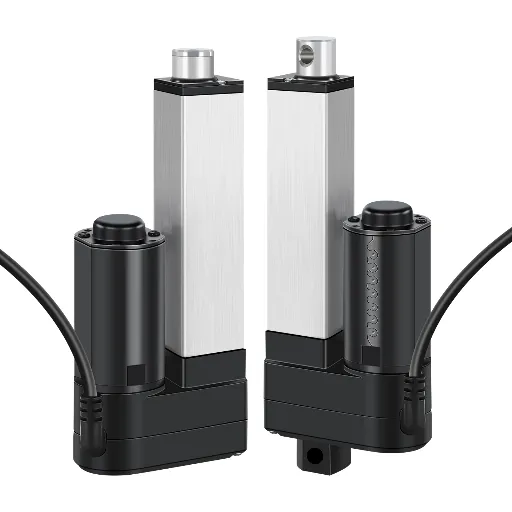
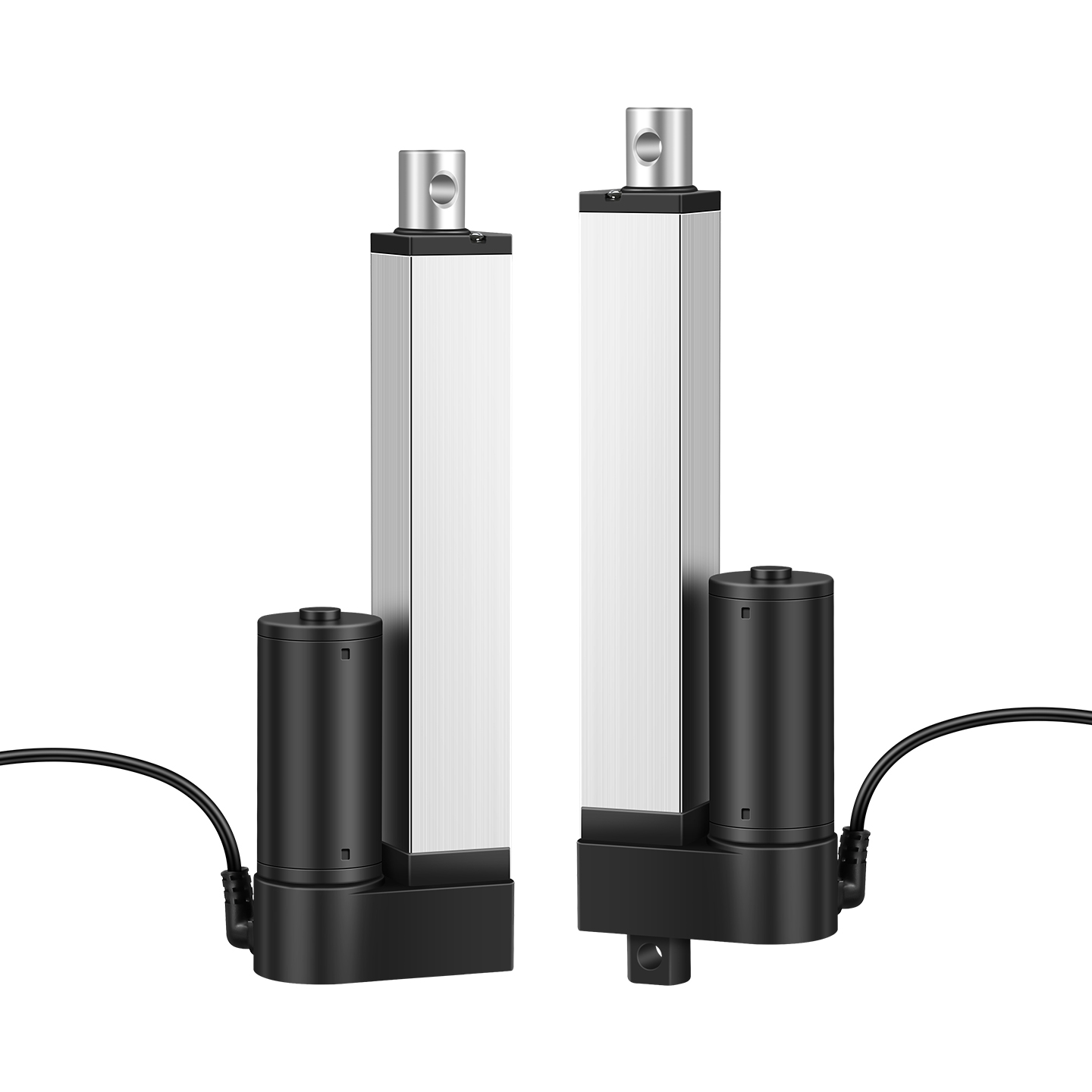
This comprehensive guide will deeply analyze the fundamental differences between servo and stepper motors. More importantly, it will reveal why an increasing number of medical, smart home, and industrial automation enterprises are abandoning the DIY approach of assembling motors and screws themselves, and are instead embracing highly customized, integrated Electric Linear Actuator systems.
The 60-Second TL;DR: Core Differences Between Servo and Stepper Motors
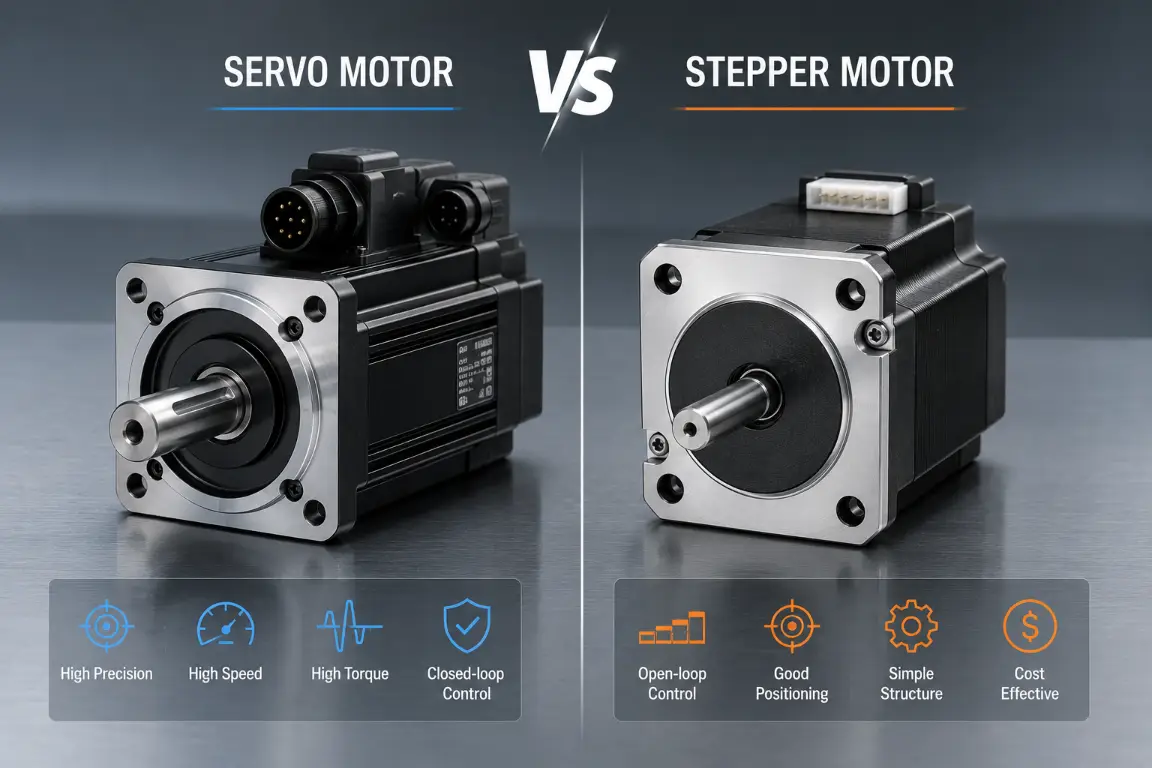
Before diving into complex physics and engineering principles, let’s look at a macro-level comparison of these two motors. To help you quickly grasp the core differences, we have summarized the key metrics in the table below:
| Feature / Parameter | Stepper Motor (Open-Loop) | Servo Motor (Closed-Loop) |
|---|---|---|
| Control Mechanism | Open-loop (No feedback, executes steps) | Closed-loop (Encoder provides real-time feedback) |
| Pole Count | High (Typically 50 to 100+ poles) | Low (Typically 4 to 12 poles) |
| Speed Range | Low to Medium (Best under 1000 RPM) | High (Easily reaches 3000 – 5000+ RPM) |
| Torque Characteristic | High at low speeds; drops sharply at high speeds | Constant torque across the entire speed range |
| System Cost | Low to Moderate (Highly cost-effective) | High (Expensive motors, encoders, and drives) |
| Setup & Tuning | Plug-and-play (Simple wiring and control) | Complex (Requires meticulous PID gain tuning) |
However, you must remember: once these motors are enclosed within the housing of an “electric linear actuator,” these rotational parameters translate into specific Thrust (N), Travel Speed (mm/s), and System Noise (dB). These are the metrics that actually dictate your equipment’s final performance.
Underlying Operating Principles: Open-Loop “Stability” vs. Closed-Loop “Precision”
Mechanism dictates destiny. The fundamental difference between the two lies in their magnetic pole count and control loops.
Stepper Motors possess a high number of magnetic poles (usually 50 or 100). Every time the controller sends a pulse signal, the motor shaft rotates by a fixed, microscopic angle (a “step,” such as 1.8°). Think of a stepper motor as an extremely obedient but “blindfolded” soldier. If you tell him to take 100 steps forward, he will take exactly 100 steps. Because there is no feedback mechanism (open-loop), it is incredibly stable and reliable under normal conditions. But if he trips over a rock (encounters sudden mechanical resistance), the controller remains completely unaware.
Servo Motors, on the other hand, have very few poles (usually 4 to 12), but they are equipped with a high-precision encoder at the rear of the shaft. A servo doesn’t just blindly execute commands; it reports its absolute position back to the controller thousands of times per second (closed-loop). If it detects even the slightest deviation between its actual position and the commanded position, the servo drive instantly injects a surge of current to correct the error. It is a constantly self-correcting “perfectionist.”
Torque and Thrust Conversion: The Fatal Tug-of-War in Linear Motion
When a motor is coupled with a lead screw to become a linear actuator, the Torque-Speed Curve becomes the most critical deciding factor for engineers.
The absolute greatest advantage of a stepper motor is its “low-speed heavy-duty” capability and its “Holding Torque.” When a linear actuator is stationary or extending/retracting at a very slow pace, a stepper motor can unleash tremendous force to firmly lock the screw in place. This means if you need an actuator to slowly lift hundreds of kilograms and suspend it in mid-air safely, a stepper-driven actuator is the most cost-effective choice. Its fatal flaw, however, is that once you demand high-speed pushing and pulling, its thrust experiences a cliff-like drop, leading to potential stalling.
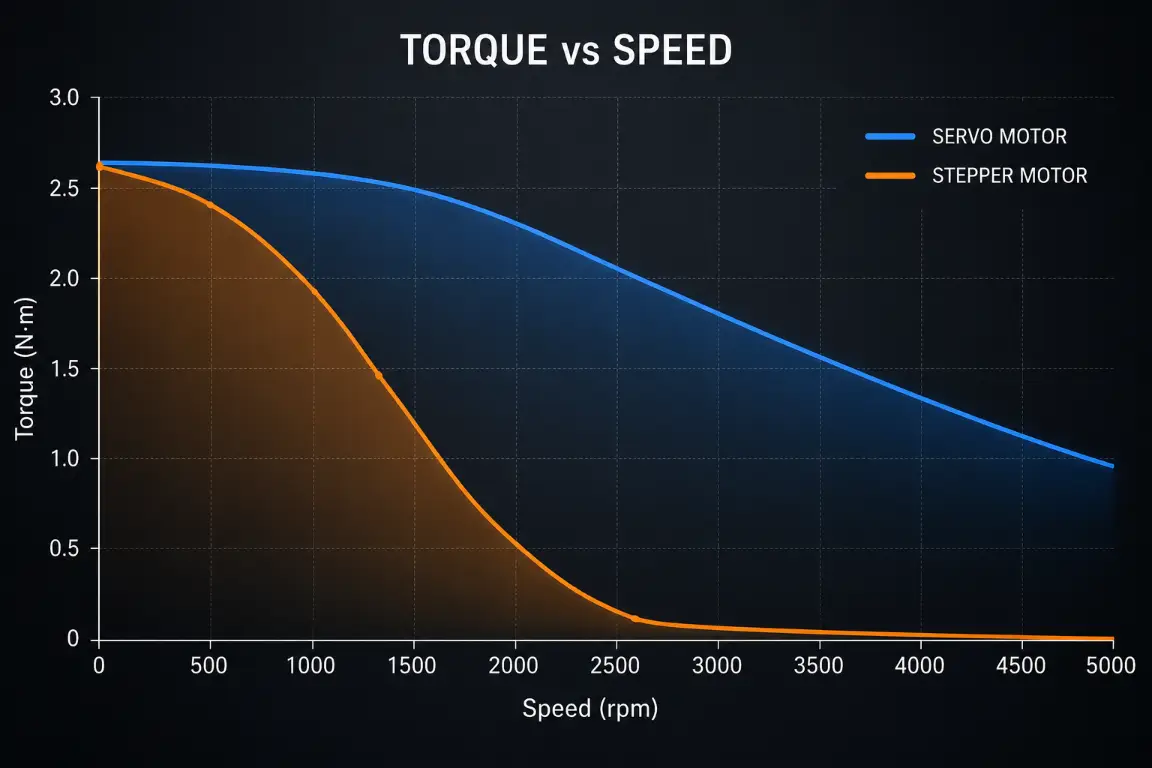
Conversely, a servo motor maintains constant torque throughout its entire rated speed range. Therefore, if your linear motion requires not only immense force but also ultra-fast cycle times (e.g., a high-speed sorting diverter that needs to strike back and forth multiple times per second), a servo-driven actuator is your only viable solution.
Precision Control and the “Lost Steps” Mystery: Microstepping vs. Absolute Position
Many engineers hesitate to specify stepper actuators due to the fear of “Lost Steps.” If a sudden surge in mechanical load occurs during a linear push/pull, a stepper motor might fail to overcome the resistance and “miss” several pulses. Consequently, the actual extended distance of the actuator rod will not match the distance recorded by the system. In high-precision scenarios, this discrepancy can be disastrous.
A servo system’s encoder perfectly solves this by guaranteeing zero-error positioning.
However, the modern linear transmission industry has evolved an incredibly smart “middle-ground” solution. For non-extreme high-speed scenarios, premium manufacturers integrate Hall Sensors or high-precision Potentiometers directly into stepper actuators. This means that while the motor itself remains open-loop, the entire actuator system achieves closed-loop position feedback. This not only eliminates the anxiety of lost steps but also enables Memory Positioning and Absolute Synchronization of multiple actuators at a fraction of the cost of a full servo system.
Noise and Resonance: The “Hidden Killers” Ignored by Most Engineers
Pain points that don’t appear on standard spec sheets are often the most lethal. Because stepper motors move in discrete “steps,” they naturally suffer from low-frequency resonance.
In a loud, heavy-industry factory, this vibration and noise are negligible. But if this actuator is installed inside an ICU nursing bed, a high-end dental chair, a smart standing desk, or a motorized TV lift in a luxury home, the massive noise generated by motor resonance and gear friction will instantly destroy the user experience.
Solving the noise disaster in linear motion cannot be achieved simply by buying a better motor. It severely tests the linear actuator manufacturer’s mechanical engineering pedigree—such as the meshing precision of transmission gears (e.g., using high-end POM gears), the acoustic resonance design of the outer shell, and the algorithmic tuning of the motor’s Soft Start/Stop capabilities.
Match Your Application: Which Actuator Does Your Equipment Need?
Now that the technical differences are clear, we can accurately match actuator systems to specific industrial and commercial scenarios. Below is a breakdown of typical applications:
- High-Speed Packaging & Sorting: Requires Servo Actuators. These applications demand ultra-high frequency, constant high-speed thrust, and the ability to handle extreme dynamic load changes without failing.
- Medical Beds & Dental Chairs: Requires Stepper Actuators (Silent Series). The absolute priority here is smooth movement and whisper-quiet operation (<50dB). The high holding torque of stepper motors also acts as a crucial safety feature for patients.
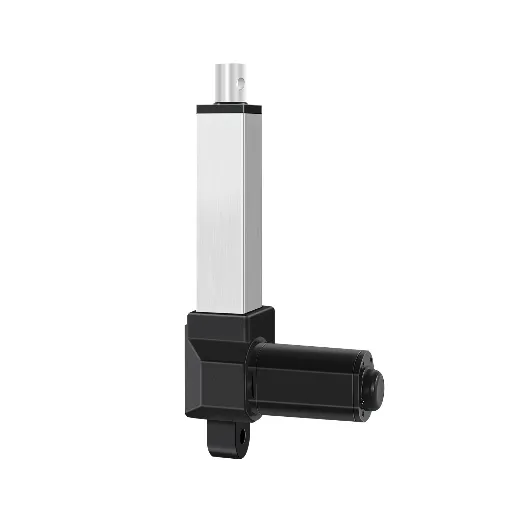
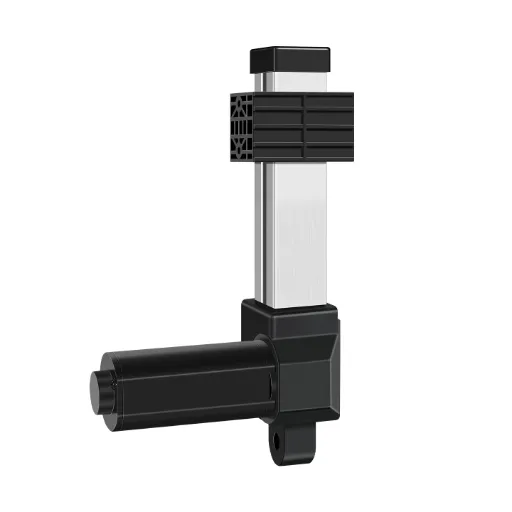
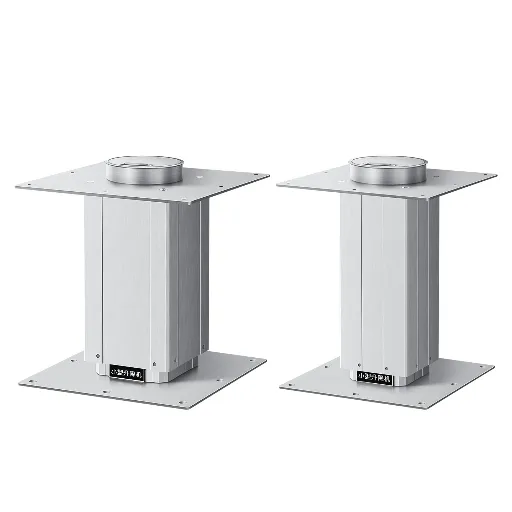
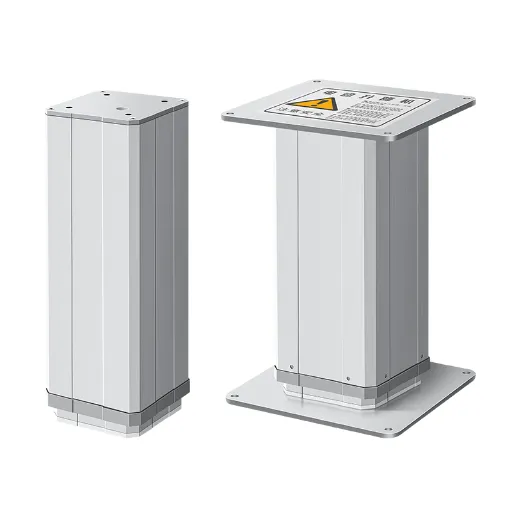
- Ergonomic Furniture (Desks/Sofas/Lifts): Requires Stepper Actuators (with Hall Sensors). These require high cost-effectiveness, smooth lifting, multi-leg synchronization, and extremely compact installation dimensions to fit inside furniture frames.
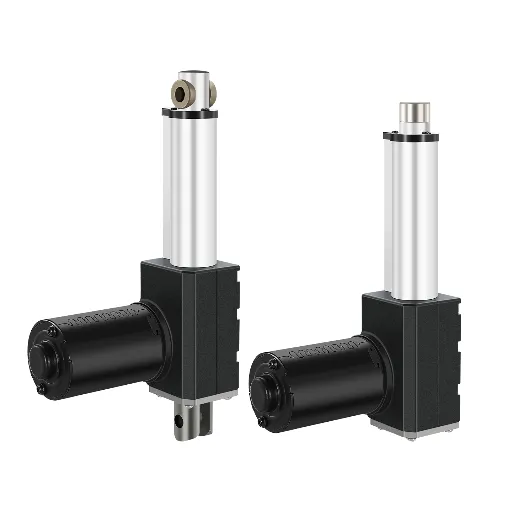
- Solar Trackers & Heavy Agricultural Tech: Requires Heavy-Duty Stepper Actuators. These systems move slowly but need massive thrust (e.g., 6000N+) to push heavy panels or hatches, coupled with high holding torque to withstand strong winds.
- Petrochemical, Mining & Dust Environments: Requires Specialized Explosion-Proof Actuators. There is a strict requirement for Ex-certified systems to prevent electrical sparks from causing catastrophic explosions in hazardous areas.
When Standard Products Fail: Why “Source Customization Capability” Determines Project Success
Many R&D engineers, after completing the selection process above, face an incredibly frustrating reality: the standard actuators available on the market either lack sufficient thrust or their installation dimensions are too bulky to fit into the equipment’s confined spaces.
At this critical juncture, partnering with a source manufacturer that possesses deep manufacturing heritage and extreme customization capabilities becomes the key to saving a project. Take Hoodland, a renowned manufacturer deeply rooted in this field for over 30 years, as a prime example. Founded in 1989 and originating from precision mold manufacturing, Hoodland demonstrates industry-leading capabilities in non-standard solutions:
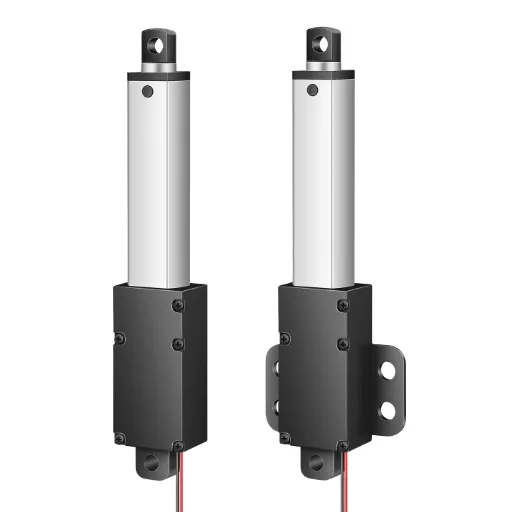
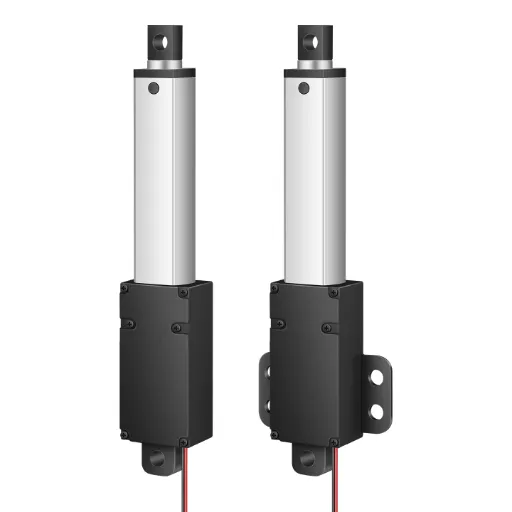
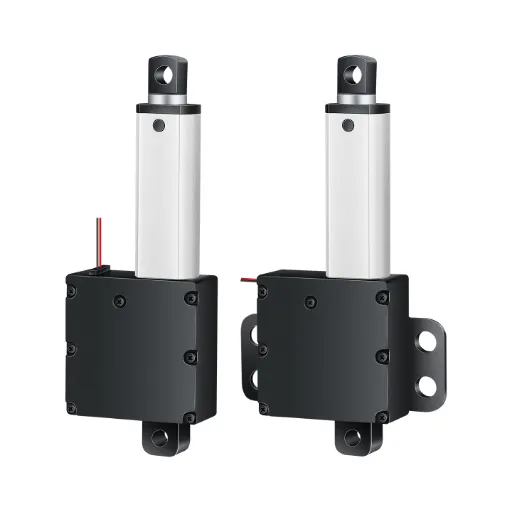
- Breaking Limits in Size and Thrust: From the ultra-micro series (IP70/IP800) designed specifically for confined spaces (like hidden cabinets or automotive tailgates), to the heavy-duty series (IP6000) capable of unleashing a massive 6000N (approx. 600 kg) of thrust in harsh industrial environments, Hoodland covers the entire spectrum of applications.
- Solving the Medical and Home “Noise Disaster”: Relying on its independent in-house mold workshop and a full suite of precision CNC carving equipment, Hoodland extensively utilizes highly customized, precision-molded POM gears paired with silent motors. This mastery suppresses stepper actuator running noise to a “whisper-quiet” <50dB. Combined with their proprietary control system, the start and stop of the actuator are buttery smooth, entirely eliminating equipment jitter.
- Boundless “Deep Customization”: Standard stroke length doesn’t fit? Hoodland can precisely customize it to your exact needs, such as exactly 235mm. Mounting holes don’t align? Because they own in-house CNC lathes and machining centers, they can directly precision-cut base plates, customize special metal mounting brackets, and tailor wiring schemes entirely around the client’s design.
- The Special-Duty Moat: For the world’s most dangerous industrial environments, Hoodland’s core products not only meet foundational IP65/IP66 ratings but have also achieved the highly coveted Ex ib IIA T6 Gb Explosion-Proof Certification. This level of safety engineering is exceedingly rare among standard actuator manufacturers.
Conclusion and TCO Calculation: Choose Rigorously Tested Integrated Solutions
When calculating costs, engineers often only look at the unit price of buying a motor. In reality, the hidden costs (labor, tuning cycles, mechanical alignment, and after-sales risks) of sourcing your own motor, couplings, and lead screws are astronomical. This is the classic Total Cost of Ownership (TCO) trap.
Rather than wasting engineering hours on complex “servo vs. stepper” integration, a smarter approach is to procure highly integrated Electric Linear Actuator systems straight from the factory. An excellent integrated solution means more than just “plug-and-play”; it guarantees system-level longevity.
For instance, every unit delivered by Hoodland boasts an industrial-grade design life of 30,000 cycles. Before leaving the factory, each actuator must undergo a mandatory 2-hour Aging Test and 100% manual inspection, fully complying with rigorous ISO9001, CE, and RoHS international standards.
Actionable Advice: Whether your project requires a heavy-duty, explosion-proof industrial actuator, a whisper-quiet medical-grade pushing system, or completely non-standard installation dimensions, do not compromise with off-the-shelf standard parts. Partner with a professional actuator manufacturer equipped with source mold-making capabilities and an annual production capacity exceeding one million units. Reach out to the Hoodland engineering team today to get your exclusive 3D drawings and customized quotation, and make linear motion integration easier than ever before.
Ready to Optimize Your Linear Motion Project?
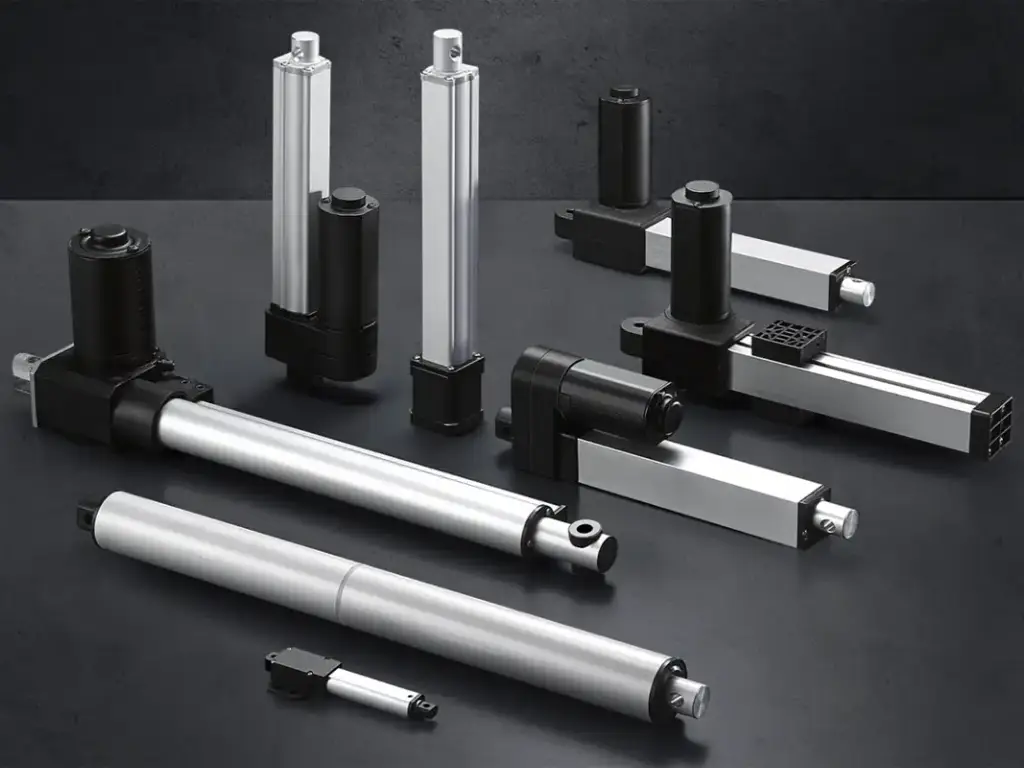
From medical-grade silence to 6000N heavy-duty thrust, Hoodland provides 100% customized solutions tailored to your unique installation needs.

 English
  Chinese