
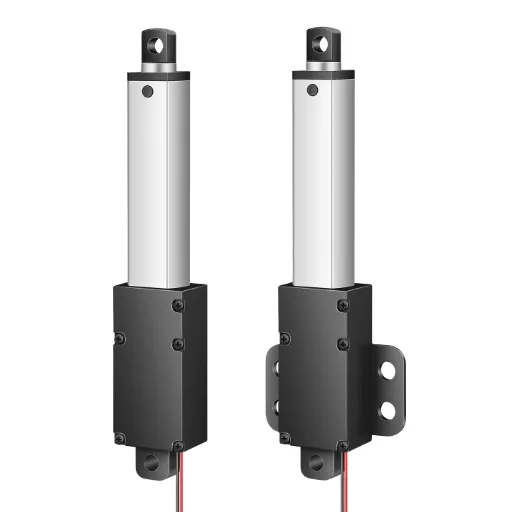
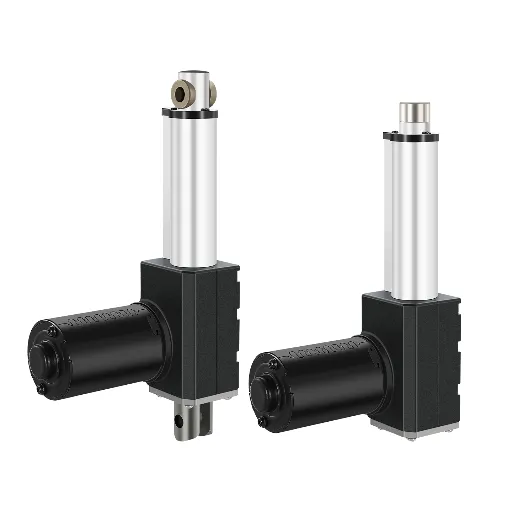
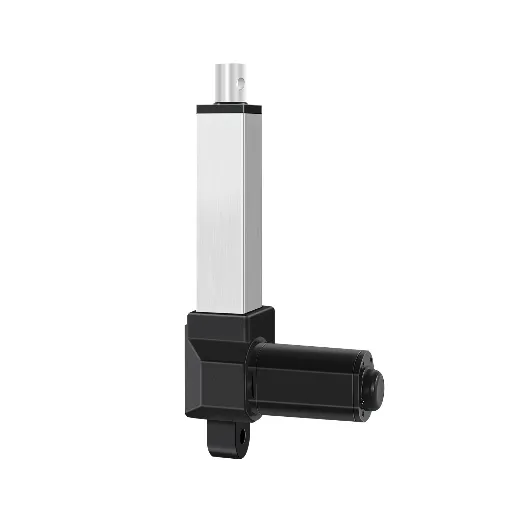
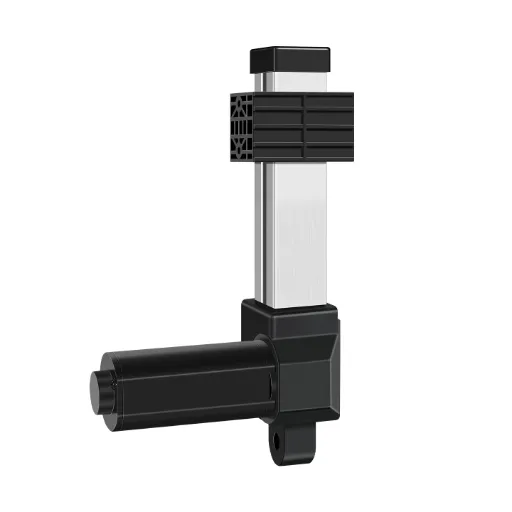
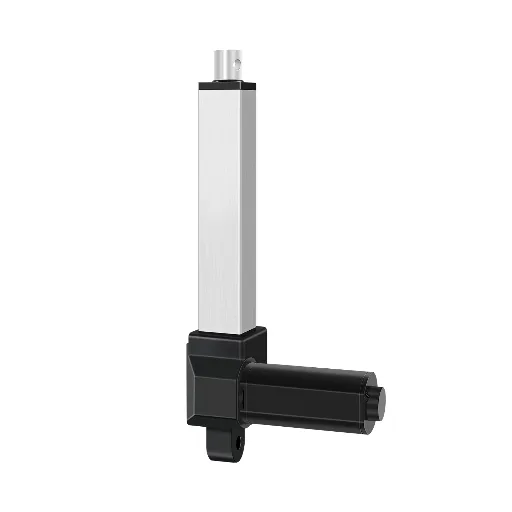
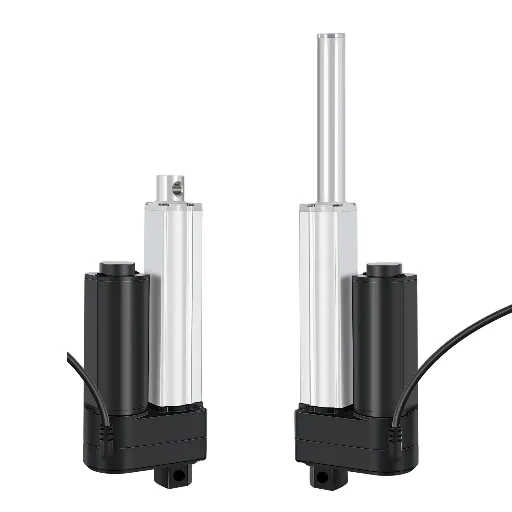
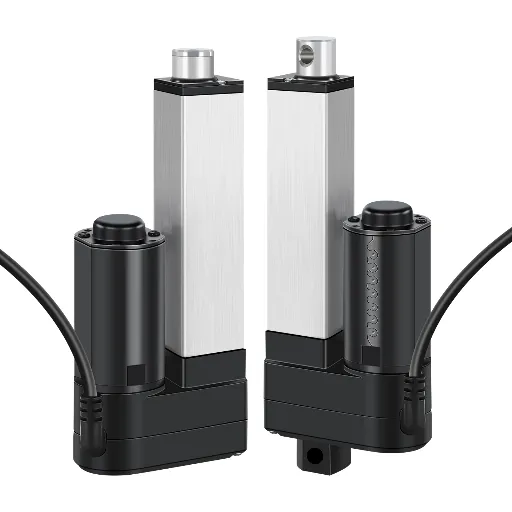
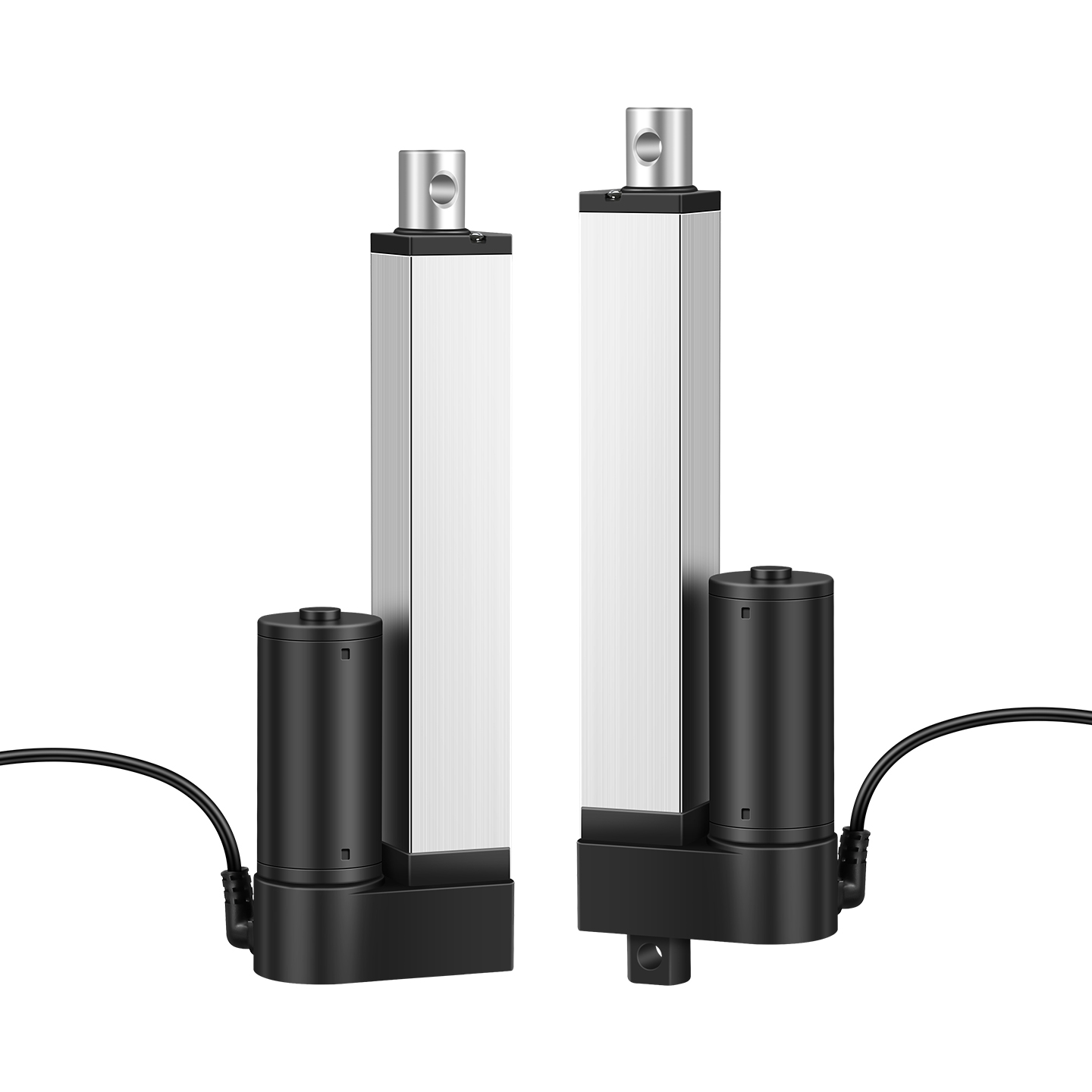
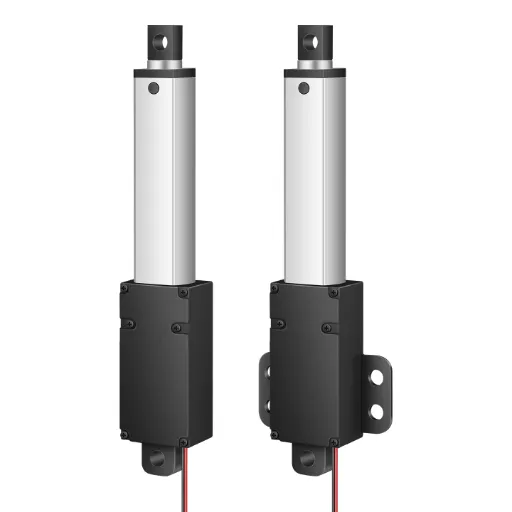
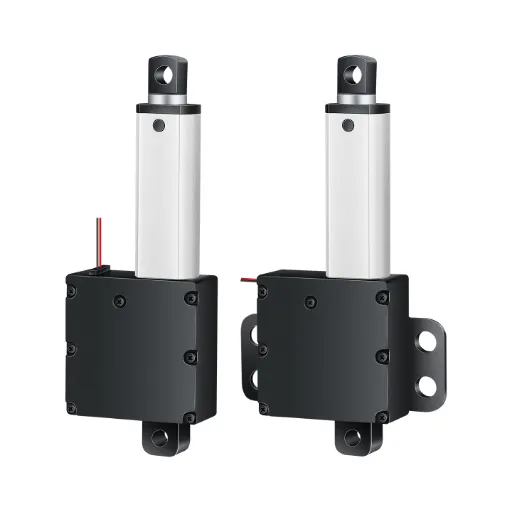
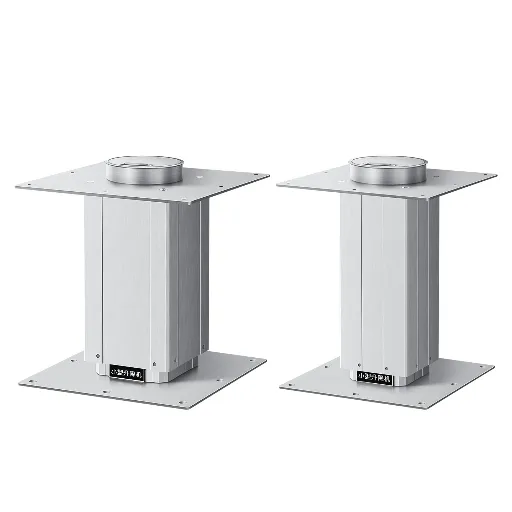
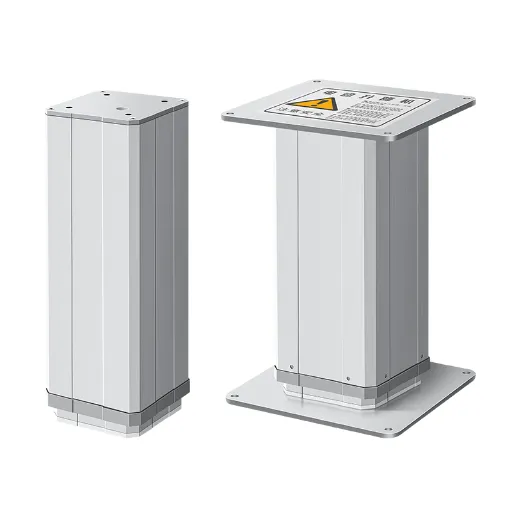
Yes, you can put a linear actuator on your bed — RV bunk, loft bed, trundle, or a queen platform that hides storage underneath. And no, you don’t need a 6,000 N monster to do it. Most DIY bed lift projects fail for the same three reasons, in the same order: the force rating was read wrong, the stroke was bought without measuring, and the speed was picked like it was a desk lift. This guide walks through the three numbers that actually decide whether your bed lift works, then the failures you’ll meet on the way, and finally the exact steps to buy the right unit the first time.
Bed Lift Basics: The Three Numbers That Decide Everything
Start with the direct answer: for most beds, this is a solved problem. RV owners have been raising queen bunks with a single 1,000 N-class actuator for years. Adjustable-bed manufacturers fit two or four smaller units under head and foot sections without drama. What separates a working install from a frustrating one is whether three numbers line up with your bed, not which brand you pick.
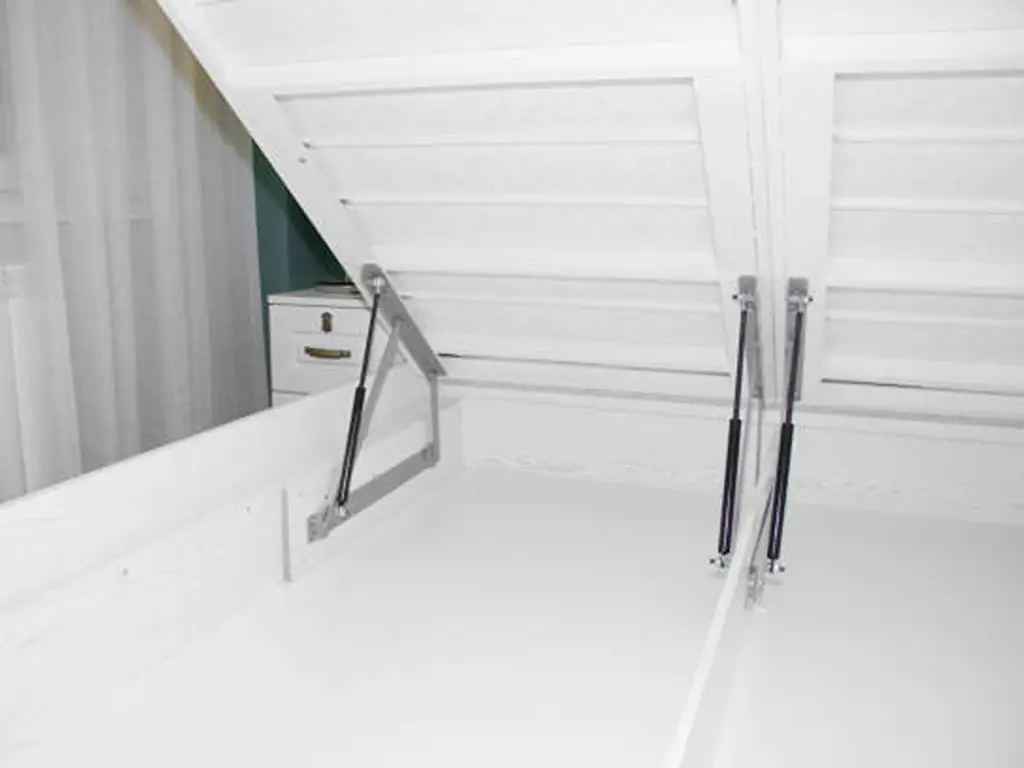
Number one: force. For a whole-platform lift (the entire bed rises vertically), a queen bed with mattress and bedding lands in the roughly 1,000–2,000 N range to lift. Take your best estimate of the platform weight (frame, mattress, topper, and whatever you store under it) and apply a safety factor of 1.5–2. That covers the awkward angles, the off-center load, and the day the kids pile on. For head-and-foot section lifts (the adjustable-bed style), each section is much lighter; even a 600 N-class unit is usually plenty.
Number two: closed length plus stroke, versus the space under your bed. This is the number everyone skips, and it is the one that decides whether the thing physically fits. A 16-inch-stroke actuator sounds like more lift, but if the unit is too long when fully closed, it simply will not fit under the bed. Measure the space first, then choose stroke and mounting distance to fit it.
Number three: speed. Beds want slow. A comfortable, safe bed lift moves at 4–8 mm/s: barely visible, no jerking, no noise. The same actuator family that lifts a desk at 20–40 mm/s is genuinely unpleasant under a bed. Fast is not a feature here.
As for cost: DIY builders report everything from under $100 (a single basic actuator with limit switches) to over $1,000 for multi-actuator synchronized setups. The spread is mostly brackets, controllers, and layout, not the actuator itself.
One clarification before we go further: “bed lift” in this article means raising the bed platform or sections electrically, not a patient hoist (patient lift), and not the bed-lift accessory you might find listed under golf cart parts. Different products, different specs entirely.
Force · Fit · Speed
Why Bed Lift Installations Fail: Symptoms You’ll Meet
Before the theory, here is the practical list: the symptoms people actually report in RV and tiny-house forums, with the cause each one usually points to.
| Symptom | Common cause | What to check first |
|---|---|---|
| Actuator stalls or stops halfway | Force under-rated for platform weight, or low voltage under load | Recompute weight with bedding and safety factor; check battery/PSU at load |
| Bought a longer stroke and it won’t fit under the bed | Closed length exceeded available space | Measure closed length + mounting distance before buying |
| Bed tilts or walks sideways while lifting | Single-point lift without guidance | Keep the original side supports or add guide rails |
| Loud, vibrating, or jerky motion | Speed class too fast for a bed | Specify 4–8 mm/s class, not desk speed |
| Actuator won’t retract or has no response | Wiring, limit switch, or controller issue | Check the limit-switch wiring and the control box output |
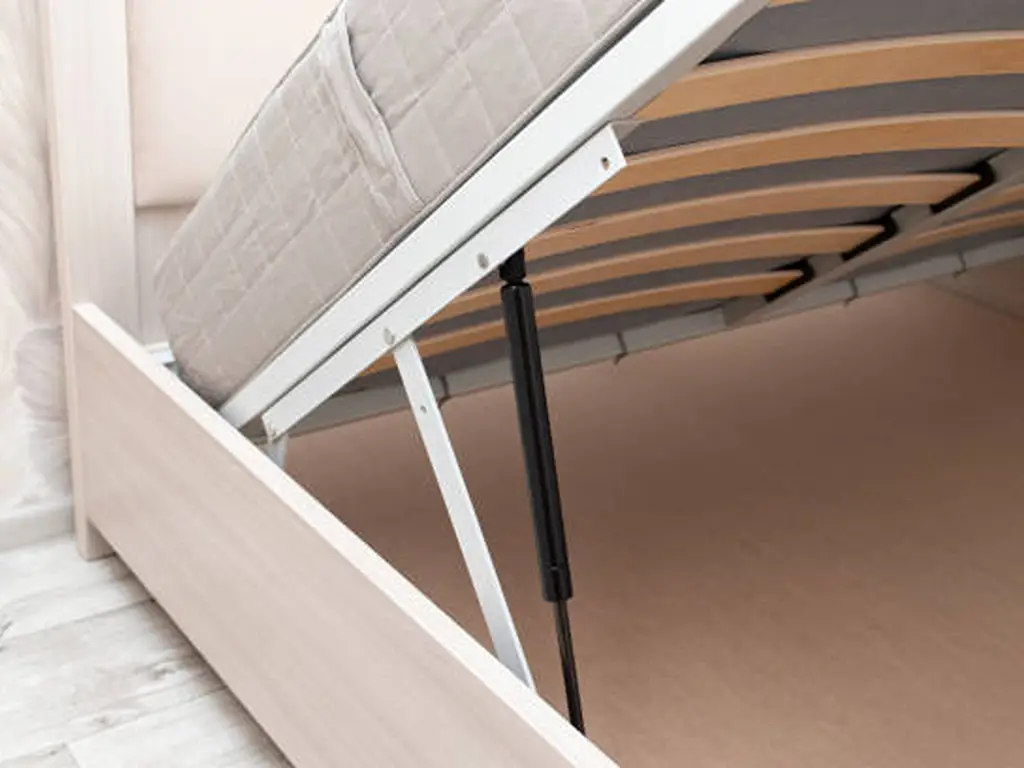
| Original gas struts popped off or wore out | Struts worn; often the reason people switch to an actuator | Replace struts, or replace the mechanism entirely |
Three things to notice about that list. First, every single failure is a spec-versus-scene mismatch, not a “bad product” story. Second, two of the six rows are pure geometry (fit, guidance), which is why measuring matters more than comparing brand specs. Third, the wiring row is where most people spend their weekend: limit switches that stop the actuator at both ends are not an optional extra on a bed lift. They are what keeps the mattress from pressing against the ceiling or the platform from grinding into the frame.
These symptoms are results. The causes live in how actuator specs are actually written, which is the next section.
How Bed Lift Specs Actually Work (and Where Ratings Lie)
The core reason bed lift numbers confuse people: spec sheets are written for the best case, and the gap between the best case and your bed is where failures come from. Three layers of that gap matter for a bed.
Three Kinds of Bed Lift — and Why the Type Comes First
There are three distinct lift types sold under the same “bed lift” umbrella, and they need different-sized equipment:
- Whole-platform lift. The entire bed rises and lowers vertically, typical for RV bunks, loft beds, and storage beds. The whole platform weight is on the actuator(s), strokes run long (200–400 mm and beyond), and one to four units share the load.
- Section articulation. The adjustable-bed style: head and foot sections tilt up. Each section is light, stroke is short (100–200 mm), and the big requirement is quiet operation at night.
- Slide-out (trundle) bed. The platform slides horizontally out from under another bed. Load is mostly horizontal, guidance matters more than raw force.
| Lift type | Typical force | Typical stroke | Fails when |
|---|---|---|---|
| Whole-platform (RV, loft, storage) | 1,000–2,000 N per unit, single or multiple | 200–400 mm | Undersized units, no guidance, single-point lift without side support |
| Section articulation (adjustable bed) | 600 N-class per section | 100–200 mm | Too fast, too loud, or duty cycle too short for nightly use |
| Slide-out (trundle) | Horizontal, lighter | 150–300 mm | Weak guides; actuator chosen by vertical thinking |
If you are reading the rest of this guide to pick one actuator for one bed, your first job is to answer which row you are in. Everything else follows from it.
Force: The Rating on the Box Is Not the Force You Get
Here is the single most useful fact in this article: rated force is measured at the slowest speed, and it falls off fast as speed rises.
A 2,500 N-class actuator’s published speed–force table reads: 2,500 N at 5 mm/s, 1,200 N at 10 mm/s, 600 N at 20 mm/s, and 300 N at 40 mm/s. Same unit, same day, same rating label — the force you actually get at a useful speed is a fraction of the headline number.
Force falls as speed rises
Published speed–force table — 2,500 N-class actuator, 24 V
This explains the two contradictions you’ll meet everywhere in this topic. First, marketplace listings advertising 4,000 N and 6,000 N actuators coexist with forum builds where a single 225 lb (≈1,000 N) unit comfortably raises a queen bunk. The forum unit runs slow, axially, and on an evenly loaded platform; the marketplace number is a no-load or low-load marketing figure. Second, “how much can a linear actuator lift?” has no single answer, because geometry decides. Mounting angle, center of gravity, and how many units share the load can swing the real lifting capability by a factor of two or three.
So the verification habit that saves you: never compare “max thrust” numbers. Compare speed–force tables.
Treat the number on the box as fiction.
If a seller can’t show force at your chosen speed, don’t buy the rating.
Stroke: The Number That Doesn’t Fit Is the One That Matters
The classic DIY failure is buying the longest stroke that sounds good. The actuator turns out to be too long to fit under the bed when closed. The dimension that decides fit is not stroke — it is closed length plus mounting distance versus the space available.
Measure three things before you buy: the vertical clearance under the bed when closed, the horizontal depth available when the bed is down, and the clearance the platform needs at full extension. Then pick a stroke that fits inside those numbers, not the longest one on offer. A 12-inch-stroke actuator that fits is worth ten 16-inch units that don’t.
The second variable is mounting distance, the spacing between the two mounting holes on the actuator. This is a customizable dimension on real actuator lines (along with cable length and connectors), and it is the difference between a clean install and a day of bracket fabrication. If your mounting points are unusual, look for a supplier that machines the mounting distance to your frame instead of forcing you to adapt to theirs.
When a Linear Actuator Bed Lift Is the Wrong Answer
For all its appeal, an electric bed lift is not the right answer in every situation. Working out which side you’re on is cheaper than discovering it with a half-finished install.
The Exclusion List: Five Situations to Think Twice
Heavy and continuous duty. Hospital-style beds, waterbeds, or a bed that cycles dozens of times a day push past what consumer actuators are built for. A standard DC actuator line is typically rated for around 10% duty: about two minutes of continuous running before it needs to rest. Nightly, occasional use is fine; constant cycling is not.
Medical or care contexts. If the lift is part of a care bed or rehabilitation equipment, it stops being a furniture project. A reputable manufacturer will not supply for that use without the paperwork. If you are building for care, buy from a supplier that treats it as a medical application, not from a general hobbyist listing.
Care beds are a different product category
Medical electrical equipment safety standards (in most markets, IEC 60601-1 and its family) govern design, testing, and documentation.
No power or no permission to modify. An RV with a 12 V system is the natural home for a 12 V actuator, but if the space is a rental or the layout can’t take a routed cable and a switch, the project may cost more in compromise than it saves in convenience.
Four-corner synchronized lifts. Lifting a heavy platform with four actuators means four units must move in lockstep. Without a synchronization controller, the platform twists, binds, and stalls. Sync controllers exist and work, but they are mandatory equipment for quad setups, not an optional upgrade. If your budget can’t include one, use fewer, bigger actuators instead.
No structural room. Some bed frames simply have nowhere to mount an actuator that doesn’t interfere with storage or supports. Measure first, and if there’s genuinely no clean mounting point, the honest answer may be a different mechanism.
When to Call a Manufacturer Instead of Doing It Yourself
The line between “buy a part” and “commission a solution” is narrower than most DIYers think. You are on the design side of that line when your mounting points are non-standard, or when you need custom mounting distance, cable length, or connectors; when you need a synchronized multi-actuator system; when you need certifications for care or commercial use; or when you need guaranteed lifespan and quiet operation. A sub-50 dB unit is the threshold where a bedroom stays quiet at night, and it is a spec you should be able to verify, not just hope for.
In that territory, the alternative isn’t a bigger Amazon order. It’s a manufacturer that will spec the actuator to your frame: stroke, mounting distance, speed–force match, and the wiring pre-fitted. The three mechanisms worth one sentence each before you decide: gas springs (fine for light assist, no control, no holding force), hydraulics (handles very heavy loads, but adds pumps, hoses, and maintenance), and motor-plus-linkage (works when space allows, more parts to fail). For most beds, a correctly sized electric actuator wins on simplicity, provided it’s correctly sized.
How to Choose the Right Bed Lift Actuator, Step by Step
When the choice is confirmed, the selection itself is a fixed sequence. Do these in order and you can’t buy the wrong unit.
Seven steps to the right unit
- 1Measure the space — closed-length clearance under the bed, depth, and full-extension clearance
- 2Fix your lift type — platform, section, or slide-out (use the type table above)
- 3Calculate force — platform weight × safety factor 1.5–2, divided by number of units
- 4Check the speed–force table — verify force at your chosen speed, never the max number
- 5Set voltage — 12 V for vehicle systems, 24 V is the mainstream for beds; controllers handle the rest
- 6Define mounting distance, cable length, connectors — as a spec, not an afterthought
- 7Verify — demand the published table and test data before you pay
Each step has a classic mistake attached. Skip step 1 and you are the person with a 16-inch actuator on the workbench and no bed space for it. Skip step 3 and the unit stalls at half height on the first night; mattress weight is almost always the forgotten kilogram. Skip step 4 and you’re comparing marketing numbers. Skip step 7 and you’re buying on faith.
One special case: replacing a failed actuator in an existing adjustable bed. Match three fields (voltage, stroke, and connector/interface) and a generic unit will usually stand in for an original part. Bedline actuators are largely 24 V with standardized mounting patterns, which is why replacement parts are widely available at a fraction of the branded price. Verify the three fields, and the swap is an afternoon’s work.
The last step is also the most important one: verification. Any serious actuator manufacturer can show you the speed–force table for the model you’re buying and the test data behind it, measured rather than estimated. If they can’t, the model number tells you nothing about what your bed will get.
Need a stroke, mounting distance, or a synchronized pair your catalog can’t cover? That’s a spec conversation, not a parts order.
Request the spec sheetWhat This Means If You Build Adjustable Beds and Medical Beds
If you’re a manufacturer reading this, building adjustable beds, care beds, or the mechanisms inside them, the consumer confusion you just read is not someone else’s problem. It is your after-sales cost in advance.
Here’s the chain, built entirely from what this article has already established. Consumer-side bed lift failures are dominated by force under-rating, stroke mis-fitting, and noise complaints. All three trace back to the same root: buying on peak ratings instead of speed–force tables. That means every bed you ship carries the same risk your customers’ DIY projects carry. Unless your sourcing uses the same verification discipline this guide recommends for a single actuator, that risk comes home as returns. The fixtures that come back under warranty rarely failed as “the motor broke.” They were specified at the wrong point on the curve: too fast for comfort, too weak at working speed, or too loud for a bedroom.
So the practical procurement rule, stated plainly: treat the headline thrust figure as a reference value. Treat the speed–force table, noise measurement, duty cycle, and cycle-life test data as the entry requirements. A supplier who cannot show you measured numbers at your operating speed is asking you to accept the same risk your customers accept from a marketplace listing.
The bed market runs on quiet, slow, verifiable motion. Spec it that way, and the after-sales conversation largely disappears.
When you put actuators into beds for a living, the specs you can verify matter more than the ones printed biggest. That’s why we publish speed–force tables for every Hoodland model, and why our custom stroke, mounting distance, and speed-matched options start with your frame, not our catalog — one unit or a thousand, with no minimum order. Send us your bed’s weight, lift type, and space, and we’ll send back the numbers you should be checking.
Get the speed–force table behind your bed lift
Send your bed’s weight, lift type, and space — we’ll return the numbers you should be checking, with a quote for one unit or a thousand.
Send your bed’s numbersReferences
- Jayco Owners Forum. “Has Anyone Used Linear Actuators to Raise/Lower Bed?” 2016. jaycoowners.com
- Net Tractor Talk. “RTV-900 Linear Actuator Bed Lift.” 2014. nettractortalk.com
- International Electrotechnical Commission. “IEC 60529 — Degrees of Protection Provided by Enclosures (IP Code).” iec.ch
 English
  Chinese