
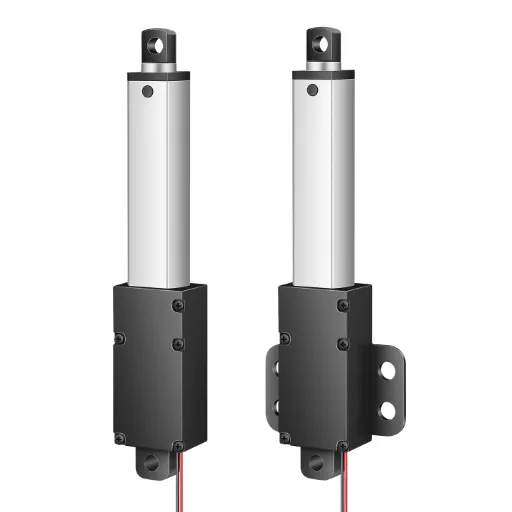
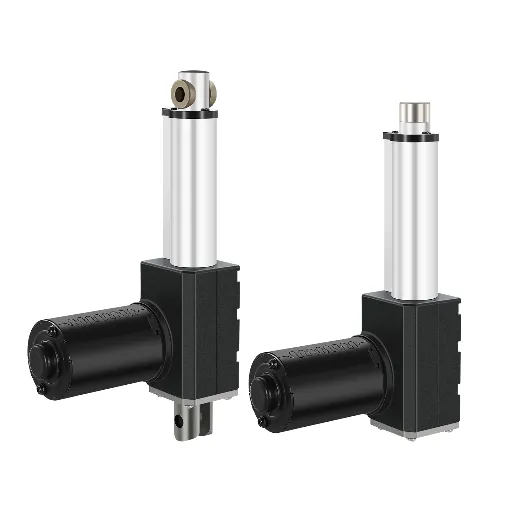
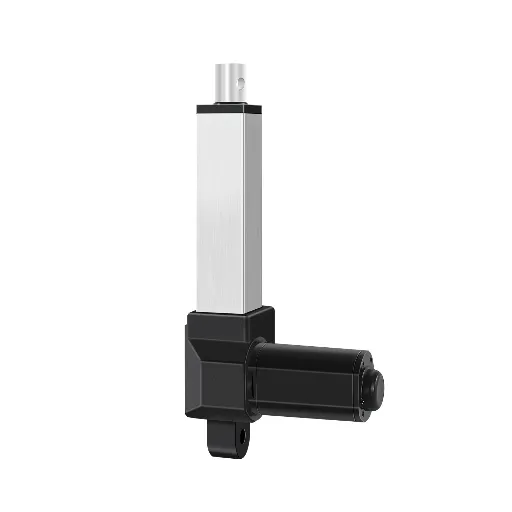
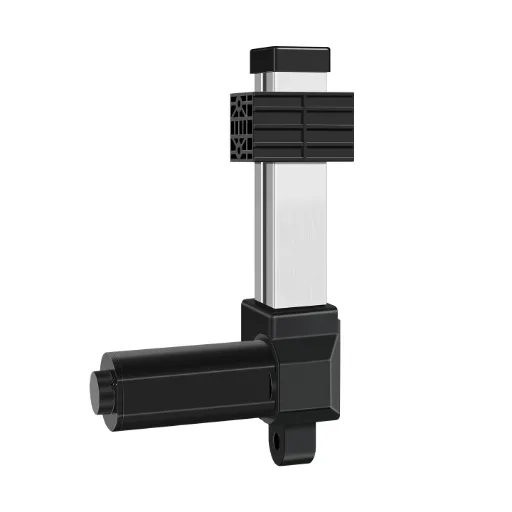
What Is a Pop-Up TV Lift Mechanism?
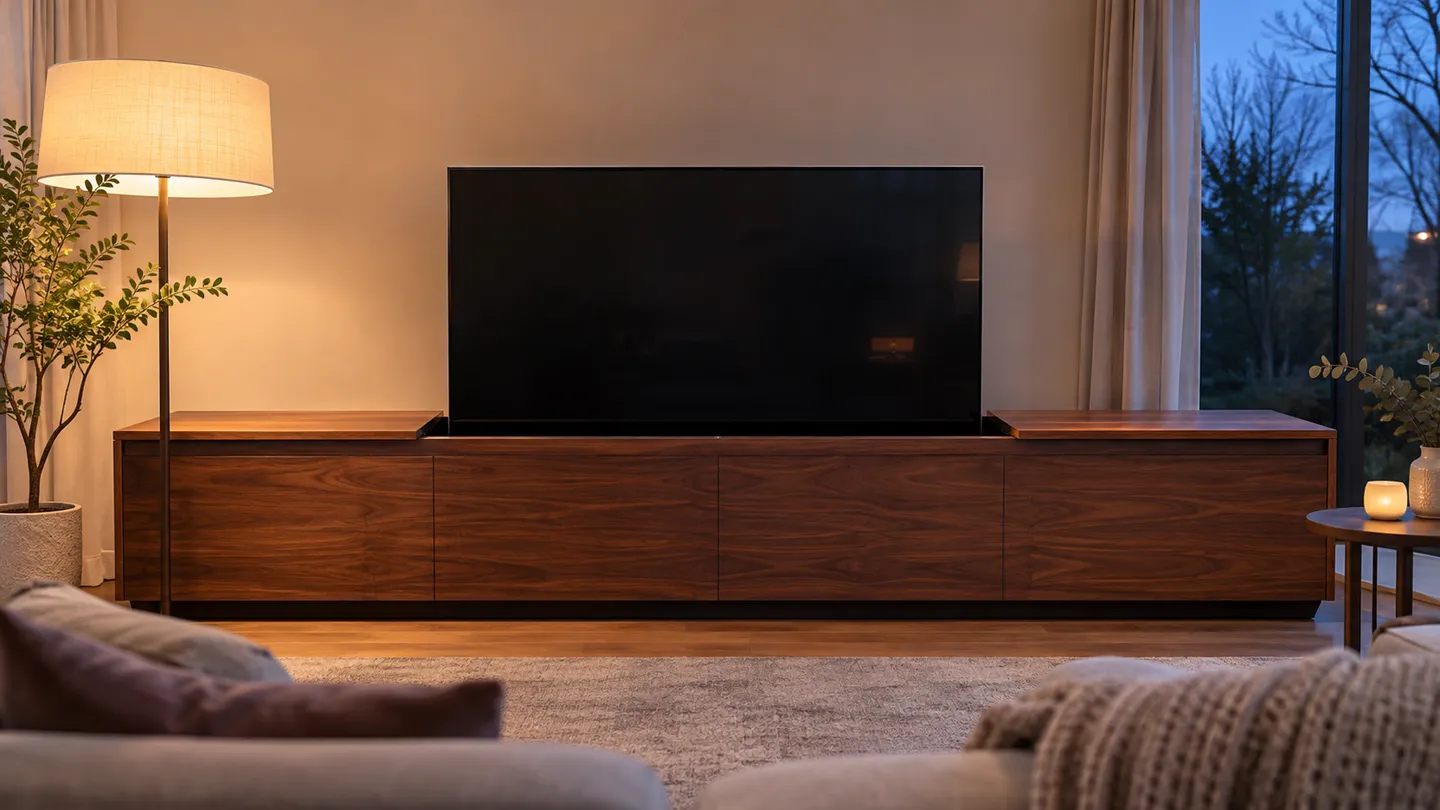
A hotel suite at dusk: the top of the media cabinet splits open, and a television rises out of the counter to eye level. When the movie ends it sinks back until the cabinet looks like plain furniture again. The part doing that work is a pop up TV lift mechanism. It has quietly become one of the most requested components in custom furniture, from bedroom footboards to conference tables.
Every pop up lift runs on the same core motion. An electric actuator or lifting column drives a mounting plate straight up a fixed vertical path. Press the remote and the plate carries the screen out of the cabinet; press again and it retracts out of sight. Built-in limit switches stop the travel at both ends, so the mechanism needs no judgment from the person using it.
One distinction keeps searches tangled: a TV lift mechanism is the machinery that goes inside furniture, not the finished cabinet itself. Retailers sell complete cabinets with a lift pre-installed, and builders construct their own cabinets around a mechanism, but both sit downstream of the same component. That component is what this guide is about.
Direction is a layout choice, not a structure choice. Pop-up lifts raise the screen out of a cabinet top or a bed footboard. Drop-down units lower a television from a ceiling or an overhead bulkhead. Flip-down designs fold a screen out of a ceiling pocket. The lifting principle underneath any of them is what decides cost, noise and reliability, and that is the next question.
You will find them in living-room media cabinets, bed footboards and conference tables that raise a display out of the desktop. They also run in RVs and boats, where a fixed wall mount wastes space (Inca TV Lifts, 2023).
Three Structure Principles Behind Every TV Lift
Ask for a TV lift mechanism and you will be offered three different machines. They all raise a screen vertically, but they generate the lift, carry side forces and collapse into different shapes. Picking the wrong principle is the most expensive mistake in this category, because everything downstream, from cabinet depth to noise, follows from it.
Three TV lift structures at a glance
| Structure | How it lifts | Where guidance comes from | Collapsed profile | Typical fit | Watch out for |
|---|---|---|---|---|---|
| Telescoping column | Lead screw inside nested aluminum tubes | The column itself | Tall and slim | Most screens and weights | Needs vertical space below the collapsed TV |
| Scissor (X-frame) | Hinged arms unfold and extend | The link pins | Short and shallow | Small to mid screens, lighter loads | Link slack grows into wobble |
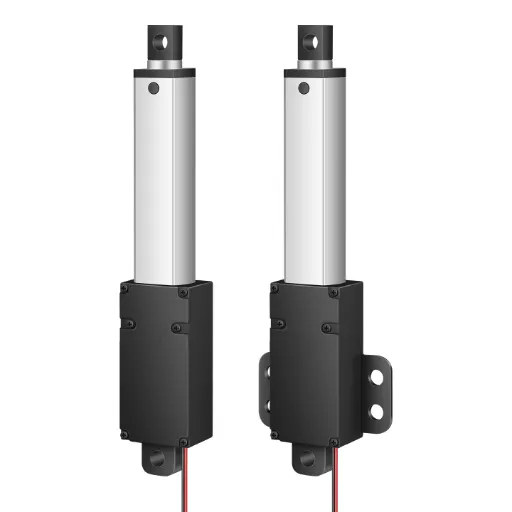
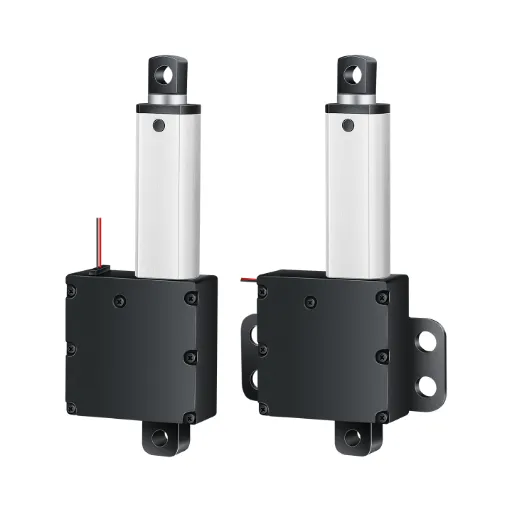
| Bare actuator + rails | One actuator pushes the plate | Your own rails | Depends on actuator | One-off builds, light screens | Actuator must never take side load |
Telescoping Column Lifts
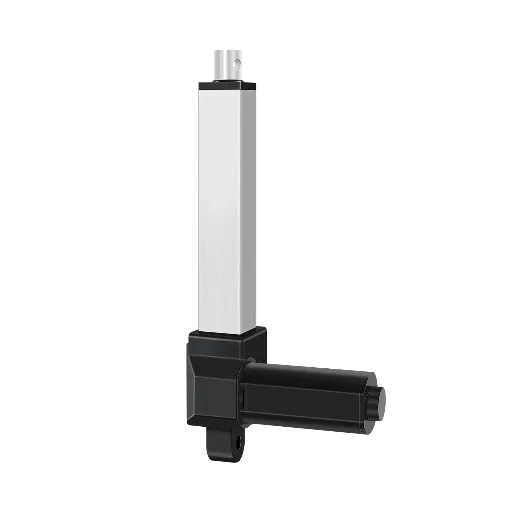
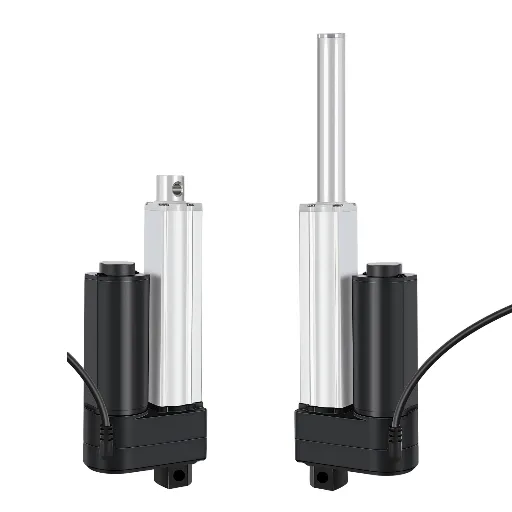
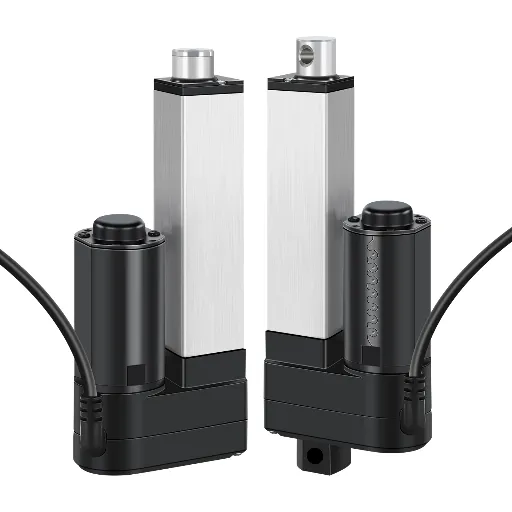
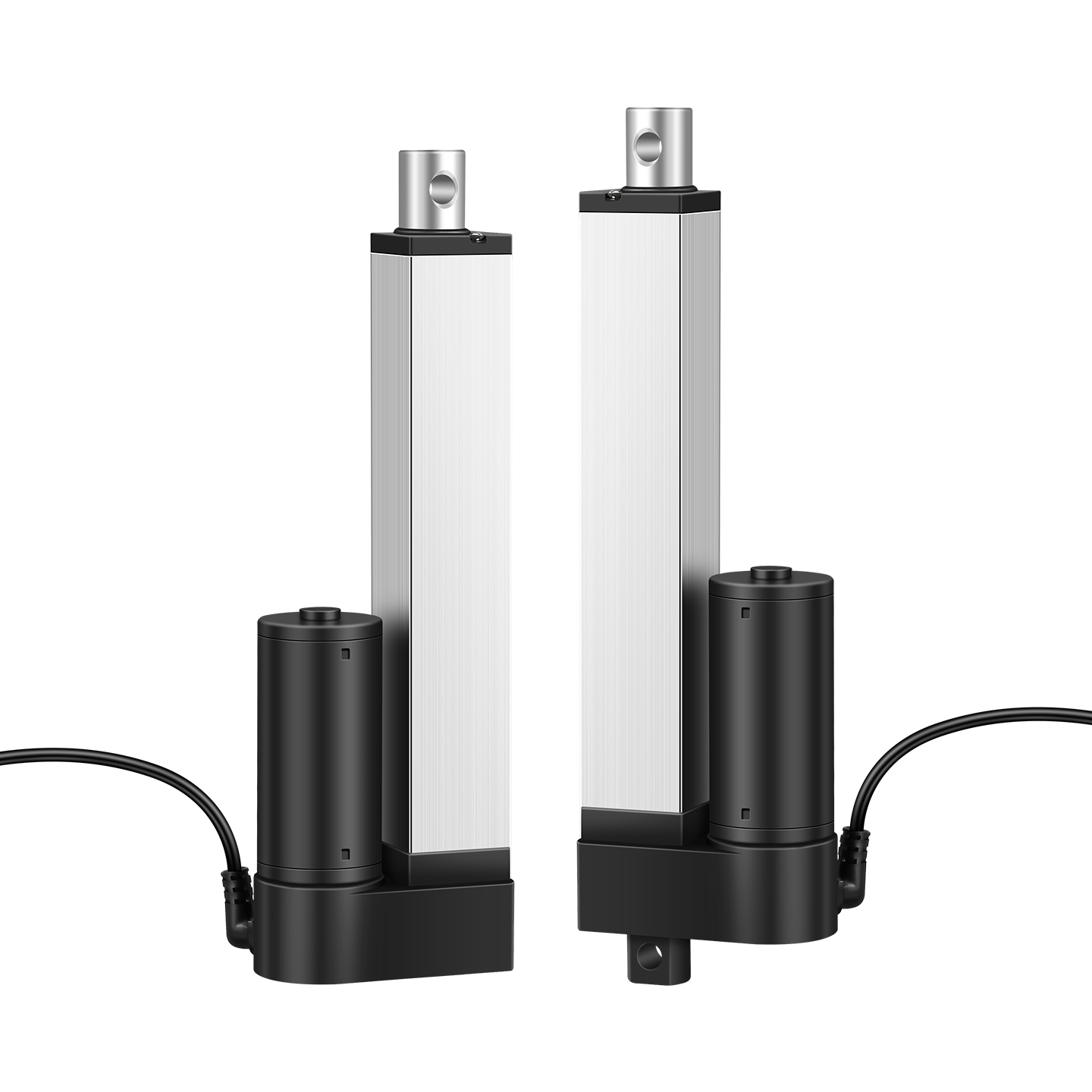
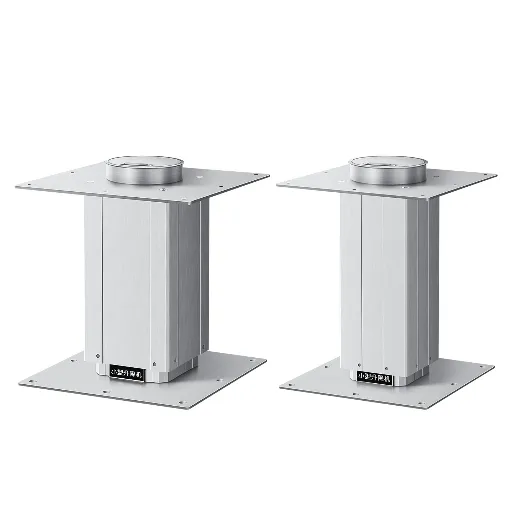
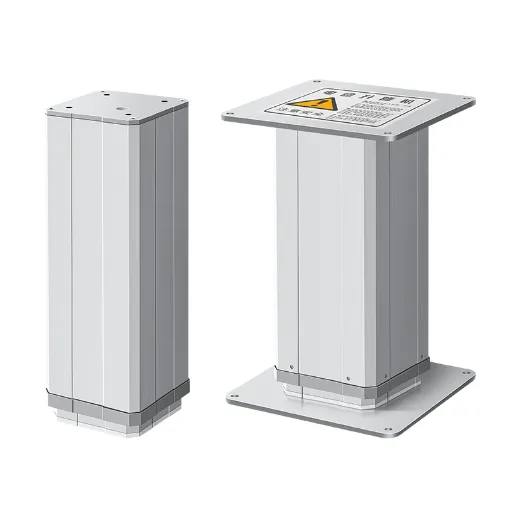
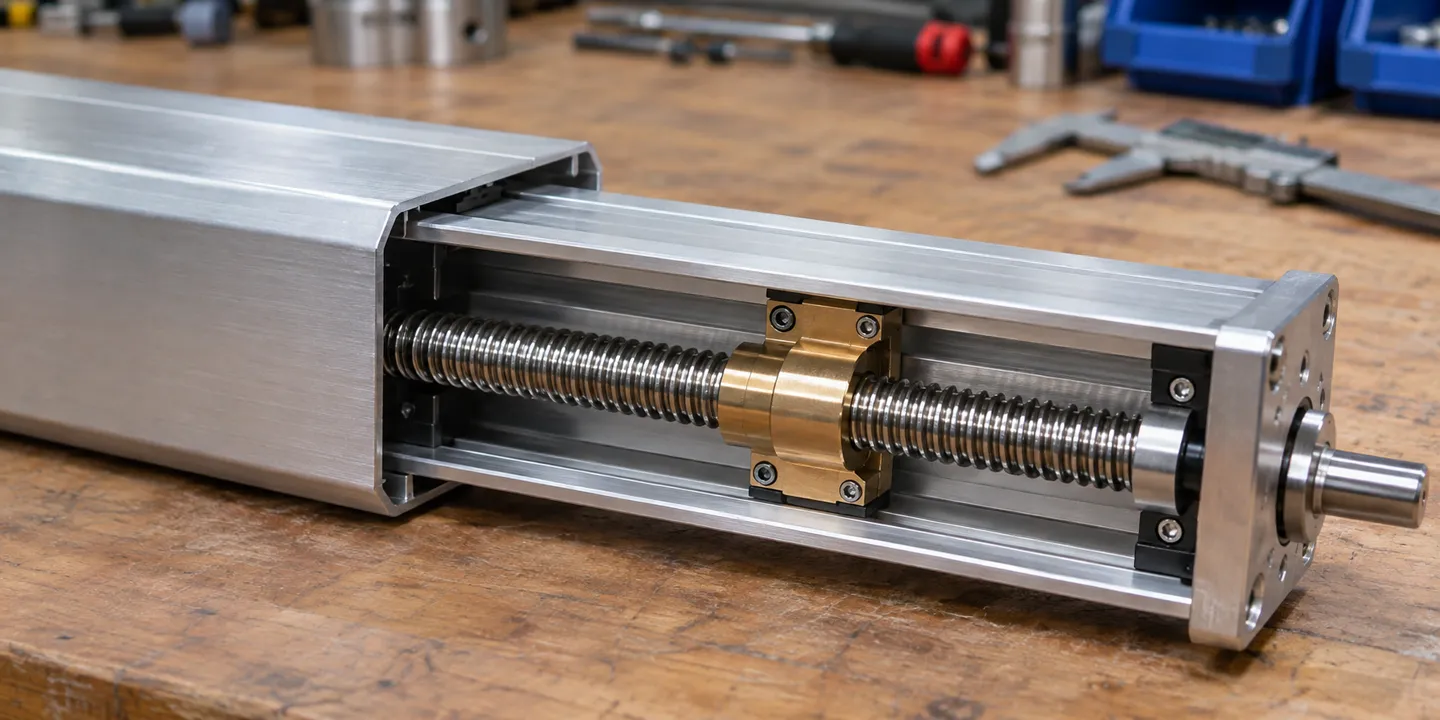
A telescoping column is the mainstream structure, and the reason is visible in its layout. The lifting screw runs inside a set of nested tubes, so the structure guides the television at every point of travel. Guidance and lifting live in the same housing, which is why column lifts stay stable under heavy screens and why commercial furniture lines standardize on them. The gear stage driving the screw also sets the noise floor: worm reductions run quietly enough for bedrooms, and columns with non-metal composite gear stages cut the whine further.
The trade-off is the collapsed profile. The column needs vertical space inside the cabinet below the resting television, so a very shallow cabinet may not close around one.
Scissor Lift Mechanisms
Scissor lifts trade internal depth for collapsed height. The X-frame folds nearly flat, so the mechanism hides under a shallow cabinet top where a column would not fit, then unfolds to deliver a long stroke from almost nothing. The compromises show up in two places. Link pins develop slack over years of use, and that slack becomes visible wobble at the top of travel. The moving arms also add their own weight, and weight asks more of the motor, which asks more of your noise budget. Scissor designs fit small to mid screens best; under a 65-inch panel they get tall, heavy and expensive quickly.
Bare Actuator Builds
The third structure is not a product but a decision: buy a single linear actuator and build the guidance yourself. A classic do-it-yourself path bolts an actuator to the back panel and lets it push the television plate directly. It is the cheapest way to move a light screen, and for a one-off build it can work well. The physics are unforgiving, though. An actuator is built to push and pull along its own axis only, and every sideways force has to go somewhere. Without rails or a column to take it, side load goes into the actuator’s extended shaft, which is where binding, wobble and early wear come from (Progressive Automations, 2026). Rack-and-pin and chain drives still turn up in old commercial installs, but they have mostly left current catalogs, so they deserve a sentence and no more.
The right-sizing rule
Capacity is not a bigger-is-better number
45 lb
the television it raises
Hundreds of pounds
of mechanism in some commercial installs
Excess capacity means a larger motor, a heavier mechanism and a noisier lift. Some commercial lifts weigh hundreds of pounds to raise a 45-pound television (Motivated Design, 2014).
Will It Fit: Sizing, Mounting and the Route Decision
For a single cabinet the question is whether it fits. For a product line the same question decides the product. Both get answered the same way, in order.
Step 1: Compute the Stroke You Actually Need
Stroke is the distance the mounting plate travels, and it is the first number to lock. Published advice conflicts here more than anywhere else in the category. One lift manufacturer states plainly that the stroke must exceed the height of the television, not its diagonal (Inca TV Lifts, 2023). A 2026 buying guide on a major marketplace, meanwhile, tells readers that a 65-inch TV clears a cabinet top with 400 mm of stroke, about 15.7 inches. That screen stands roughly 36 inches tall (Alibaba Electronics Buying Guides, 2026). Both cannot be right at once, and the gap between them is more than double.
The conflict dissolves once you decide how much of the screen stays hidden at rest. For a full-reveal pop-up, the screen has to rise until its bottom edge clears the cabinet opening. That lands the requirement near the full height of the television plus clearance. A partially hidden resting position, the assumption behind the 400 mm figure, needs roughly half that. Compute your own number instead of inheriting one. Take the screen height from the diagonal: a 16:9 screen stands about 0.49 times its diagonal. Add the reveal you want above the cabinet top. Add the lid thickness too, if the plate must carry it clear.
Stroke budget by screen size (full-reveal, 16:9)
| Screen size | Approx. screen height | Full-reveal stroke needed | Common catalog fit |
|---|---|---|---|
| 32 in | 16 in / 406 mm | from ~430 mm | fits |
| 55 in | 27 in / 686 mm | from ~720 mm | fits |
| 65 in | 32 in / 813 mm | from ~850 mm | fits at the top of consumer ranges |
| 75 in | 37 in / 940 mm | from ~970 mm | commercial territory |
Consumer catalog strokes run from about 25 to 36 inches (635 to 914 mm) (Firgelli Automations, 2020), which brackets most televisions through 75 inches on a full-reveal plan. That is also why the 400 mm figure fails a full-reveal 65-inch build: it matches roughly half the screen height, a partially hidden position, and the guide never says so.
Step 2: Check the Cabinet Geometry and Mounting
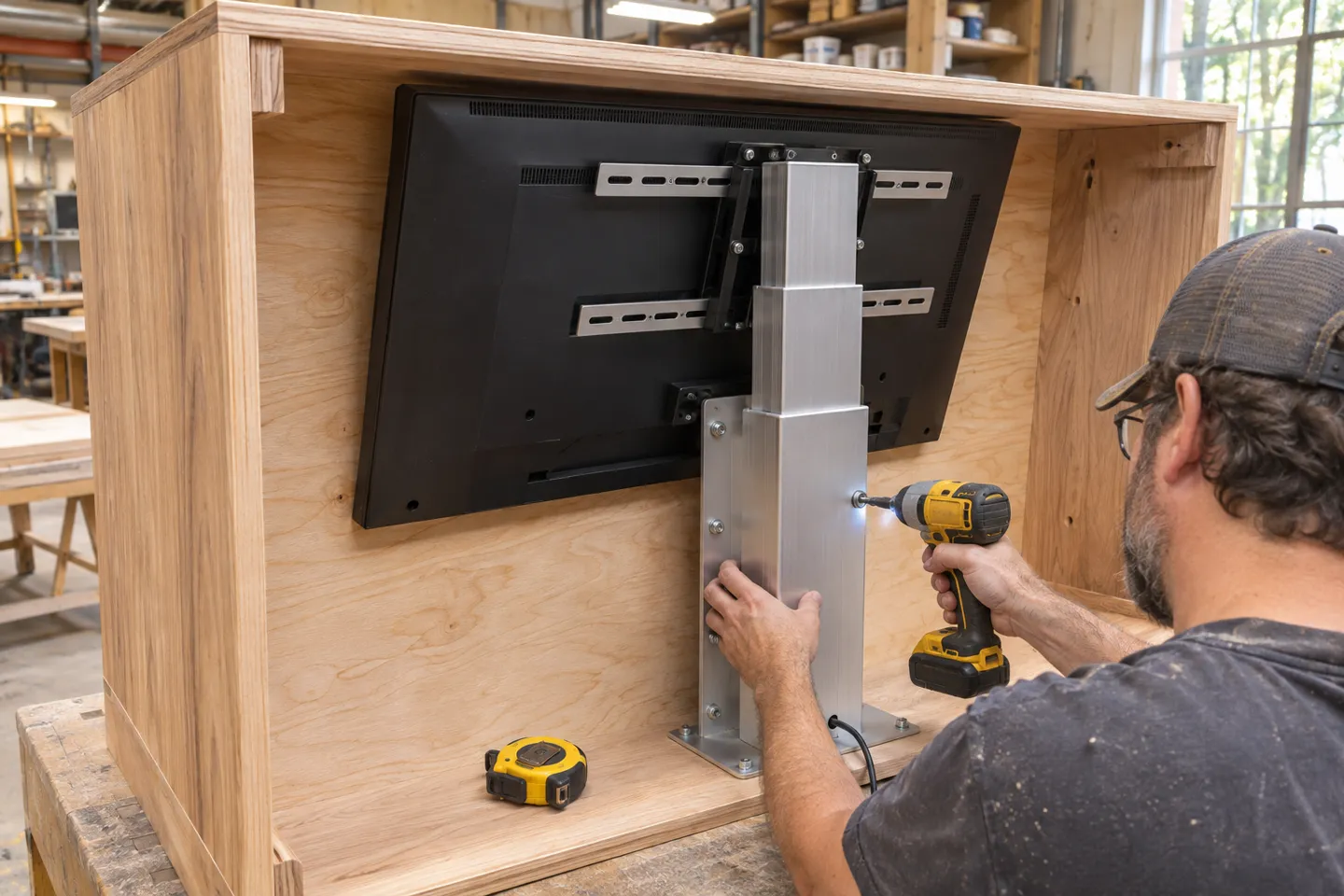
Depth stacks three things: the mechanism’s collapsed height, the television and its bracket, and cable slack. Add them before drawing the cabinet, because the mechanism usually wins the space argument. Mounting comes next. Rear-mount systems bolt to a flat vertical back panel and rest feet on the cabinet floor. The install is clean, but the back panel must be at least 3/4-inch plywood to carry the load. Floor-mount systems bolt the whole mechanism to the cabinet base and take irregular or curved cabinets, at the cost of a little extra vertical clearance (Firgelli Automations, 2020).
Past 55 inches, plan on cross-bracing or a doubled cabinet floor, because the whole assembly can pass 200 pounds (Firgelli Automations, 2020). Marine and RV builds add two rules of their own: everything bolts against vibration, and the power system is 12-volt DC, which narrows the mechanism list before price ever enters.
Step 3: Choose the Route and the Lid Strategy
Route decision matrix
| Route | Fits when | Switch away when |
|---|---|---|
| Bare actuator + self-built rails | Prototypes, single pieces, light screens, tight budgets | Production runs, screens past ~43 in, any client-facing install |
| Telescoping column (ready-made) | Production furniture, 32-75 in screens, quiet rooms | Extremely shallow cabinets that cannot take the collapsed height |
| Scissor lift (ready-made) | Shallow cabinets with small to mid screens | Heavy screens, long strokes, zero-wobble requirements |
The lid deserves its own decision. Flip-top lids must open before the plate arrives and close after it leaves, which means travel timing, prop arms or a sliding cover. Woodworking forums repeat one detail across builds: the last inch of travel slams the lid unless something slows it. Builders then add their own bumpers and dampers to fix a mechanism they already bought (Reddit, r/woodworking, 2022). Decide the lid strategy together with the mechanism, not after it.
The route decision also compounds. One market report values TV lift cabinets at USD 2.19 billion in 2024, heading to USD 4.44 billion by 2033, an 8.3% CAGR (Growth Market Reports, 2025). Whatever the exact figure is worth, the direction is clear: this mechanism is moving into more cabinet types, from bed footboards to conference tables to outdoor kitchens. A route chosen for one build gets copied into every product that follows it.
Before the route decision gets copied into every cabinet that follows, send Hoodland your cabinet dimensions and screen size, and an engineer will check the stroke math with you.
Send your cabinet dimensionsThe Numbers to Accept Before You Buy
Two mechanisms with the same stroke and the same load rating can behave nothing alike. The difference hides in four groups of numbers, and every one of them can be demanded on paper before money moves.
First, speed against load. Catalog speed figures are no-load speeds, and real speed falls as load rises, which is a property of the motor, not a defect. Honest manufacturers publish the full curve: a mid-size actuator might list 88 mm/s empty and around 5 mm/s at maximum load on the same datasheet. Work the arithmetic from your own screen. An 800 mm stroke at a loaded speed of 40 mm/s takes about 20 seconds; getting it under 15 seconds needs roughly 55 mm/s under load, not under nothing.
The loaded-speed reality check
88 mm/s
no-load catalog speed on a mid-size actuator
~5 mm/s
the same actuator at maximum load
20 s
an 800 mm stroke at 40 mm/s under load
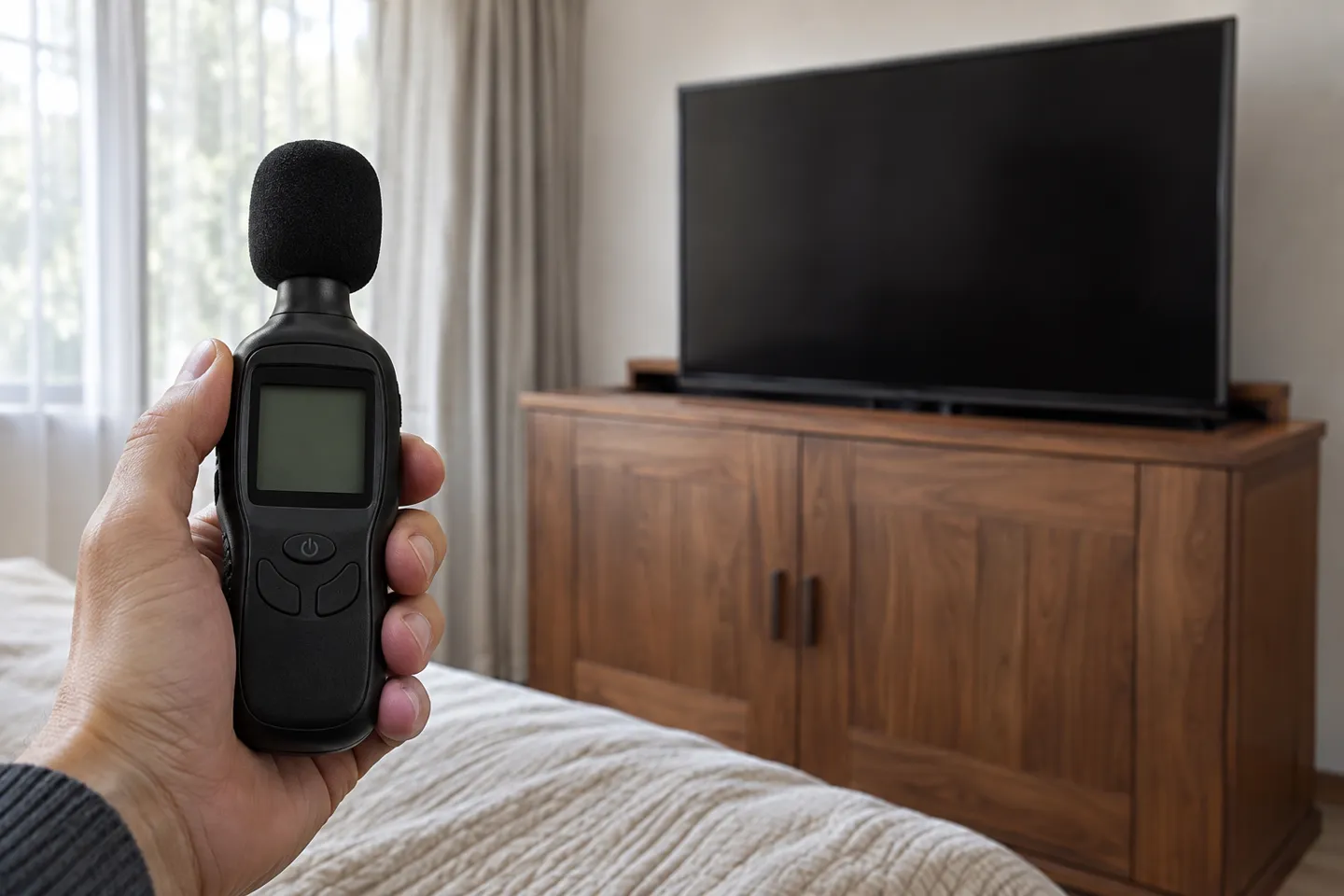
Second, noise in decibels, not adjectives. Residential furniture can reasonably demand under 50 dB measured at a meter, and the figure is checkable on arrival. The gear stage drives it: metal spur gears whine, composite non-metal stages run quieter, and worm reductions trade a little efficiency for silence.
Third, life and duty in industrial units. Actuators of this class typically carry duty limits around 10% with no more than two minutes of continuous run, and service lives measured in tens of thousands of cycles. Convert your furniture’s real usage into cycles per day and the requirement stops being abstract.
Fourth, control and feedback. Built-in limit switches are the baseline. Position feedback comes through a Hall sensor, a potentiometer or a 5-wire harness. It is what lets a cabinet remember heights and lets two columns raise one long desktop screen in sync. That sync is the standard request on conference tables. Anything that must talk to a home automation system needs that settled at ordering, not at install.
Acceptance list for a TV lift mechanism
| Acceptance item | Why it matters | What to demand from the supplier |
|---|---|---|
| Loaded speed curve | Nominal speed is no-load; the experience is loaded | Full speed-load table at your TV weight |
| Noise level | Adjectives are unverifiable | dB(A) figure at 1 m under load |
| Cycle life and duty | Predicts the warranty bill | Rated cycles and duty cycle in writing |
| Feedback and control | Sync, memory positions, automation | Limit switch type, feedback type, control protocol |
| Right-sized capacity | Oversizing costs noise and power | Thrust sized to load plus a sane margin |
One boundary runs across all five rows: size the mechanism to the load with a reasonable margin, not to the biggest number on the shelf. Oversized capacity buys a bigger motor, a heavier unit and more noise for a television that never needed it.
Failure Modes to Design Out Early
Field failures in this category follow a pattern, and nearly all of it is visible before production if you know where to look.
Controllers fail before mechanisms do. The recurring story in home automation forums is a ten-year-old lift cabinet that still moves smoothly but no longer answers its remote (Reddit, r/homeautomation, 2024). The workarounds people attempt are power-cycling routines around a control box nobody can replace. Remote receivers age the same way (Reddit, r/fixit, 2024). The design action is direct: make the control box a replaceable module with a documented connector, not a sealed unit wired into the mechanism.
Lids are the second chronic offender. Builders report the same collision at the end of travel and the same improvised fixes, foam on a dowel, spring props, sliding covers. If the product has a lid, deceleration in the final stretch of travel is a specification, not an installation detail.
Television generations drift. A lift box sized around one screen can be slightly too short for the replacement bought three years later. Boat owners meet this mismatch when a new television no longer fits the opening the old one left. Specify stroke with a margin for the next screen size up, not only for the one shipping today.
Side play accumulates. Guidance parts wear, and a build that relied on the actuator to carry side loads shows it first as wobble at the top of travel. Guidance elements that can be replaced with the cabinet closed turn a wear item into maintenance instead of a warranty return.
Pre-production check
- Control box replaceable as a module with documented connector
- Deceleration specified for the final stretch of travel
- Stroke sized one screen size up
- Guidance elements serviceable with the cabinet closed
- Noise and loaded speed verified against the acceptance table
What This Means for Furniture Manufacturers
Read the earlier sections as a purchasing standard and the category reorganizes itself. The market report behind the 8.3% CAGR figure describes demand spreading into more cabinet types. Every new cabinet type then copies the mechanism decision made for the first one. The five acceptance rows cost nothing to put into a supplier questionnaire: loaded speed, decibels, cycle life, feedback and right-sized capacity. Those five lines settle most quality arguments before a sample exists.
The route fork resolves on volume. A bare actuator with self-built guidance stays legitimate for prototypes and single pieces, where engineering hours cost less than the mechanism price. Once a cabinet enters production, the guided column structure takes over. The wobble and lid complaints documented above stop being one builder’s problem and become a batch of warranty claims. Scissor units keep their niche where cabinet depth is the binding constraint and the screen is small.
The right-sizing boundary matters more at volume than at a single build, for the plain reason that an oversized mechanism repeats in every unit. Capacity matched to load with a sane margin is quieter, lighter and cheaper per cabinet.
We supply both routes at Hoodland: guided lifting columns such as the IPT1100 for production cabinets, and linear actuators with matching in-house developed controllers for prototype work. Speed-load data is published for every model, so the acceptance list above can be checked line by line. Our custom lift mechanisms take custom stroke lengths from 25 to 2000 mm, custom panels and mounting distances, all with no minimum order. The mold and injection workshops that make the tooling sit behind the same assembly line.
Specify a lift that passes your acceptance list
Hoodland supplies guided lifting columns and matched in-house controllers, publishes speed-load data for every model, and cuts custom strokes from 25 to 2000 mm with no minimum order.
Request your custom lift specificationReferences
- Alibaba Electronics Buying Guides. “TV Lift Mechanism Guide: How to Choose the Right One.” 2026. https://electronics.alibaba.com/buyingguides/tv-lift-mechanism-guide-how-to-choose-right
- Growth Market Reports. “TV Lift Cabinet Market Size, Share & Growth.” 2025. https://growthmarketreports.com/report/tv-lift-cabinet-market
- Reddit r/homeautomation. “Need some assistance in tv lift controller.” 2024. https://www.reddit.com/r/homeautomation/comments/1bh4xk8/need_some_assistance_in_tv_lift_controller/
- Reddit r/fixit. “Tv lift remote control system.” 2024. https://www.reddit.com/r/fixit/comments/1b3853r/tv_lift_remote_control_system/
- Reddit r/woodworking. “Building a TV lift credenza and can’t decide how to…” 2022. https://www.reddit.com/r/woodworking/comments/y579cj/building_a_tv_lift_credenza_and_cant_decide_how/

 English
 Chinese