
What an Actuator Does in an IoT System
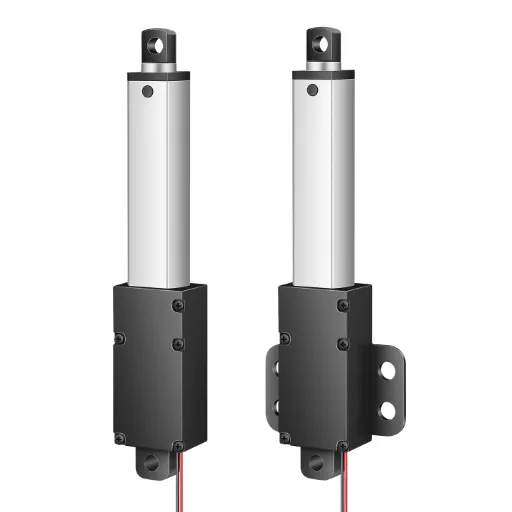
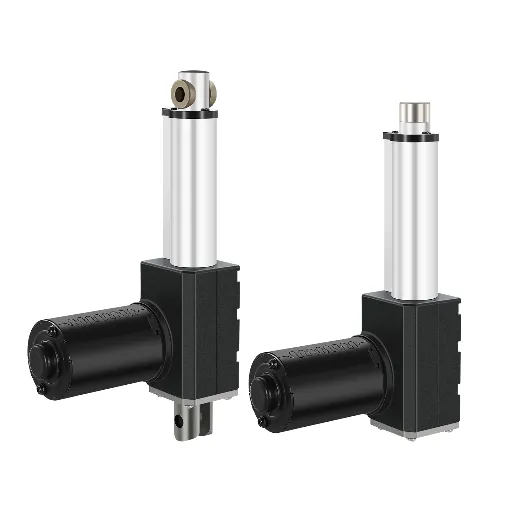
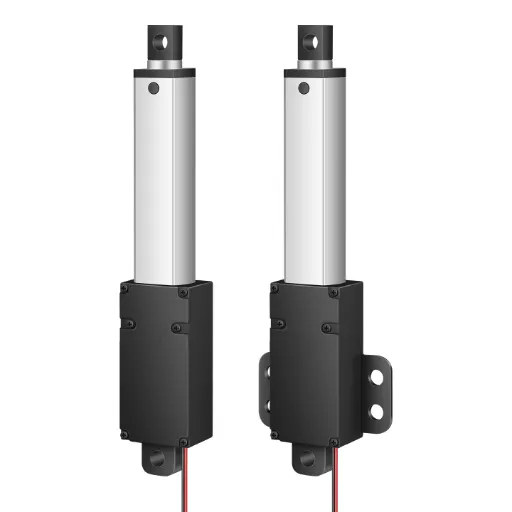
A connected device earns its name when it moves something. A smart window that never opens is just a sensor with a lid. The component that turns a command from software into a physical push, pull, lift, or twist is the actuator, and it sits at the very end of every IoT chain.
The division of labor is easy to state. Sensors read the world and convert temperature, position, light, or pressure into data. Controllers and cloud logic compare that data against rules and make a decision. The actuator converts that decision back into a physical action on the world.
Picture a greenhouse vent. A sensor reports 32°C inside. The controller decides the crop is too warm. A linear actuator lifts the window 15 centimeters, and the temperature falls. Sensor, decision, actuator: one loop, three jobs.

That loop explains why the actuator is often called the last centimeter of IoT. Data and connectivity get the attention, but nothing happens until something moves. Pick the wrong actuator and the smartest system on earth still sits still.
The actuator is also where digital constraints become physical ones. Software cares about bits, watts, and milliseconds. The actuator cares about newtons, millimeters, heat, and dust. Every selection problem in this guide comes from that translation.
The Power-Source Axis: Every Actuator Type on One Map
Ask how many types of actuators exist and you will get different numbers from different sources. Some say four, some say six, one popular list says seven. The counts disagree because each source draws the boundary in a different place.
There is a cleaner way to hold all of this. Every actuator answers one question: where does the energy come from? That question is the axis, and the familiar categories are just its values. Learn the axis and you can classify any actuator you will ever meet, including ones not invented yet.
| Power source | What it is | Typical IoT role |
|---|---|---|
| Hydraulic | Pressurized fluid pushes a piston through a cylinder | Extreme force in fixed plants, not battery devices |
| Pneumatic | Compressed air moves a piston or vane | Fast, cheap motion in factories that already run an air line |
| Electric | A motor or coil, driven by electronics, produces the motion | The default in connected devices; runs on the same power and logic as the rest of the system |
| Thermal | Heat expands a wax pellet or shape-memory alloy | Slow, small motions like valve trims |
| Magnetic | An electromagnet pulls an armature directly | Relays, latches, short sharp strokes |
| Mechanical | Gears, screws, or springs store and redirect force | The transmission inside other actuators, occasionally the whole device |
Why do the counts differ? Mechanical actuation is often folded into the electric row, since screws and gears are how electric actuators actually work. Some modern lists add a seventh value for soft actuators, which use supercoiled polymer or dielectric elastomer films to flex like muscle. They remain laboratory and research hardware, so one line here completes the map.
Motion output is a second axis, and it is worth separating in your head. Rotary actuators turn a shaft. Linear actuators push or pull in a straight line. A rotary motor becomes a linear one through a lead screw, a rack, or a linkage. When a catalog says linear versus rotary, that is the output axis, not the power axis. Keep the two axes apart and every actuator in IoT literature files itself cleanly.
IoT Constraints Decide: Why Electric Wins, and When It Doesn’t
Power and Duty Cycle: The First Filter
A battery-powered device cannot carry an air compressor. That single sentence removes pneumatic and hydraulic from most connected products, and it removes them for good reasons. Compressors and hydraulic packs need mains power, they need maintenance, and neither fits inside a wall-mounted enclosure or a hand-held instrument.
What remains is electric, but electric on a budget, and the budget is harsher than most people expect. Consider the classic beginner build: a 12 V linear actuator driven from a small 3.3 V lithium board through a boost converter. One reply in a builders’ thread on r/esp32 put the arithmetic plainly. A 3.3 V supply delivering 1 A gives you roughly 0.275 A at 12 V through a boost converter, before any losses.
The power-budget arithmetic
1 A
at 3.3 V
your electronics budget
≈ 0.275 A
at 12 V
what the actuator gets, before losses
A boost converter trades volts for amps. The wattage never grows.
The thread starter wanted the setup to be light, safe, and USB-C rechargeable, and every reply pushed back on one axis or another. That is what a power constraint does: it is not a preference, it is arithmetic.
Heat adds the second constraint. Brushed DC actuators, the most common kind in IoT-friendly price ranges, are typically specified at a 10-20% duty cycle because the windings cannot shed heat continuously (Wevolver, 2026). A 20% rating usually means two minutes of running inside a ten-minute window (Firgelli Automations, 2026). A gate that cycles every thirty seconds will cook an actuator whose datasheet assumes a few moves per hour.
Controllability and Feedback: Why IoT Leans Electric
Electric actuators speak the same language as the rest of the system. A microcontroller, an H-bridge, and a PWM signal are off-the-shelf parts. Reversing direction is a logic level. Speed is a duty cycle. Current draw is measurable, which means stall conditions can be detected in software.
Position feedback closes the loop. A potentiometer or Hall sensor inside the actuator reports where the rod actually is, not where the firmware hopes it is. That distinction is what makes memory positions, multi-actuator synchronization, and position-critical motion possible at all. Fluid power can be electronically controlled too. But every step toward precision costs proportional valves, sensors, and conditioning hardware. That is precisely the cost a connected device was trying to avoid.
The market has already voted on this. Growth at that scale does not mean every actuator sold is electric, but it tells you where the volume of new designs is heading.
Where the volume is heading
52.7B USD
global linear actuator market, 2023
94.3B USD
projected by 2030
Automation and connected equipment keep pulling the trajectory upward. Source: Grand View Research, 2024.
When Pneumatic and Hydraulic Still Win
Two boundaries keep the fluid-power rows of the map alive. First, factories that already run compressed air should use it. Shop air sits around 6 to 8 bar in most plants (Abac Air Compressors, 2026). A pneumatic cylinder fed from that existing line is cheaper, faster, and more abuse-tolerant than any electric alternative. Second, force density still belongs to hydraulics. When a machine needs enormous, smooth, sustained force, no battery-powered electric actuator competes with a hydraulic ram.

The matrix below is the whole decision in one view. Find your scenario in the middle column, then read the right column before you commit.
| Actuator type | Fits these IoT scenarios | Fails or loses when |
|---|---|---|
| Electric, coil-driven (solenoid, relay) | Latches, locks, valves, any short sharp stroke | Long strokes, sustained holding under load, heat-sensitive enclosures |
| Electric, motor with lead screw | Doors, hatches, lifts, quiet medical and home devices | Very high speeds, duty cycles beyond roughly 20%, force beyond a few thousand newtons |
| Pneumatic | Factory automation on an existing air line, high-cycle gating | Battery devices, fine positioning, any site without an air supply |
| Hydraulic | Fixed plants needing extreme force density | Anything portable, anything maintenance-light |
| Thermal (wax, SMA) | Slow valve trims, tiny self-contained motions | Speed, force, position feedback |
| Soft actuators (research) | Gripping delicate objects in labs | Commercial reliability, field service |
One pattern sits under every row. Electric wins wherever the device must carry its own power, and loses wherever a plant already carries the infrastructure for it. That is the constraint logic of the whole guide in a single sentence.
Inside Electric: Motion, Mechanisms, Feedback and Interfaces
Linear or Rotary First
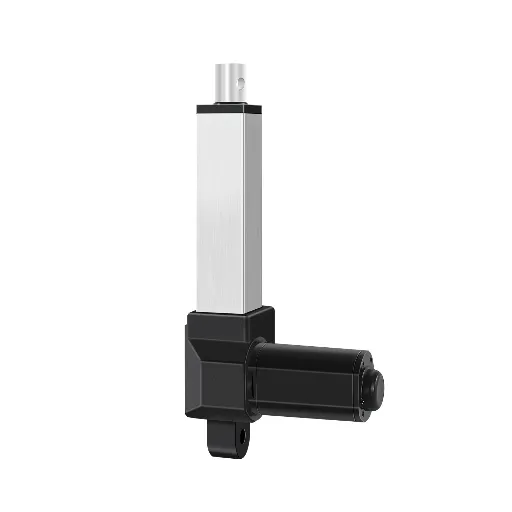
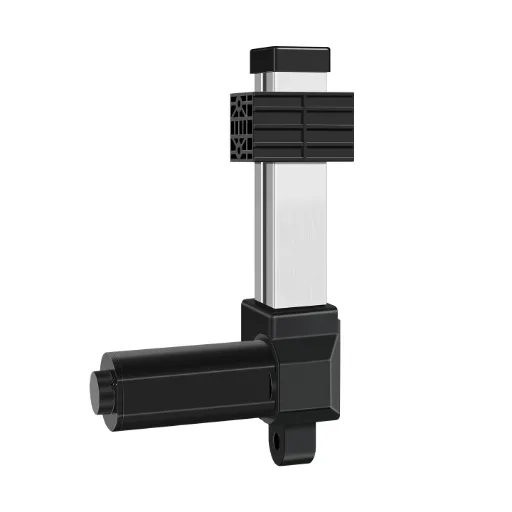
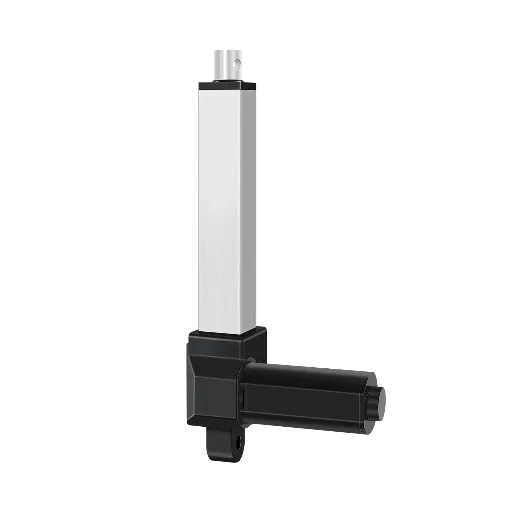
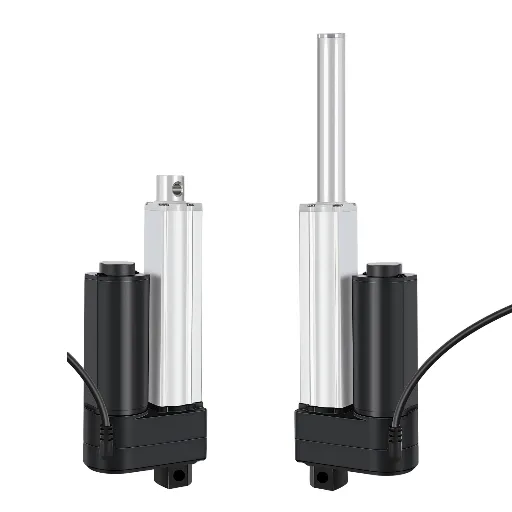
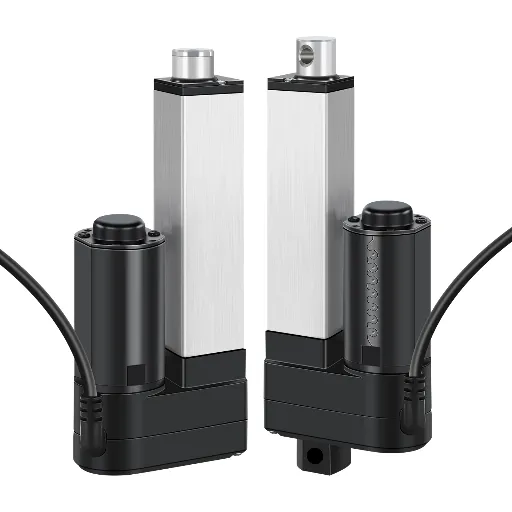
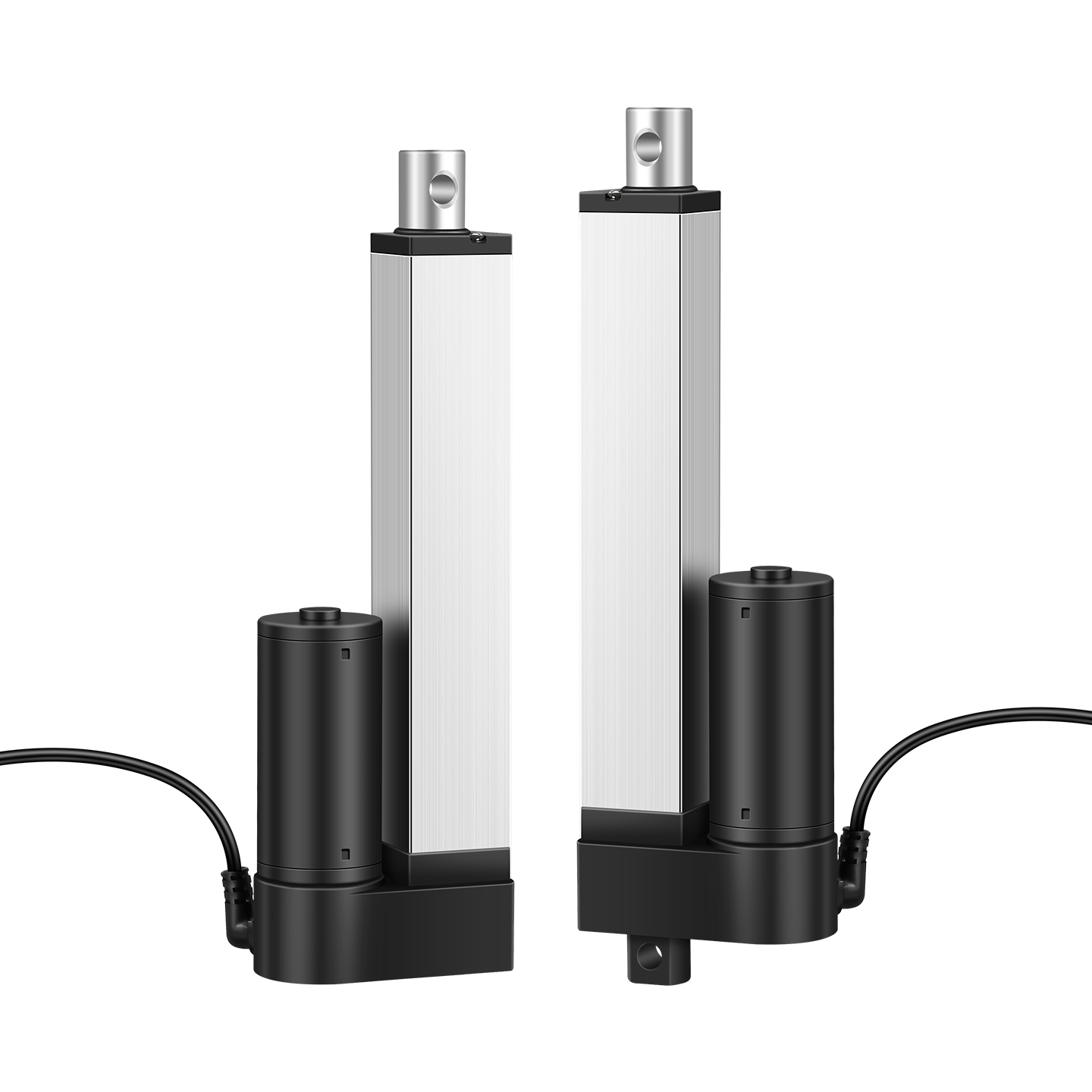
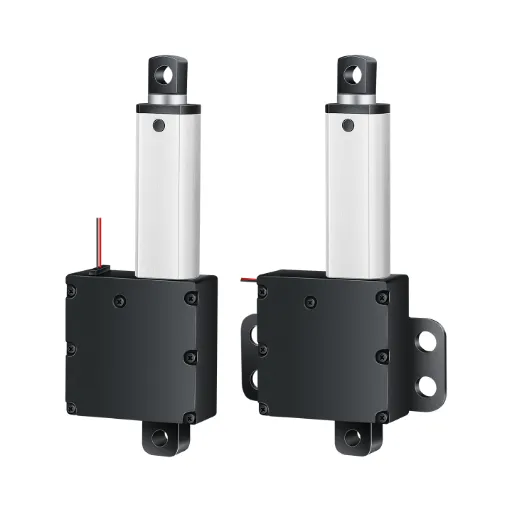
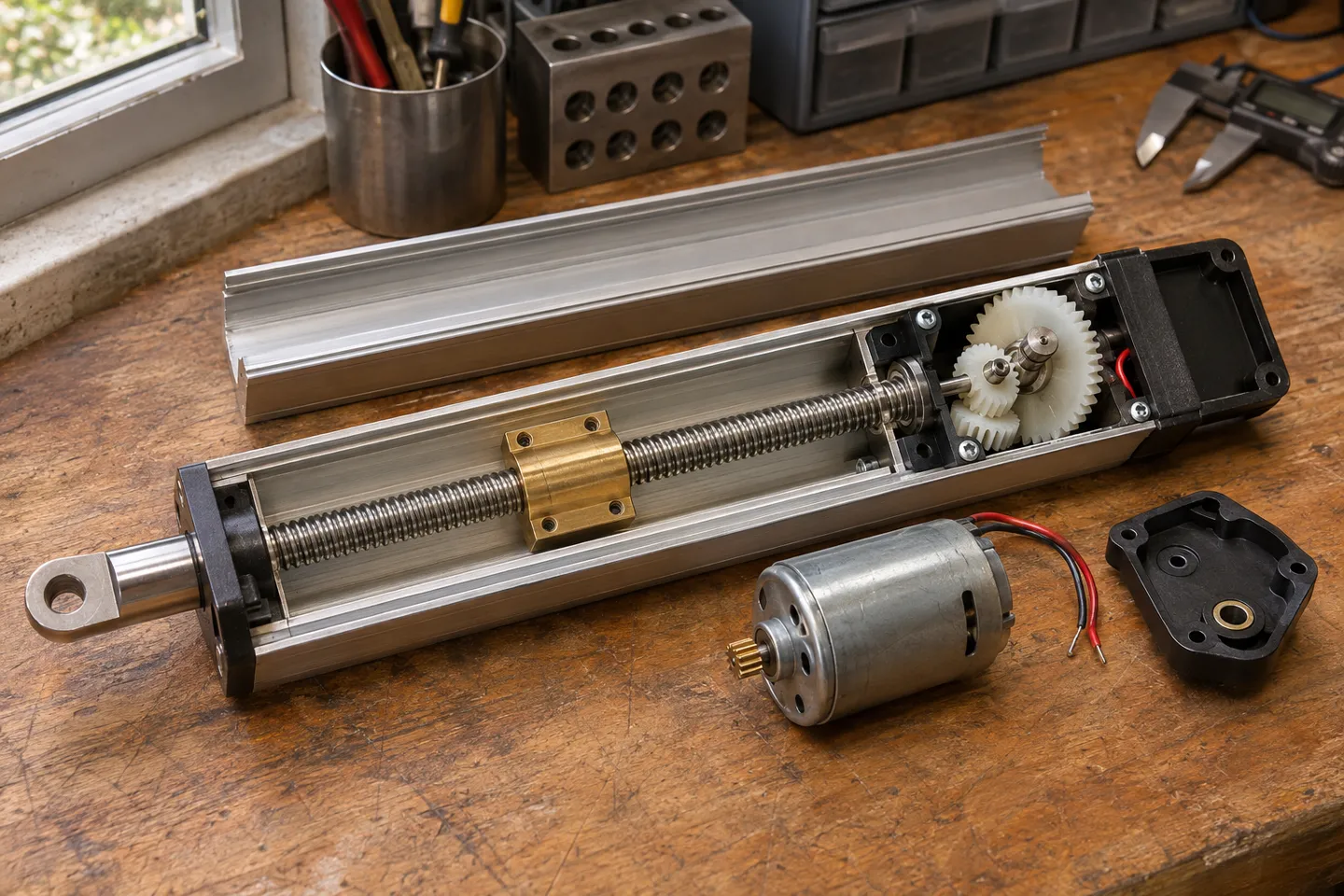
Settle the output axis before anything else, because it decides the transmission. If the device needs a rod that pushes, pulls, or lifts, a linear actuator with an integrated screw is the shortest path. Motor, gearbox, and screw arrive as one sealed unit with mounts on both ends. If the device rotates something, a rotary actuator or a plain gearmotor is lighter and cheaper than converting rotary to linear and back.
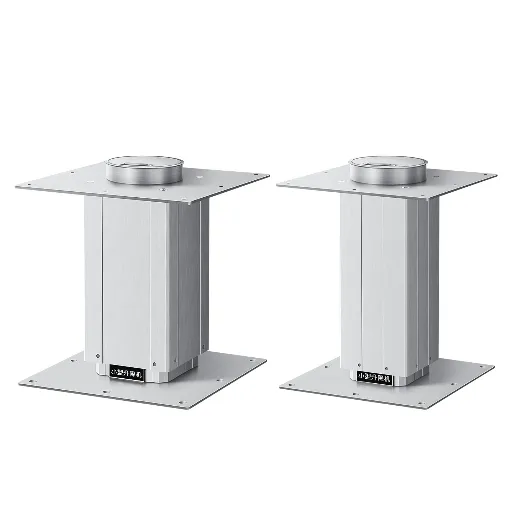
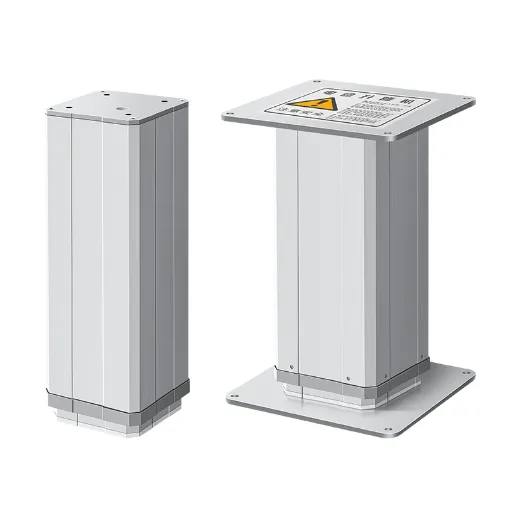
Most connected products want the straight-line version. Solar trackers tilt panels, dispensers push trays, columns raise desks, locks throw bolts. That is why “linear actuator” and “IoT project” so often share a sentence.
Mechanism Families: Where Noise, Life, and Precision Come From
“Electric” names the power source, not the machine. At least five mechanism families hide under the word, and they differ in exactly the things that decide field performance.
A solenoid moves an armature with a coil, so it is fast, cheap, and short-stroked. It also runs hot if energized for long, which caps it to momentary jobs like latching and valve switching.
A motor driving a trapezoidal lead screw is the family most IoT designs meet. The screw’s friction is high enough to hold position with power off, which is a quiet safety feature. It is also slow and inefficient by design, and it is why so many datasheets carry that 10-20% duty figure.
A ball screw replaces sliding friction with recirculating balls, so it converts power into motion far more efficiently and moves faster under load. The trade is direct: low friction means it back-drives, so a vertical load needs a brake or a counterweight.
Steppers and servos solve precision at the rotary stage, and pairing them with a precision screw gives micron-class positioning for lab instruments and optics. Piezo stacks and voice coils push the same logic to sub-millimeter, high-frequency moves.
Noise and service life live in the gears between motor and screw. Polymer gearing runs markedly quieter than steel, which is why medical and household devices specify it, at the cost of lower overload tolerance. Well-designed plastic gear trains hold their noise figure for years; abused ones whine as they wear. Ask how the gear train is specified, not just whether the catalog says “quiet”.
Feedback and Interfaces: How the Actuator Joins the Network
The last internal decision is what the actuator tells the controller. Four levels exist, and the right one depends entirely on what the motion must prove.
| Feedback level | What the controller knows | Buys you | Cost |
|---|---|---|---|
| End-limit switches only | The rod hit one end or the other | Basic safe travel | No mid-stroke position at all |
| Potentiometer | Continuous resistance, proportional to position | Absolute position reading | Wiper wear over long lives |
| Hall sensor | Pulses or steps from magnet rings | Clean, wear-free position and speed counts | Needs a controller that reads them |
| External encoder | High-resolution counts | Closed-loop precision, synchronization | Adds cost and wiring to every axis |
Interfaces stack on top of feedback. The simplest actuator takes two wires and reverses with polarity, driven by an H-bridge and a PWM pin. Mid-range units expose UART for direct position commands. Industrial designs speak RS485 and Modbus so a PLC can address dozens of axes on one bus. Wireless modules attach to any of these, which is how an actuator becomes an IoT citizen.
Two capabilities appear only once feedback exists. Memory position, meaning return to a stored height after power loss, requires knowing where the rod is. Synchronization, meaning two or three actuators raising one platform level, requires comparing their positions in real time. If your product needs either, the feedback row above is not optional.
Concrete ranges help here. Off-the-shelf DC linear actuators come in three broad bands. Micro units offer around 7-150 N with strokes from 10 to 200 mm. Mid-range units cover roughly 100 to 2500 N with strokes to 1000 mm. Heavy units reach 6000 N with static holding, and all three bands commonly run at 6, 12, or 24 V DC. Your spec will land inside one of those bands, and every band supports every interface above.
When the off-the-shelf bands miss on stroke, voltage or feedback, that is a customization question, not a compromise.
Ask Hoodland About a Custom BuildHow Actuators Fail in Real IoT Builds
Failure in the field rarely looks like a broken part. It looks like a design assumption that met a real condition. The recurring patterns are few, and each one has a check you can run before shipment.
Heat is first. A duty cycle exceeded under load cooks windings and softens polymer gears long before anything visible breaks. First confirm the datasheet rating applies at your actual load, and remember the rating usually assumes a ten-minute window, not continuous motion.
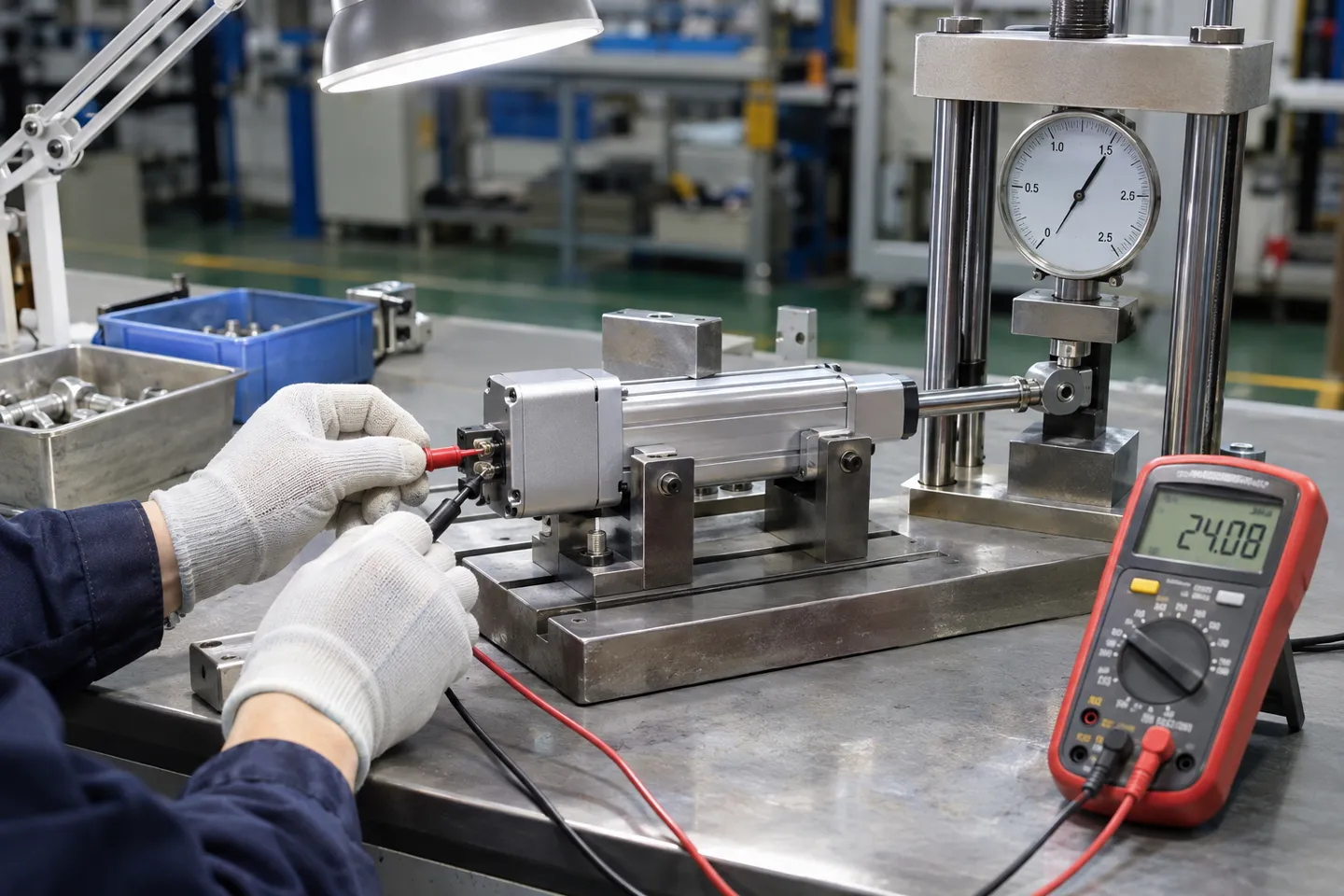
Stall is second. When an actuator pushes against a hard stop, current is limited only by winding resistance, which means stall current runs at several times the rated figure (Firgelli Automations, 2026). A supply and driver sized for the moving current will brown out on the first jam.
Check before shipment: the driver and supply must survive the datasheet stall figure, not the moving-current figure.
Power budget is third, and the section above did its arithmetic. Batteries sag under load, and boost converters fold when the input current ceiling is hit. First measure the actuator’s real start-up surge at full load, not the catalog average.
Environment is fourth. An IP43 enclosure survives splashes, not weather; the IP code scale is defined in IEC 60529 and the second digit is the one that matters outdoors. Condensation kills electronics in rated enclosures too, when warm days meet cold nights. First confirm the sealing class against the worst placement, not the average one.
Control is fifth. Wireless links add latency, and control loops built for milliseconds stumble when the network turns slow. Open-loop actuators also drift from their commanded position as mechanisms wear. First confirm what the motion must prove, then buy the feedback level that proves it.
| Failure mode | First thing to confirm |
|---|---|
| Overheating, shortened life | Duty cycle rating at your real load and window |
| Brownouts, dead supply | Stall and start-up surge versus supply and driver limits |
| Slow or weak motion | Current budget at motor voltage after boost conversion |
| Corrosion, condensation | IP class and temperature range against the worst placement |
| Position drift, failed sync | Feedback level matches what the motion must prove |
None of these checks requires a lab. All of them require reading datasheets with your own scenario in hand. That habit, applied early, is what separates a device that ships from one that gets returned.
From Types to Specs: Buying Actuators for Connected Devices
Everything above reduces to a stance worth stating plainly. The question “which actuator type should I use” hides four smaller ones. How is it powered, what duty cycle does it face, what must its motion prove, and what environment must it survive? Answer those and the category name follows. The category name follows from the answers. Procurement works the same way, which is why the four questions translate directly into a spec sheet.
Turning the Four Questions into a Spec Sheet
A complete inquiry for an electric actuator needs nine fields. Anything less and the quotes you receive will not be comparable; anything more and suppliers will quote against fiction.
The nine-field inquiry sheet
- 1Voltage: system rail and tolerance (6, 12, or 24 V DC are the common rails).
- 2Stroke: length plus tolerance and the mounting distance between pin centers.
- 3Thrust: dynamic push and pull figures, and static holding if it must lock under load.
- 4Speed: millimeters per second at the rated load, not no-load.
- 5Duty cycle: percent and reference window at your real load.
- 6Feedback: none, potentiometer, or Hall, matched to what the motion must prove.
- 7Interface: two-wire polarity, PWM plus H-bridge, UART, or RS485/Modbus.
- 8Protection: IP class per IEC 60529 plus operating temperature range for the worst placement.
- 9Certifications: CE and RoHS for most markets, explosion-proof certification if the site demands it.
Send all nine and every quotation arrives in the same shape. Leave one out and you will spend the comparison meeting discovering what each supplier assumed instead.
Evaluating Suppliers: Three Things That Cost More Than Unit Price
Customization range is the first cost most buyers discover late. Devices are not designed around catalog strokes. The real question is not whether a supplier can change a dimension but what the change touches: motor, gearbox, tooling, lead time, minimum order. Ask for the change list and the sample lead time before comparing prices.
Certification coverage is the second. A certificate for one product family does not cover a sibling model, and hazardous-location sites require explosion-proof certification on the specific unit, not a general factory claim. Ask for certificate numbers per model.
Lifetime cost is the third, and it is where quiet mechanisms earn their keep. A medical or office device that cycles all day ages its actuator continuously, so cycle life, noise figure, and after-sales response belong in the same spreadsheet as unit price.

That is exactly the conversation we like. We are Hoodland, a linear actuator and lifting column factory where customization is the default workflow rather than the exception. We adjust voltage, stroke, thrust, speed, ingress protection and connectors to your design. We accept single-piece orders with no minimum quantity, and a single sample unit typically ships in 1-3 days. See Hoodland’s custom actuator program for how those projects run.
The actuator market’s steady climb means more devices and more motion in them, and the winners in that build-out are the teams that treat selection as arithmetic rather than vocabulary. Write the four questions down, turn them into the nine fields, and send them to two suppliers today.
From four answers to a built actuator
Describe the load, stroke, duty cycle and environment; the Hoodland engineering team replies with a build proposal and a sample plan.
Start a Custom Actuator InquiryReferences
- Grand View Research. “Linear Actuator Market Size And Share Report, 2024-2030.” 2024. https://www.grandviewresearch.com/industry-analysis/linear-actuator-market-report
- Wevolver. “Linear Actuator Motor: Choosing the Right Motor Technology for Modern Linear Actuators.” 2026. https://www.wevolver.com/article/linear-actuator-motor-choosing-the-right-motor-technology-for-modern-linear-actuators
- Abac Air Compressors. “Bar vs PSI: Pressure Explained for Compressed Air Systems.” 2026. https://www.abacaircompressors.com/en-us/blog/compressed-air-guide/bar-vs-psi-pressure-explained
- r/esp32 community. “Newbie Needs Help: 12V Linear Actuator (L298N) with Small ESP32, Battery & USB-C Charging.” 2025. https://www.reddit.com/r/esp32/comments/1lujghj/newbie_needs_help_12v_linear_actuator_l298n_with/



 English
 Chinese