
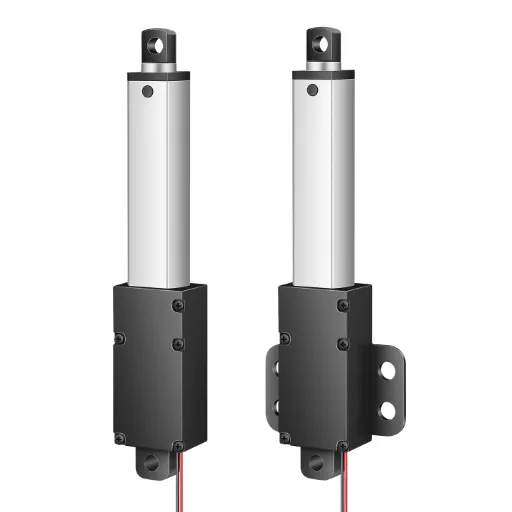
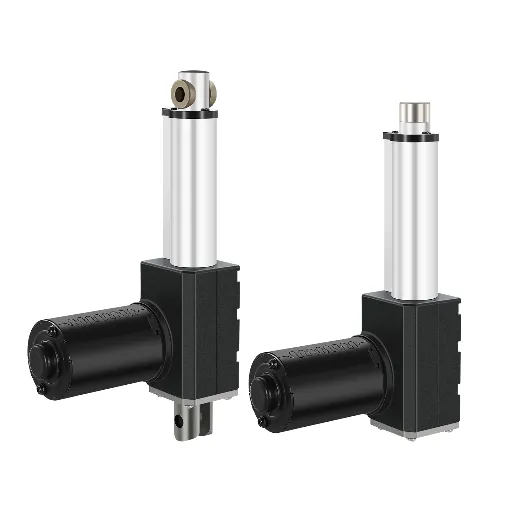
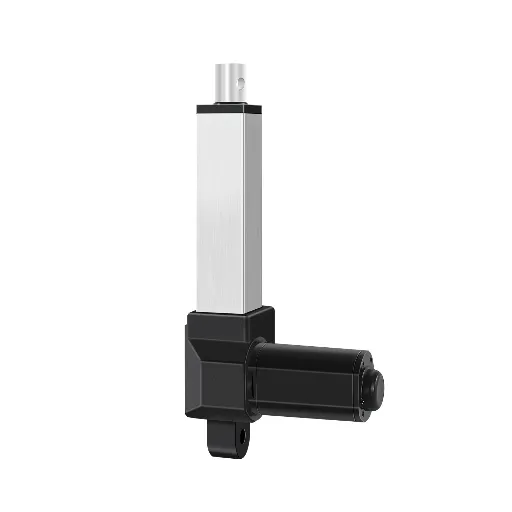
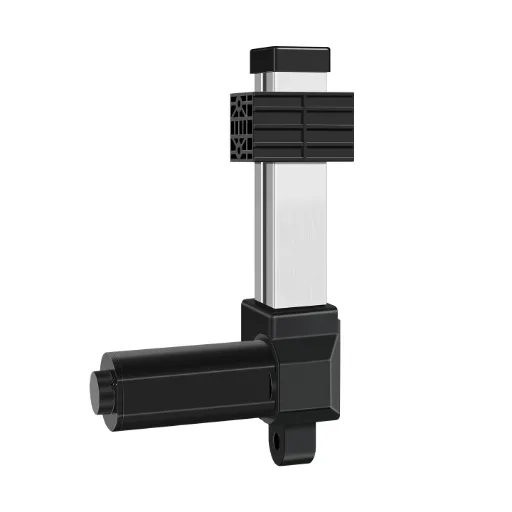
A hospital bed tilts into its cardiac-care position because a compact cylinder inside the frame got its instructions. The cylinder spun a motor and pushed a screw-driven rod forward by the exact distance the controller asked for. No compressor, no hydraulic hoses. That cylinder is an electric actuator. Once you see how it converts power into measured motion, every line of its spec sheet reads like a promise you can check.
What Is an Electric Actuator?
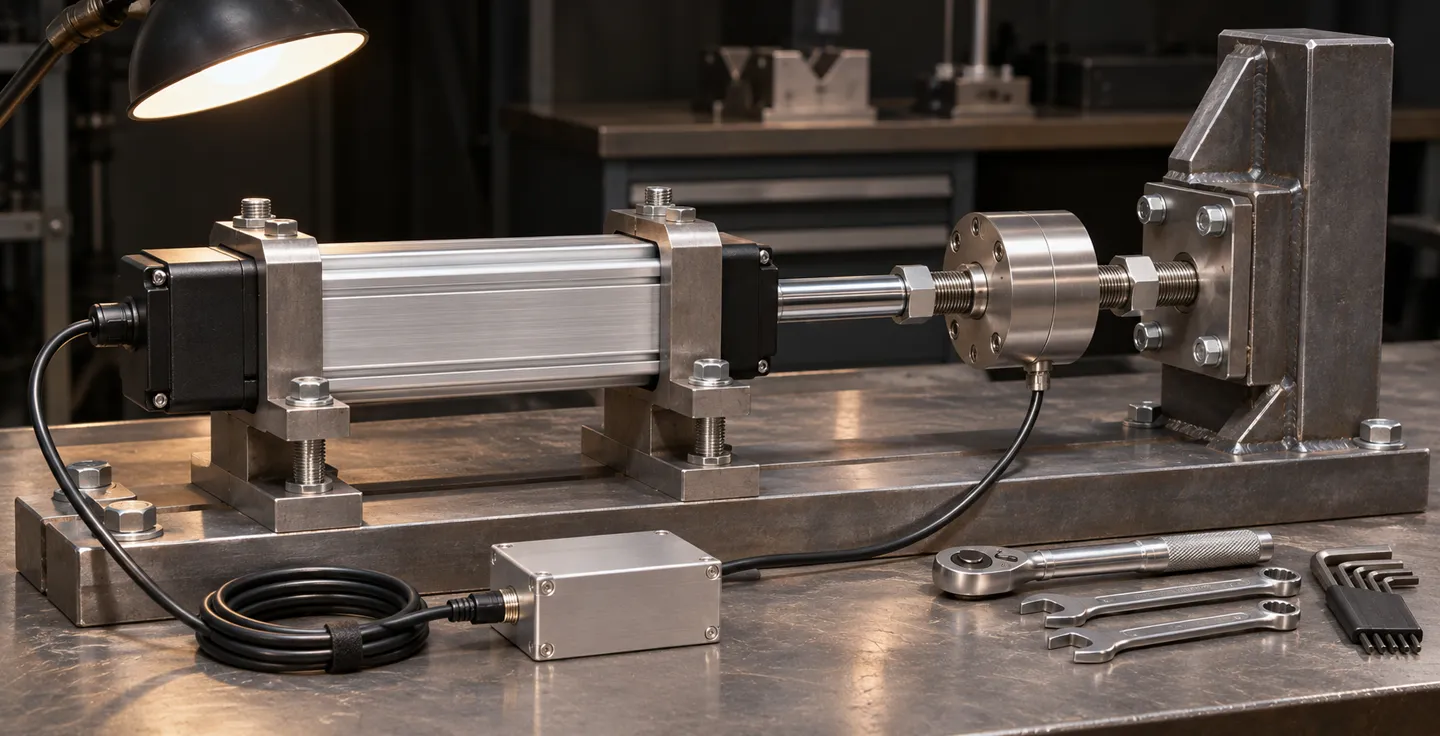
An electric actuator is a device that converts electrical energy into controlled mechanical motion, most often a straight-line push or pull, sometimes a rotation (Wikipedia, 2026). Feed it DC or AC power and a control signal, and it delivers movement at a force, speed, and position you specified in advance. That word “controlled” is the whole point: unlike a motor spinning free, an actuator moves a load to a place and stops there.
The term covers three separate industries, and mixing them up wastes your reading time. Valve electric actuators rotate valve stems in quarter-turn or multi-turn motion, a world governed by pipe pressure and torque curves. Robotic servo actuators articulate joints with high-speed feedback loops. This guide is about the third kind: the linear units that move the working parts of equipment, with a nod to their rotary cousins. Think lift columns, slide gates, feeders, and adjustable platforms.
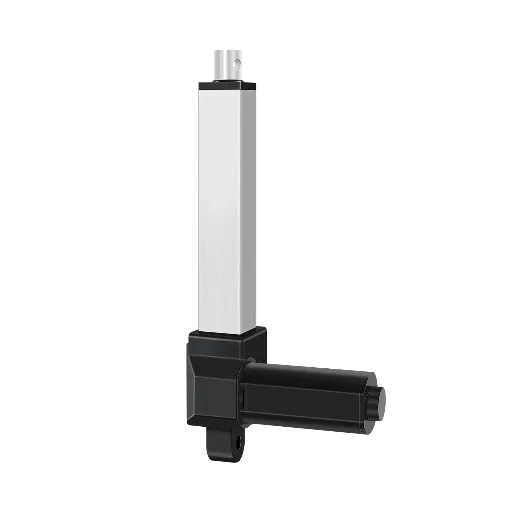
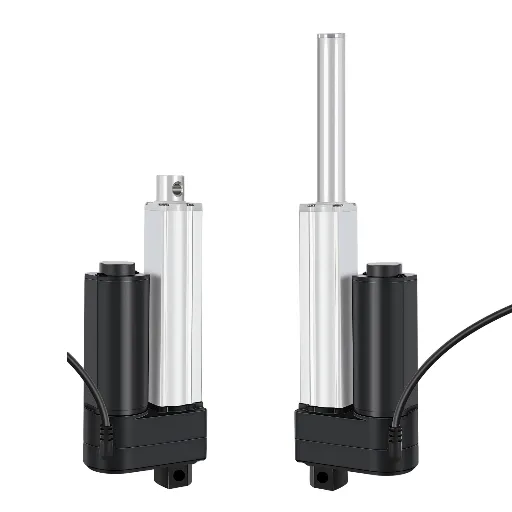
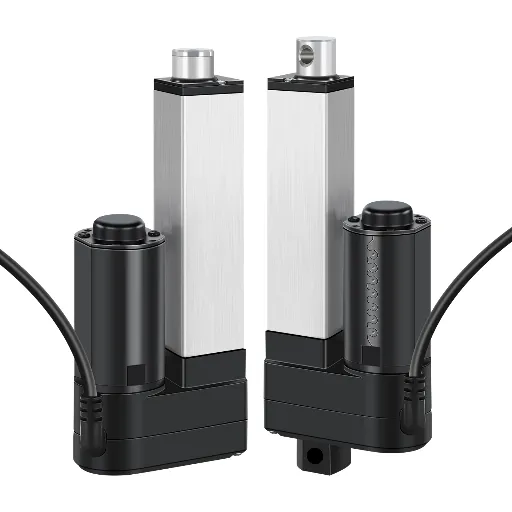
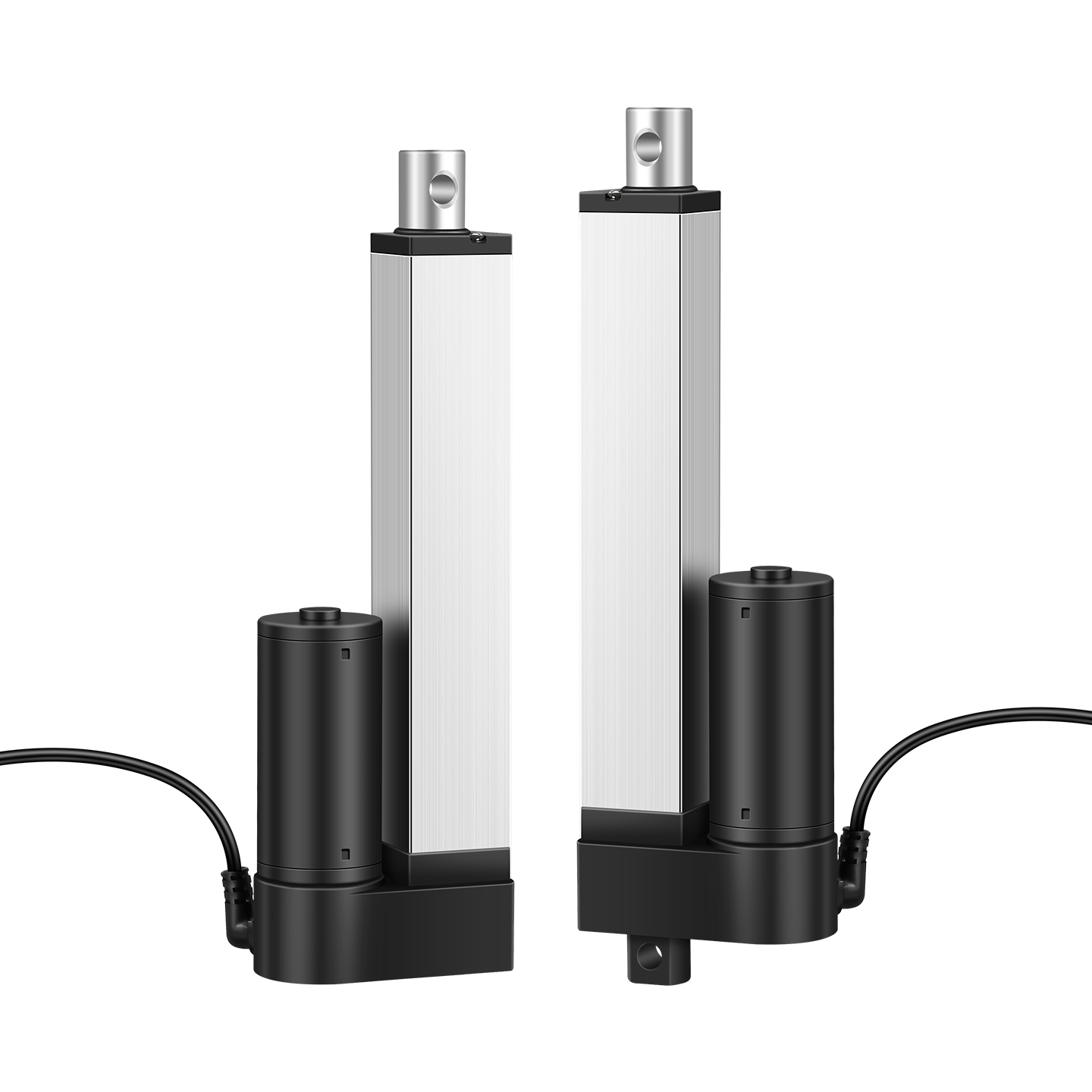
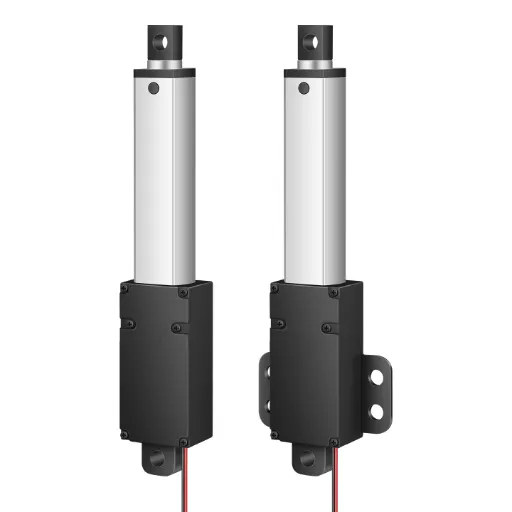
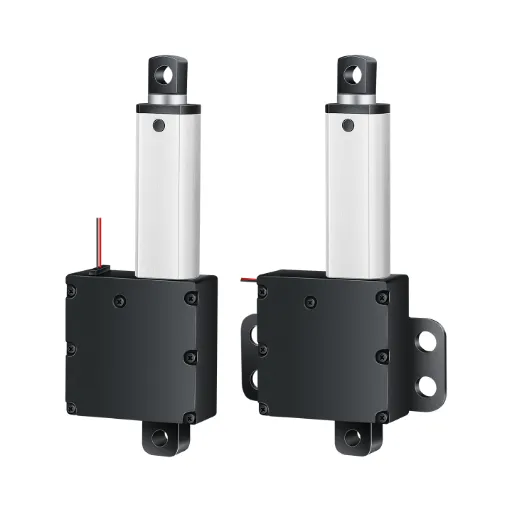
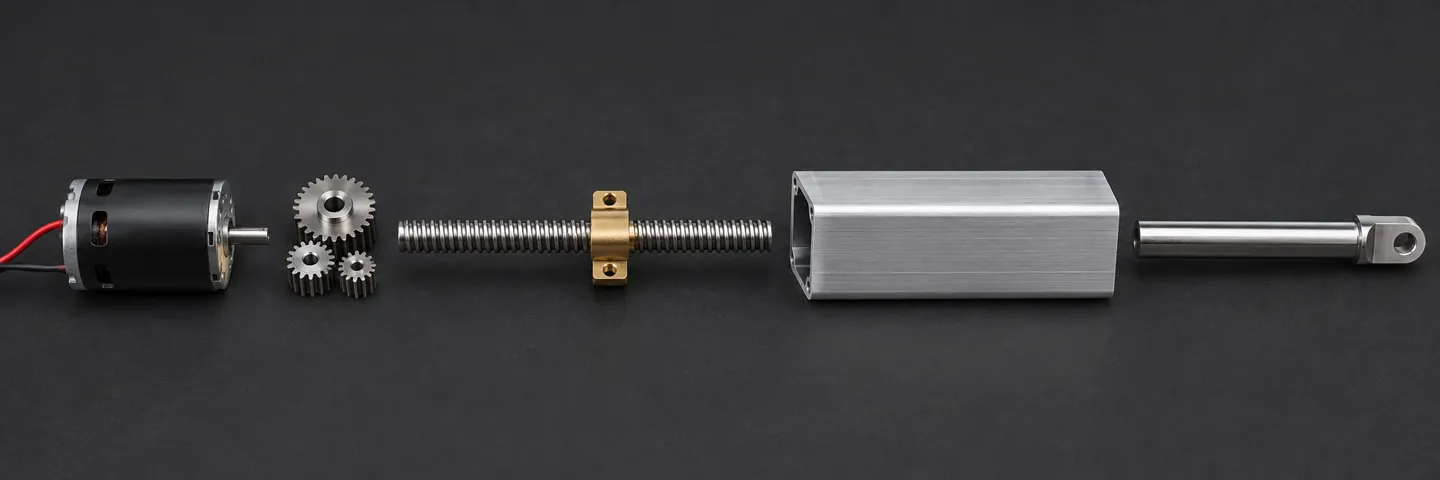
Inside the tube, the working chain has four links. Power arrives at a DC motor, usually 12 or 24 V in catalog equipment. A gear set trades motor speed for torque. A lead screw and nut convert the motor’s rotation into straight travel, the same way a bolt moves through a nut when you turn it. A rod or bracket carries the load, and limit switches cut the drive at each end of travel so the unit cannot crash into itself. Many models add position feedback on top of that chain, which becomes important later in this guide.
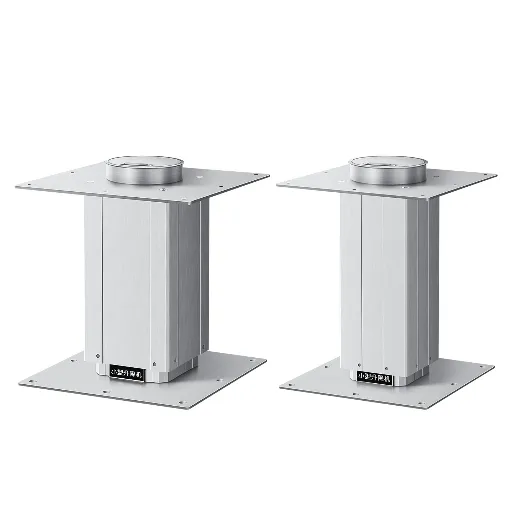
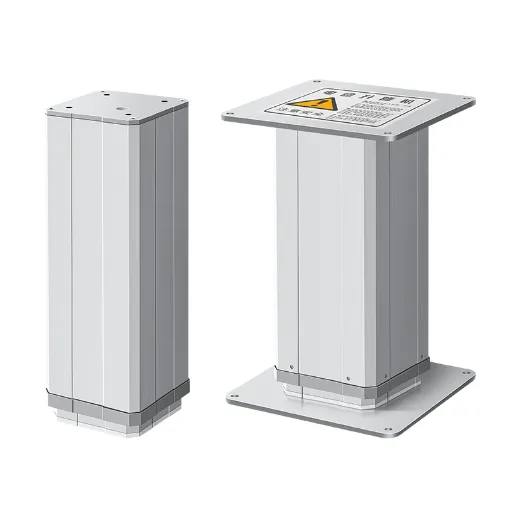
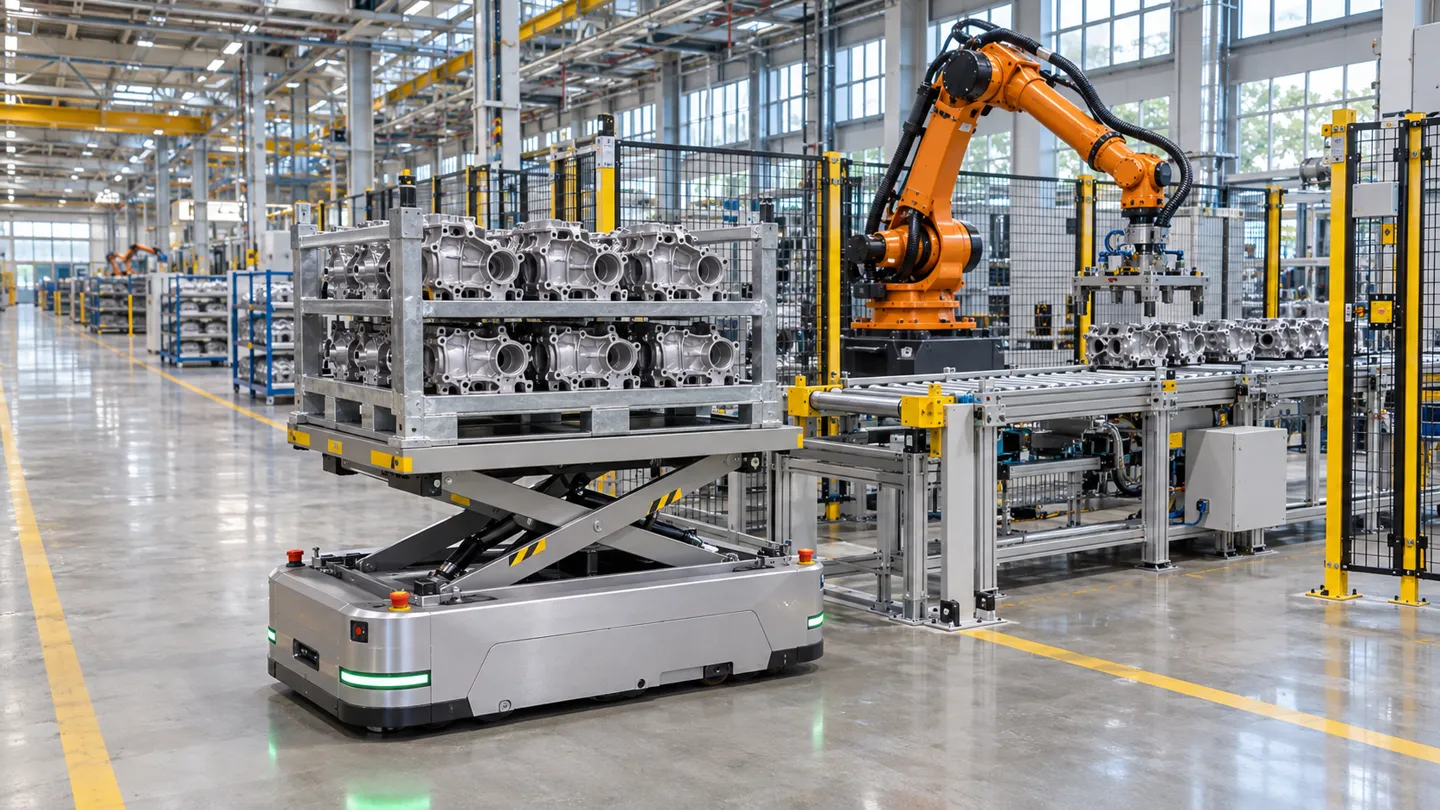
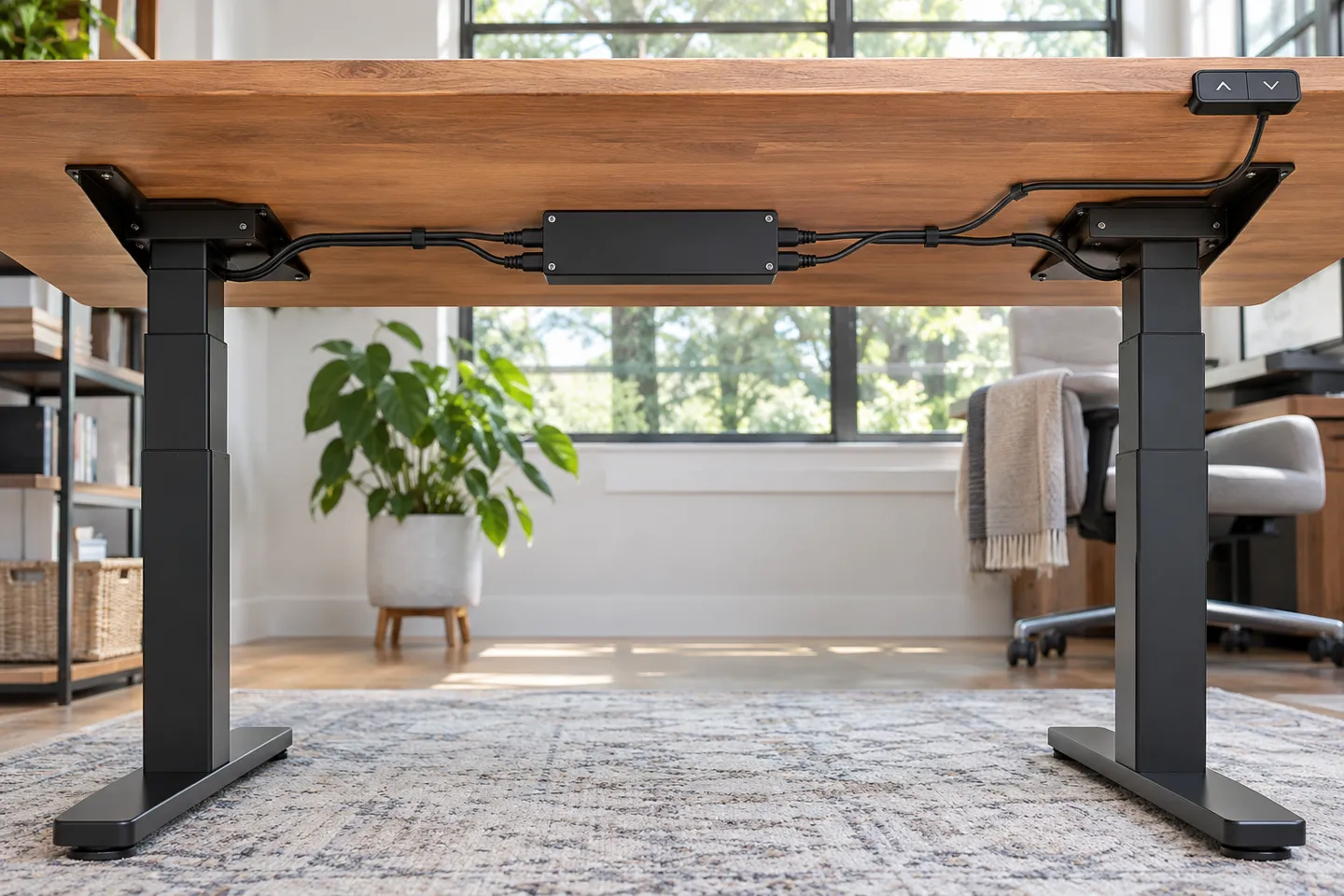
You will find these units working across an unusually wide spread of equipment. Industrial automation uses them for slide gates, lifting platforms, AGV lift mechanisms, and processing fixtures. Medical devices put them inside dental chairs, care beds, and rehab equipment, where quiet and smooth travel matter. Smart furniture runs on them too: think standing desks and recliners. The tail of the list is long, running from agriculture through specialty vehicles to energy-storage cabinets. Same physics, very different duty requirements, which is exactly why the rest of this guide is about reading specs rather than admiring them.
How the Transmission Mechanism Defines Every Type
Catalog sites list dozens of actuator “types”, and the lists never seem to agree. The honest way to sort them is by transmission: how the motor’s rotation is geared and converted into output. Get the mechanism straight in your head and you can place any unfamiliar model within seconds. Every performance difference you care about traces back to a mechanical choice.
Motor and Gearbox Layouts: Parallel, Right-Angle, In-Line
In a parallel layout, the motor sits alongside the screw and spur gears connect them. Spur gearing accepts a wide range of gear ratios, so parallel units cover unusually broad force and speed combinations. The trade is noise: meshing spur gears are the loudest of the three layouts.
In a right-angle layout, often called L-shaped, the motor sits perpendicular to the drive and a worm gear does the converting. Worm gearing runs quietly and, crucially, resists back-driving: with power off, the load usually cannot spin the screw backward and crash down. That self-locking behavior is why this is the most common layout in furniture, medical, and lifting duty. The cost is a narrower ratio selection and somewhat lower mechanical efficiency.
In an in-line layout, the motor, planetary gears, and screw share one axis. The result is a compact unit that fits narrow installation pockets, at the price of a longer retracted length and a higher-pitched operating noise.
Three gearbox layouts at a glance
| Layout | Noise | Self-locking | Ratio range | Typical duty |
|---|---|---|---|---|
| Parallel (spur) | Loudest | No | Widest | Broad force-speed catalog coverage and cost-driven projects |
| Right-angle (worm) | Quietest | Yes in most designs | Narrow | Furniture, medical and lifting where holding position matters |
| In-line (planetary) | Medium with higher pitch | No | Moderate | Tight installation pockets with longer retracted length |
Lead Screw Versus Ball Screw: The Quiet-and-Cheap Versus Fast-and-Continuous Trade
Below the gearbox sits the screw, and this choice decides your duty cycle more than any other single component. A plain lead screw (often ACME profile) is cheap, quiet, and frictionally self-locking. Friction is also its weakness: a large share of motor work turns into heat, so lead-screw units suit intermittent duty and struggle when cycled hard.
A ball screw recirculates balls between screw and nut, so most of the motor’s work becomes motion instead of heat. It runs faster, cycles longer, and suits continuous or near-continuous duty. Ball screws can back-drive, meaning an unsupported load can spin the screw when power is off, so designers pair them with a brake or a worm stage. They cost more, and in exchange they survive the projects where lead-screw units overheat.
One further option completes the map: the planetary roller screw, which packs several threaded rollers around the screw to spread load. It delivers heavy force and long life in a compact body and shows up in demanding industrial machinery rather than in catalog furniture units.
Confirm the holding requirement first
Holding first: if the load must stay put with power off, the design needs self-locking, worm gearing or a high-ratio lead screw, confirmed in writing before any shortlist. Never treat a brake as a later add-on.
Output Geometry: Rod, Rodless, and Rotary
Rod-style units, a tube with an extending rod, are the most common form and the default mental picture of a linear actuator. Rodless designs mount a carriage that rides along the body itself, saving the envelope space an extending rod needs, at the cost of a more exposed sealing path. Rotary actuators output a shaft rotation instead of straight travel, and part-turn variants handle the quarter-turn jobs that sit between the two worlds. If a supplier’s catalog only shows rod-style units, ask early whether they build the other geometries or partner for them.
When to Choose Electric Over Pneumatic or Hydraulic
Strip the comparison tables down to what actually drives decisions. Electric actuation wins on control: you can program motion profiles, hold intermediate positions, synchronize multiple units, and run nearly silently, all without a compressor or a hydraulic power pack. Pneumatic wins on up-front cost, simplicity, speed of basic two-position action, and intrinsic safety in flammable atmospheres, because air components neither spark nor overheat when they fail. Hydraulic still owns the extreme-force territory. For most equipment builders the real fork in the road is electric versus pneumatic, so the rest of this section focuses there.
Practitioners apply a few reliable heuristics, and the first one is geographic. Equipment clustered near an existing compressor favors pneumatic. Scattered equipment favors electric, because running cable beats running air lines (Eng-Tips valve engineering thread, 2019). The same thread carries a field report worth reading before you decide. A packaging machine built on pneumatics never hit its motion targets, even after weeks of adjustment. The switch to electric delivered the programmed motion curves flawlessly, and nearly silently. If your application needs shaped motion profiles rather than two-position action, that report is your answer.
The market has already been voting. The electric linear actuator market was valued at USD 27.2 billion in 2025 and is projected to reach USD 46.5 billion by 2033, a 7.0% CAGR (Grand View Research, 2026). Growth at that pace across a decade reflects motion-control electrification in automation, medical, and ergonomic equipment, not a passing preference.
Electric actuation is still the wrong call in three specific situations. Safety-instrumented valves that must close by spring return on air or spring power belong to pneumatic territory. In extreme explosion-risk zones where certification costs dominate and simplicity is the safety argument, pneumatic remains the default. And a plain two-position action at an existing air-powered site gains nothing from rewiring for electric. Check those three boxes before you commit either direction.
Self-check before ruling electric in or out
- Does the motion need shaped profiles, mid-stroke positions, or synchronization? Electric favors you.
- Is compressed air already present and is the action plain two-position? Pneumatic may be cheaper.
- Does a safety function require spring-return closing? Stay pneumatic for that loop.
- Is the environment extreme explosion-risk? Price the certification before choosing electric.
- Will the unit cycle continuously? Spec continuous-duty electric (ball screw, larger motor), not a catalog intermittent unit.
Reading the Spec Sheet: Six Parameters That Decide Success or Failure
Two actuators can look identical in photos and behave completely differently in your machine. The differences live in six spec-sheet parameters, and each one has a specific way of failing when you misread it. This section is the one to keep open while you compare datasheets.
Force and Speed: One Motor, Several Faces
Here is the first surprise for most buyers: force and speed are not independent. They trade against each other through the screw pitch, so the same motor family ships in several faces. One heavy-duty 12/24 V series offers three versions of the same body: 6,000 N push with a 4.5 mm/s no-load speed, 3,000 N at 8 mm/s, and 2,000 N at 22 mm/s. Choose by the pair, never by either number alone.
The second surprise is that static and dynamic load are separate ratings, and the gap is not marketing caution. A compact series may rate 2,500 N static but only 1,500 N dynamic. Static covers holding or pressing against a load without movement; dynamic covers moving it, and movement is where friction and heat compound. Size the unit by the static number and then move the load all day, and the screw, nut, and bearings wear at the moving-load level. Failure arrives early, and it usually arrives without warning. The check is mechanical: size by dynamic load with margin, then confirm the static rating still covers any end-of-travel pressing your machine does.
If you are sizing a unit now, send Hoodland your load, duty, and stroke figures and we will return a matched spec from real datasheet numbers.
Request a Spec ReviewDuty Cycle and Heat: Why Cheap Actuators Die Mid-Project
Duty cycle is the parameter most often ignored and most often fatal. It states the share of time the actuator may work within each cycle. The reason is thermal. Motor windings and screw friction dump heat into a small aluminum body, and heat is the one thing catalog actuators cannot escape quickly.
A 10% duty rating means the actuator works for 6 seconds and rests for 54 in every minute of continuous cycling.
The 6-second rule
10%
Duty rating
6 s
Of work
54 s
Of rest, every minute
Before ordering, compute your real duty: cycles per hour x travel time per cycle, as a share of one hour, then keep about 50% margin below the rating.
Budget catalog units commonly rate 10 to 25% duty, which fits occasional adjustment motion and fails badly in continuous cycling. Continuous-duty designs pair ball screws with larger motors and cost more for a physics-based reason, not a marketing one. Field reports line up with this. A chicken-coop door actuator jammed at end of stroke while its power supply cycled on and off. It died within two years of outdoor duty (Reddit r/engineering, 2021). Environment and duty together, not either alone.
Environment: IP Ratings, Temperature, and the Outdoor Trap
Ingress protection is written as IP followed by two digits, and the second digit is the one that matters for rain and washdown. Digits 3 and 4 handle splash and dust-resistant indoor work. A 5 keeps out dust and low-pressure jets, and a 6 survives powerful jets and heavy seas. Here is the trap that catches even careful buyers: some model names contain numbers that mimic IP codes. One compact actuator series carries the model name “IP60” while its actual ingress rating is IP54. The model name is a label; the spec table is the promise. Always read the rating in the datasheet, never in the name.
Temperature range matters more outdoors than indoors. A typical -25 to +65 °C rating covers most climates, but condensation cycles and direct sun can push a nominally mild environment past what an unsealed unit tolerates. Stroke deserves one check as well: confirm the stroke covers your travel plus margin. Confirm built-in limit switches are present too, because they stop travel at each end without external sensors.
Six-parameter boundary matrix
| Parameter | Real-world question | Failure if exceeded | Pre-order check |
|---|---|---|---|
| Static vs dynamic load | Will it move the load or hold and press? | Early wear of screw nut and bearings and collapsed output | Size by dynamic load with margin and confirm static covers pressing |
| Duty cycle | How many cycles per hour and how long each? | Heat soak and thermal cutoff and mid-shift death | Compute real duty from cycle math and keep 50% margin below rating |
| IP rating | Rain or washdown or dust or clean indoor? | Water ingress and corrosion and shorted supply | Read the datasheet IP value not the model name |
| Temperature range | Climate and sun exposure and condensation cycles? | Seized lubricant and cracked seals and derated motor | Check rating against worst case including condensation |
| Stroke and limits | Travel plus margin and end-of-travel control? | Over-travel crash and jammed rod at stroke ends | Confirm stroke margin and built-in limit switches |
| Force-speed pairing | Does the spec pair match your load and cycle time? | Stalled motor and overheated screw and missed cycle time | Choose by the force-speed pair never one number alone |
When a unit does fail, work the symptoms in order. A hum with no movement points to the supply first: verify voltage under load and the supply’s current rating, then check for a rod jammed at stroke end. Movement that stops mid-stroke points to thermal protection after duty overrun. Outdoor units deserve a water-ingress inspection before anything else, because water kills through the supply line. A unit that opens with black debris inside is telling you its lubricant and screw are past service (Reddit r/engineering, 2021).
Control and Feedback: What You Can Actually Command
Every actuator can stop at its stroke ends. What separates a parts-mover from a controllable machine element is feedback, and feedback comes in four levels, each unlocking a specific set of motions. At the bottom, built-in limit switches cut the drive at each end and nothing more. A diode bridge lets the unit run in reverse after hitting a limit. That is why a basic unit can always retreat even with only switches aboard (Reddit r/ElectricalEngineering, 2023). A potentiometer reports continuous position, which unlocks position memory: return to a saved height on command. Hall sensors do the same job without contact wear. An encoder, typically 256 to 4,096 lines in catalog equipment, resolves position finely enough to synchronize multiple actuators and to close a PID loop around motion.
Feedback options and what each one unlocks
| Feedback | What it reports | Motions it unlocks | Typical use |
|---|---|---|---|
| Limit switches | End of travel only | Stop at stroke ends and retreat | Simple open-close duty |
| Potentiometer | Continuous analog position | Position memory and preset heights | Desks and beds and hatches |
| Hall sensor | Contactless position counts | Position memory with longer service life | Sealed and long-life units |
| Encoder (256-4,096 lines) | High-resolution position | Multi-actuator sync and PID closed loop | Industrial automation and robotics |
Integration practicalities follow from the ladder. Catalog equipment runs 12 or 24 V DC, speaks to PLCs and controllers through standard interfaces, and benefits from soft start and stop, which reduces mechanical shock and lengthens life. Many manufacturers offer paired controllers, handsets, and power supplies as a set, which removes the most common integration headache: mismatched electronics that behave differently from the datasheet.
The expensive mistake here is a mismatch between control ambition and feedback hardware. A team that orders limit-switch-only units for a synchronized two-column lift will discover the gap mid-project, and mid-project retrofits cost multiples of the original option price. Write the motion list first: jog, position, synchronize, close a loop. Then buy the feedback that covers it.
How to Specify and Vet an Electric Actuator Supplier
By this point the parameters are familiar, so purchasing becomes a matter of writing them down and then checking that a supplier can actually deliver them. The specification side takes four lines.
The four-line specification
1Duty with margin math
Duty, stated from your real cycle, with the margin math attached.
2Dynamic vs static load
Dynamic load as the sizing number; static load as the pressing number.
3IP for the real environment
The ingress protection your real environment needs, not a neighboring machine’s.
4Motion list and feedback
The motion list, and therefore the feedback, your controls require.
Vetting a supplier then follows the same four links you learned in this guide. Mechanism: confirm the layout and screw type match your holding and duty requirements, in writing. Parameters: request measured ranges from the datasheet, and treat catalog slogans as unverified until a datasheet confirms them. Control: check feedback options and controller pairing. Then ask whether the supplier delivers a complete set: actuator, controller, power supply, and brackets. Set-level delivery moves integration risk back to the supplier, where it belongs. Assurance: ask for the cycle-life figure and its basis, for certifications published for download rather than badge icons, for lead-time commitments by product class, and for customization terms.
The assurance link is where projects are quietly won or lost. One engineer sourcing an actuator for a PID-controlled gate praised a well-regarded brand. Then came the operative detail: lead times long enough to shape the entire project plan (Reddit r/PLC, 2020). Some manufacturers state publicly that standard units ship in 3-7 days and complex custom needs 15 days or more. That commitment is schedule insurance, and a slightly cheaper quote cannot replace it. Integration failure is the expensive outcome, and the supplier terms decide who absorbs it.
The same four links flex by segment without changing shape. Medical device builders add certification depth and after-sales history to the assurance link. Furniture brands push synchronization and noise to the front of the control link. Specialty vehicle builders lean on custom voltage and non-standard brackets, and distributors need stable lead times plus marketing material. If your project sits in the awkward middle between catalog specs and full custom engineering, that gap is exactly where Hoodland built its linear actuator line. You can order custom voltage from 6 to 24 V, thrust from 20 to 6,000 N, stroke from 25 to 2,000 mm, position feedback options, and no minimum order quantity. We pair actuators with our own controllers and brackets as one assembly, and the IP60 series page shows how those options break down in practice.
Supplier vetting checklist
- Mechanism confirmed in writing: layout and screw type match holding and duty needs.
- Datasheet numbers on file: dynamic and static load, duty cycle, IP value, temperature range.
- Motion list mapped to feedback: jog, position, synchronize, closed loop.
- Complete-set capability: actuator, controller, power, brackets from one source.
- Cycle-life figure with basis, not adjectives.
- Certificates downloadable, model-level.
- Lead time by class: standard vs custom, committed.
- Customization terms: voltage, thrust, stroke, sensors, mounting, MOQ.
Turn Your Duty Profile Into a Buildable Spec
Send your application data and get a custom voltage, custom stroke actuator quoted as a complete set, with cycle-life figures and committed lead times.
Start Your Custom SpecReferences
- Grand View Research. “Electric Linear Actuator Market Size & Share Report, 2033.” 2026. grandviewresearch.com/industry-analysis/electric-linear-actuator-market-report
- Wikipedia. “Actuator.” 2026. en.wikipedia.org/wiki/Actuator
- Eng-Tips Valve Engineering community. “Pneumatic Vs Electric actuators selection for valves.” 2019. eng-tips.com/threads/pneumatic-vs-electric-actuators-selection-for-valves.456343
- Reddit r/PLC. “Reputable Linear Actuator Manufacturers.” 2020. reddit.com/r/PLC/comments/gesbn9
- Reddit r/engineering. “Linear actuator stopped working after 2 years. Any ideas why?” 2021. reddit.com/r/engineering/comments/rmax6o
- Reddit r/ElectricalEngineering. “How do linear actuators move after a limit switch is pressed?” 2023. reddit.com/r/ElectricalEngineering/comments/18ktnkz

 English
 Chinese
 German
 Spanish
 French